What does this harvest date calculator calculate?
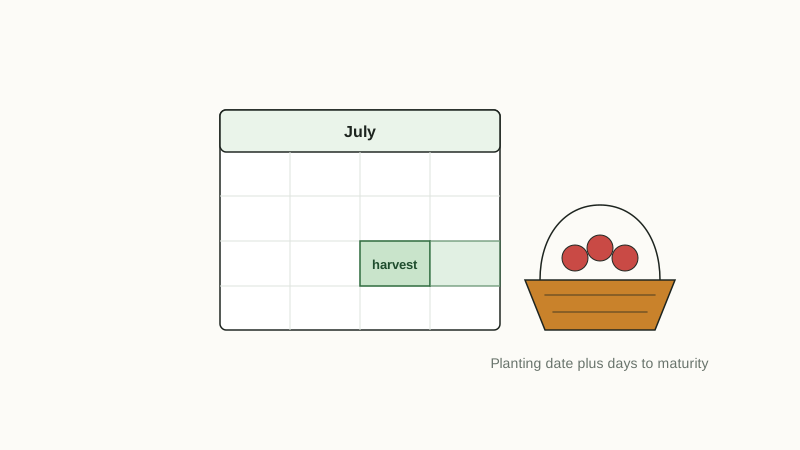
This tool adds a variety's stated days to maturity to the planting or transplant date you enter. The result is an estimated first harvest date. An optional harvest window shows a period when you may continue picking or checking the crop.
The date is a planning estimate, not a promise. Temperature, sunlight, water, soil conditions, transplant stress, pests, and the way a seed company defines maturity can all change the actual date.
What you will need
The correct starting date
Use the date that matches the maturity statement on the seed packet or plant label. Many transplanted crops list days from transplanting, while many direct-sown crops list days from sowing. If the label is unclear, check the variety description from the seed supplier.
Days to maturity
Use the value for the exact variety when available. Two tomato or lettuce varieties can mature weeks apart. A general crop average is less useful than the number selected by the breeder or supplier for that cultivar.
Harvest window
The harvest window is a planning aid. A head of lettuce may have a short ideal window, while beans, tomatoes, and zucchini can produce repeatedly. Enter zero if you only want the estimated first date.
How the calculation works
The calculator uses calendar days. It adds the entered days to maturity to the starting date, then adds the harvest-window length to find an end date.
If beans are direct sown on May 15 and the packet lists 55 days to maturity, the estimated first harvest date is July 9. A 14 day harvest window extends the planning period through July 23.
The calculation does not automatically add germination time. Whether germination is already included depends on how the supplier defines the maturity value. That is why matching the starting date to the label is important.
How to use the estimate
Begin checking the crop before the calculated date. Harvest cues are often more reliable than elapsed time. Color, size, firmness, pod fill, skin texture, and ease of separation can indicate maturity, depending on the crop.
For a crop that produces continuously, the first date helps schedule picking rather than predicting a single harvest. For storage crops, it can mark the point to begin watching both the plant and the weather.
Worked examples
Direct-sown carrots
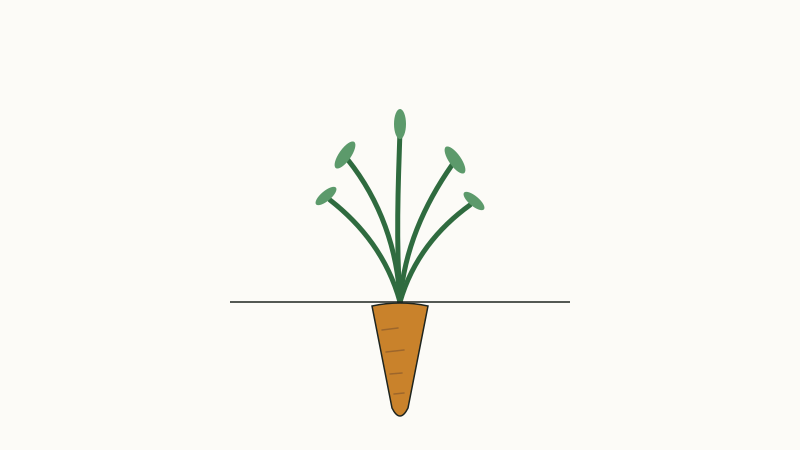
Carrots sown on April 20 with a listed maturity of 70 days have an estimated first harvest date of June 29. Root size and flavor should guide the final decision, and smaller roots may be harvested earlier.
Transplanted tomato
A tomato transplanted on May 10 with 75 days to maturity has an estimated first ripe date of July 24. Cool nights or transplant stress may push the first ripe fruit later.
Succession sowing
Lettuce sown every 14 days can be entered as separate calculations. The resulting dates show how repeated sowings may spread harvest rather than concentrating it in one week.
Common planning mistakes
Starting from the seed order date
Use the day the seed was sown or the transplant entered the garden, depending on the label. Purchase and delivery dates do not affect biological maturity.
Using a crop average instead of the variety
Cultivars are selected for different maturity times. Use the exact packet or label when possible.
Treating the date as a deadline
Plants respond to growing conditions, not a calendar alone. Start scouting near the estimate and use crop-specific maturity signs.
When this calculator may not be the right choice
Perennial fruit, overwintering crops, plants requiring accumulated chill, and crops modeled with growing degree days need more than a simple calendar-day calculation. This tool is best for annual vegetables, herbs, and flowers with a stated days-to-maturity value.
Frequently asked questions
Which date do I enter for a transplanted crop? Enter the date the transplant went into the garden, not the date you sowed it indoors or bought it. For transplants, use the days-to-maturity figure the packet lists from transplanting, which is shorter than the seed-to-harvest figure.
Why does the seed packet give a range of days? Days to maturity shifts with weather, soil temperature, and variety, so the range is honest uncertainty. Plan around the middle of it and expect cool, cloudy stretches to push the real date toward the long end.
What if my crop matures earlier or later than the estimate? That is normal. The date is a planning anchor for succession sowing and scheduling, not a deadline. Check the crop for ripeness signs in the week around the estimate rather than harvesting by the calendar alone.