What this moon-phase planting calendar shows
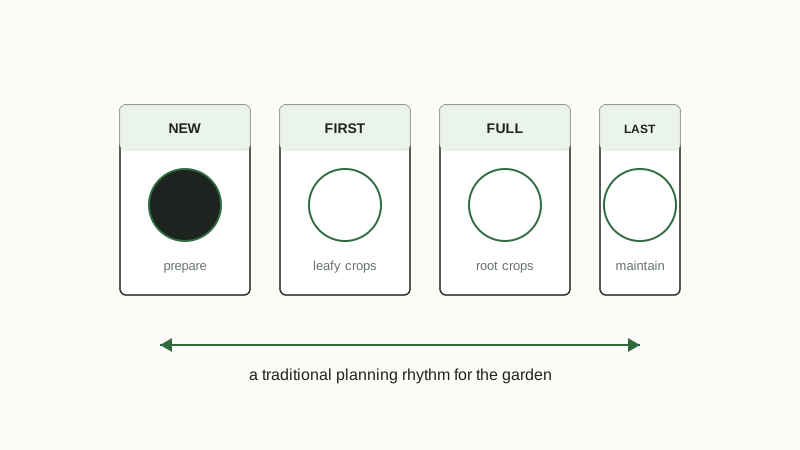
This tool lists the four main lunar phases for the year you choose: new moon, first quarter, full moon, and last quarter. It groups the phases into waxing and waning periods, then adds the garden tasks commonly associated with each tradition.
A waxing moon is traditionally associated with increasing above-ground growth. Many moon-gardening calendars therefore suggest leafy crops and other above-ground plants during the period from the new moon toward the full moon. A waning moon is traditionally associated with decreasing energy. These calendars often suggest root crops, pruning, weeding, and other maintenance during the period from the full moon toward the next new moon.
How to use the calendar
Choose the year you want to plan, then review the dates in order. Use the phase filters if you want to focus on waxing or waning recommendations. The PDF download and copy-link actions preserve the selected year so you can keep the calendar with your seed packets or garden notes.
The phase cards are planning prompts, not deadlines. A quarter moon or full moon does not make frozen, waterlogged, compacted, or unusually hot soil suitable for planting. Check your local frost dates, soil temperature, weather forecast, and the directions on the seed packet before you sow or transplant.
How the dates are calculated
The calendar uses a standard synodic month, the average interval between matching lunar phases, of about 29.53 days. It starts from a documented reference new moon and advances through the selected year in quarter-phase increments. The result is rounded to a calendar date.
This is a lightweight planning model. It does not calculate the moon's position above your horizon, moonrise or moonset, illumination percentage at a particular hour, or the exact local time of a phase. Those details can shift the date shown in a local time zone by part of a day.
What to plant during each phase
New moon and first quarter
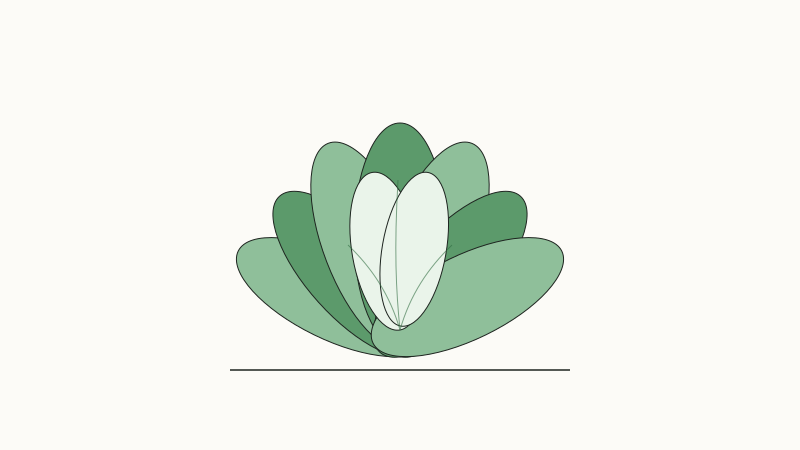
Traditional moon calendars often place leafy greens and above-ground crops in the waxing period. Depending on your climate and crop, that may include lettuce, spinach, kale, herbs, beans, and other plants whose harvest comes mainly from stems, leaves, flowers, or fruit.
Treat this as a way to organize a list of tasks, not as a substitute for crop timing. Lettuce may tolerate cool soil while beans need warmer conditions, even when both are assigned to a waxing phase.
Full moon and last quarter
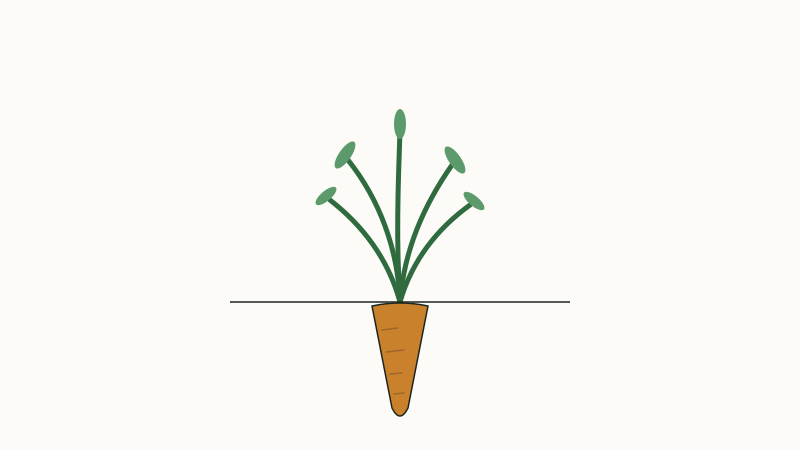
The waning period is commonly linked with root crops and garden maintenance. Gardeners may use it to schedule carrots, beets, radishes, and potatoes, or to weed, thin seedlings, prune, turn compost, and prepare beds.
The crop still needs suitable soil and weather. Root crops need loose soil, and pruning should follow the needs of the plant rather than a lunar date alone.
Is moon-phase gardening supported by science?
There is not good evidence that lunar phase alone reliably improves germination, growth, or harvest. The moon does affect tides and nighttime light, but those effects do not replace the much larger influences of temperature, water, light exposure, soil condition, variety, and pest pressure in an ordinary garden.
Use this calendar if the rhythm helps you remember tasks or makes planning enjoyable. For the best growing decisions, prioritize local frost information, soil temperature, daylight, moisture, and the growing guidance for the crop and variety.
Important limitations
The dates are approximate. They are not a live astronomical almanac and do not include a location-specific time zone. The planting suggestions describe a traditional practice and are not a guarantee of germination, growth, or yield. The tool also does not know your crop variety, hardiness zone, elevation, microclimate, or current weather.
For a climate-based spring schedule, use the vegetable planting calendar. It uses a median last spring freeze and crop-specific timing windows. For one crop's indoor sowing date, use the seed starting calculator.
Frequently asked questions
Which moon phase is best for planting?
Traditional calendars commonly associate waxing phases with above-ground crops and waning phases with root crops. There is no reliable scientific basis for treating one moon phase as universally best. Soil, temperature, moisture, light, and crop timing should guide the final decision.
Are the phase dates exact?
No. This tool gives approximate calendar dates from an average lunar cycle. It does not show the precise local time of each phase. Use an astronomical almanac when the exact time or location of a phase matters.
Can I use this calendar instead of a frost-date calendar?
No. Lunar phases do not tell you when your soil is warm enough or when frost danger has passed. Use local freeze data and crop-specific timing for planting dates, then use the moon calendar as an optional planning layer.