Houseplants
How do you grow a coffee plant at home?
By Tools for Gardeners · Last reviewed 2026-10-09
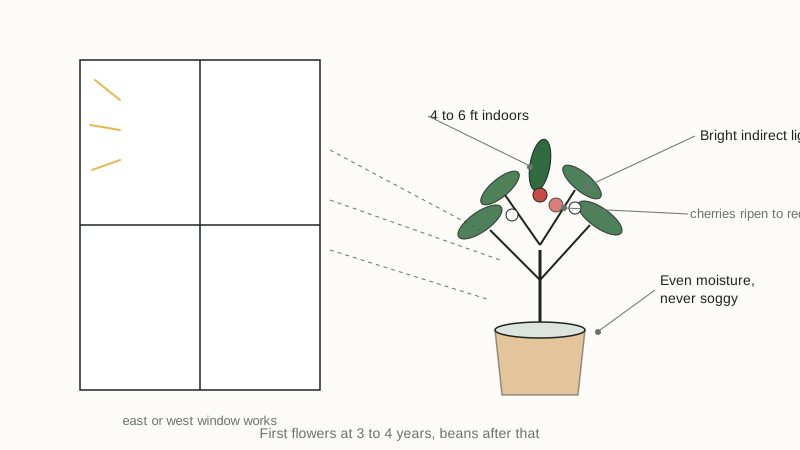
Grow Coffea arabica like a foliage houseplant: bright indirect light, soil kept consistently moist but never soggy, and humidity above what most living rooms offer in winter. It grows well indoors and typically reaches 4 to 6 feet, but expect three to four years before the first flowers, and any beans come after that.
The honest framing up front: this is a handsome, glossy-leaved shrub that happens to produce coffee, not a way to supply your kitchen. A healthy indoor plant may eventually set a small crop of cherries each year, which is enough for novelty, not for brewing habits.
What you are growing
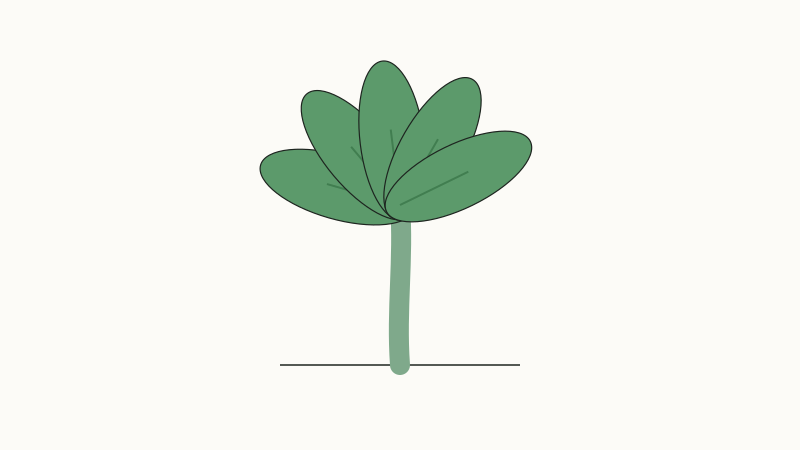
Coffea arabica is a tropical evergreen shrub or small tree native to Ethiopia, per the NC State Extension Plant Toolbox. Outdoors it is hardy only in zones 10 to 12, so everywhere else it lives as a houseplant or spends summers outside. Indoors it stays 4 to 6 feet tall with glossy, dark green, wavy-edged leaves.
The flowers matter more than most guides suggest: star-shaped white blooms with a scent compared to jasmine, appearing in late spring to early summer once the plant matures. The berries that follow ripen slowly from green to yellow to deep red, and each holds the two seeds that become coffee beans.
Light
Bright, indirect light is the sweet spot. An east window is ideal; a few feet back from a south or west window works. Both NC State and the Missouri Botanical Garden describe it as a filtered-sun or light-shade plant, since in nature it grows as an understory shrub. Direct afternoon sun through glass can scorch leaves; too little light gives you a leggy plant that will never flower.
If you summer it outdoors, park it in light shade or dappled sun, not full exposure, and bring it back inside well before cold nights. Your frost dates matter less than the 50°F line: this plant starts dropping leaves below about 55°F.
Water and humidity
Keep the soil consistently moist without letting it sit in water. NC State's phrasing, "consistently moist but not soggy," is the whole rule: water when the top inch of mix feels dry, then let the pot drain fully. A pot without a drainage hole will eventually sour the roots.
Humidity is where most homes fall short. Heated winter air causes brown leaf tips and leaf drop, the plant's signature complaint. A humidifier nearby, or grouping it with other plants, is the practical fix. Misting helps briefly but does not substitute for ambient humidity.
Temperature preference is 70 to 80°F days and 60 to 65°F nights, per both NC State and Missouri Botanical Garden. Normal home temperatures fit; keep it away from cold drafts, exterior doors, and heating vents.
Soil and repotting
Use a well-draining potting mix rich in organic matter; coffee prefers soil on the acidic side (NC State lists acid to neutral pH). A standard peat or bark-based houseplant mix is fine without amendments.
Repot in spring when roots fill the pot, moving up only 1 to 2 inches in diameter at a time. An oversized pot holds wet mix the roots cannot reach, which circles back to the soggy-soil problem. The potting mix calculator tells you how many quarts of mix the new container actually takes.
Feeding and pruning
Fertilize during the growing season, spring through early fall, with a balanced houseplant fertilizer at label rate every month or so. Skip winter feeding when growth slows.
Prune in early spring to keep the plant bushy and within bounds. Cutting back top growth does not hurt it; plantations keep coffee trees trimmed to about 6 feet for harvest, so an occasional hard shaping is well within what the species tolerates.
Flowers and beans, realistically
First flowers appear when the plant is about three to four years old, per both NC State and Missouri Botanical Garden. Arabica flowers are self-fertile, so a single indoor plant can set fruit without a pollinator or a second plant, though gently shaking a flowering branch helps.
The cherries ripen over many months, shifting green to yellow to deep red. Pick them fully red, squeeze out the two seeds, and dry them. From flower to dried bean on a houseplant is most of a year, and the final yield might fill an espresso cup or two. That is the reward: the process, not the supply.
Common problems
- Leaf drop. Usually cold: temperatures below about 55°F, a drafty sill, or a trip outdoors that ran too late.
- Brown leaf tips and edges. Dry air, most often in heated winter rooms, or irregular watering.
- Leggy growth, no flowers. Not enough light. Move it closer to the window or add a grow light.
- Sticky leaves or cottony tufts. Scale and mealybugs are its usual pests, along with spider mites in dry air, per NC State. Wipe leaves, isolate the plant, and treat with insecticidal soap.
Frequently asked questions
Can I grow a coffee plant from a bean? Not from a roasted or even raw green grocery bean; coffee seeds lose viability quickly and roasted beans will never sprout. Buy a nursery plant, or find fresh seed from a specialty supplier if you want to start from scratch. NC State lists seed as the recommended propagation route, but viable fresh seed is the catch.
How big will it get indoors? Four to six feet is typical for a container plant, per Missouri Botanical Garden. Spring pruning keeps it shorter and denser if the ceiling or the window disagrees.
Can it live outside year-round? Only in frost-free climates, roughly zones 10 to 12. Everywhere else it can summer outdoors in light shade and must come back inside before nights drop below about 50°F.
What to do next
Give it the brightest indirect spot you have, water when the top inch dries, and raise the humidity around it through winter. When it outgrows its pot in spring, the potting mix calculator sizes the refill. For a lower-maintenance companion on the same shelf, the air plant care guide covers a plant that skips soil entirely, and the banana page covers another tropical that tolerates indoor life.