soil
Drainage
Last reviewed 2026-10-04
Drainage is the movement of excess water through or away from soil. Good drainage does not mean soil dries instantly. It means the root zone can hold useful moisture while allowing air to return after irrigation or rain.
What it means
Drainage depends on texture, structure, compaction, slope, organic matter, container holes, and the water table. Sandy soil can drain rapidly but hold little water. Clay soil can drain slowly, especially when compacted. A raised bed can still have poor drainage if it sits over a dense layer.
How it affects the garden
Match plants to the site's moisture pattern. Improve structure over time, avoid working wet soil, and make sure containers have open drainage holes. Do not place a small plant in a very large pot of wet mix and assume extra volume solves the problem. Irrigation frequency must match the soil and weather.
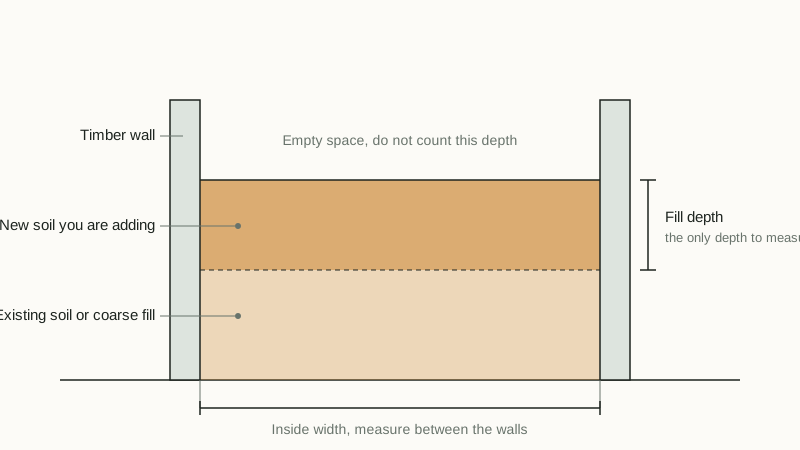
The potting mix calculator estimates volume, while the soil calculator estimates how much material is needed. Neither result alone diagnoses drainage.
Example
A container with a blocked drainage hole stays wet after several days without rain. Repotting into a suitable mix with an open hole addresses the cause more directly than adding more water between wilted periods.
Common confusion
Drainage is not the same as water retention. Healthy soil needs both movement of excess water and storage of enough moisture for roots.
Sources
University of Minnesota Extension explains how poor drainage and excess water damage container roots.