Houseplant growing guide
Aglaonema pictum tricolor
Aglaonema pictum 'Tricolor' · Araceae
Sun
Medium to bright indirect
Season
Year-round indoors
Maturity
Slow; several years to 2 ft
Water
Moderate
Soil pH
5.5 to 6.5
Spacing
Container; about 2 ft
By Dandre Noah
Planting aglaonema pictum tricolor
Treat this as a warm-room jungle plant, not the forgiving lobby chinese evergreen. Pot it in a loose, chunky mix that holds some moisture but drains freely; houseplant soil cut with orchid bark and perlite works well. It stays small, topping out around 2 feet over several years, and it likes being slightly pot-bound, so do not rush to repot: every two years in spring is about right, moving up just one size. Its non-negotiable demand is warmth, since it sulks below about 60 F and hates cold drafts, so keep it away from winter glass, exterior doors, and air conditioning vents. Bright filtered light keeps the tricolor pattern crisp.
Planting details
- Chunky, well-drained mix: potting soil plus bark and perlite
- Keep above about 60 F and out of drafts
- Likes to be slightly pot-bound; repot every 2 years
- Humidity around 60 percent keeps leaf edges clean
- Toxic if eaten and a skin irritant; keep from pets and kids
Growing requirements
Medium to bright indirect light is the sweet spot: direct sun scorches the variegated leaves, while a dim corner fades the contrast between the three greens and slows an already slow plant to a crawl. Keep the mix consistently and lightly moist rather than wet, watering when the top inch dries and always letting the excess drain away, because soggy mix rots the roots fast. Humidity around 60 percent prevents the brown crispy edges that mark dry air; a pebble tray or humidifier does more than misting. Feed lightly in spring and summer at half strength.
Harvesting and care
Do very little. Pull off yellowed leaves at the base once they release easily, wipe dust from the leaves so the pattern shows, and rotate the pot for even growth. Propagate in spring by dividing the clump at repotting or by rooting stem sections in moist mix. It rarely flowers indoors, and the spathe is not the attraction anyway. Watch for the usual aroid pests, mealybugs, spider mites, scale, and thrips, and quarantine new plants for a couple of weeks, since this is not a plant you want to lose to hitchhikers.
Common mistakes
- Letting it dry out completely like a snake plant; it wants a lightly moist mix
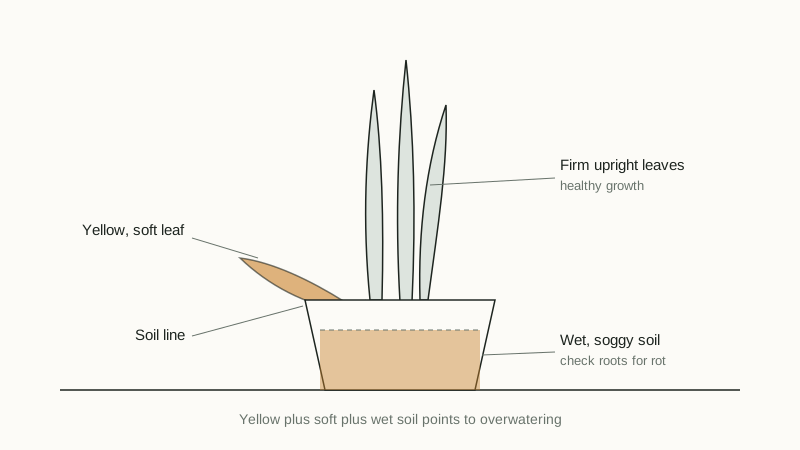
- Soggy soil with no drainage, which rots the roots
- Direct sun, which bleaches and burns the variegation
- Repotting yearly into bigger pots; it grows best snug
- Cold rooms or drafts below about 60 F, which stall and damage it
Companion plants
It sits naturally with the other humidity-loving aroids: monstera, prayer plant, and nerve plant share its warmth, moisture, and filtered-light needs, so grouping them builds a pocket of humid air that benefits all of them. Its cousin chinese evergreen tolerates the same conditions with far less fuss. Keep it away from the dry-rhythm succulents and from radiators and heating vents.
Frequently asked questions
Is aglaonema pictum tricolor hard to grow?
Easier than its price suggests. Warmth above 60 F, humidity near 60 percent, and a lightly moist chunky mix cover most of what it needs.
Why is my tricolor losing its pattern?
Too little light fades the contrast and too much bleaches it. Aim for bright filtered light a few feet back from a window.
Is it still a rare plant?
Much more available than it used to be thanks to tissue culture, though good specimens still cost more than common aglaonemas.
Is it the same as a chinese evergreen?
Different species. The common chinese evergreen is A. commutatum; pictum tricolor is a Sumatran species selection with camouflage variegation and fussier warmth needs.
Is it toxic?
Yes, like other aroids: irritating if chewed or eaten, and the sap can bother skin. Keep it away from pets and children.