Houseplant growing guide
Air plant
Tillandsia spp. · Bromeliaceae
Sun
Bright to direct
Season
Year-round indoors
Maturity
2 to 4 years to bloom
Water
Weekly soak
Soil pH
None (epiphyte)
Spacing
No pot; mount or bowl
By Dandre Noah
Planting air plant
There is no potting at all, which is the entire point. Air plants are epiphytes whose wiry roots exist only to anchor the plant, so display one wired or loosely glued to driftwood, cork bark, a rock, or a shell, or simply set it in an open bowl or terrarium with air movement. The roots never go in soil, and the plant never sits in standing water. Outdoors they live year-round only in the warmest parts of zones 9 to 12 depending on species; a frost kills them.
Planting details
- No soil: mount on wood, cork, or stone, or sit it in an open container
- Attach with wire or a dab of glue at the base; never cover the roots in mix
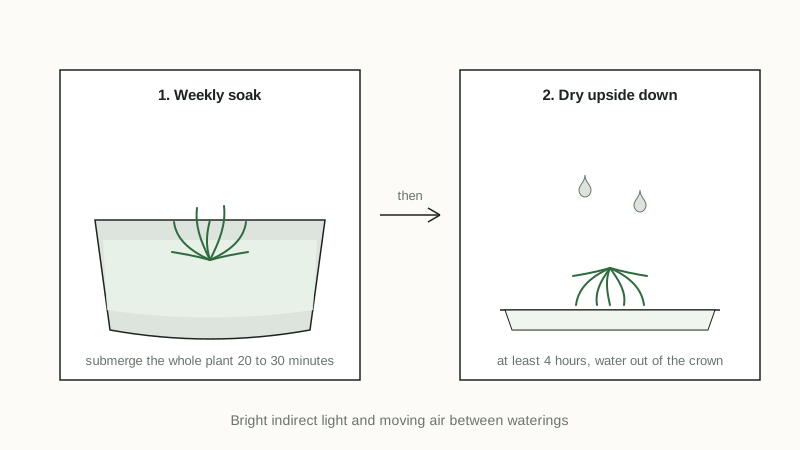
- Water by soaking the whole plant 20 to 30 minutes about once a week
- After soaking, shake off water and dry upside down so the crown does not rot
- Propagate by separating the pups that form after flowering
Growing requirements
Give an air plant the brightest window in the house: most species tolerate full sun in nature, so a sunny sill is not too much, and NC State Extension notes high light is what they need to flower. Water is absorbed through the silvery scale-covered leaves, not the roots, which is why soaking the whole plant works. A 20 to 30 minute soak weekly suits most homes, more often in hot dry conditions and less in humid ones, always followed by a shake and an upside-down dry so water never sits in the crown. Normal room temperatures suit them; bring outdoor plants in before any frost risk. Airflow matters as much as humidity, so skip sealed terrariums.
Harvesting and care
Misting alone rarely delivers enough water in a dry home; think of misting as a supplement to soaking, not a substitute. If leaf tips crisp, the plant is thirsty; if the base turns black and soft, water sat in the crown. Feed very lightly once a month in spring and summer by adding a quarter-strength bromeliad or air-plant fertilizer to the soak water. After blooming, which happens once in a lifetime, the mother slowly fades while producing pups at her base; separate them at half her size or leave them to grow into a clump.
Common mistakes
- Relying on misting alone in dry rooms, which slowly starves the plant of water
- Letting water sit in the crown after a soak, the main cause of rot
- Dim spots; low light is the top reason air plants never bloom
- Sealed terrariums with no air circulation
- Assuming air means no water at all; they cope with drought but need weekly soaking to thrive
Companion plants
Air plants are non-toxic to cats and dogs, and their soil-free habit makes them the cleanest choice for open displays pets can reach. They share bright humid spots with orchids and staghorn ferns, other epiphytes that also live on bark rather than in mix. Avoid tucking them into arrangements with thirsty rooted plants, where the watering schedules fight.
Varieties worth growing
- Tillandsia ionantha: small and popular; blushes red when it flowers
- Tillandsia xerographica: large silvery rosette; the most drought-tolerant common species
- Tillandsia usneoides (Spanish moss): hanging strands rather than a rosette
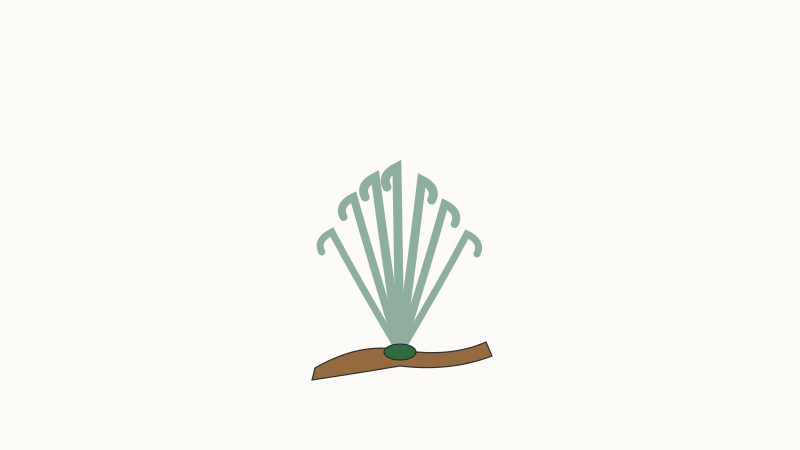
- Tillandsia caput-medusae: twisting snake-like leaves on a bulbous base
Frequently asked questions
Do air plants need soil?
No. They are epiphytes: the roots only anchor the plant, and water and nutrients come in through the leaves. Mount them or display them loose in a bowl.
How do I water an air plant?
Submerge the whole plant in water for 20 to 30 minutes about once a week, then shake it off and let it dry upside down. Increase frequency in hot, dry conditions.
Are air plants safe for pets?
Yes, Tillandsia species are non-toxic to cats and dogs, and their soil-free display habit makes them a clean choice within reach.
Will my air plant flower?
Once in its life, if it gets enough light. After blooming, the plant slowly declines while producing pups at the base, which become your next generation of plants.