Houseplant growing guide
Spider plant
Chlorophytum comosum · Asparagaceae
Sun
Medium indirect
Season
Year-round indoors
Maturity
2 to 5 years
Water
Moderate
Soil pH
6.0 to 7.0
Spacing
Container; 12 to 18 in
By Dandre Noah
Planting spider plant
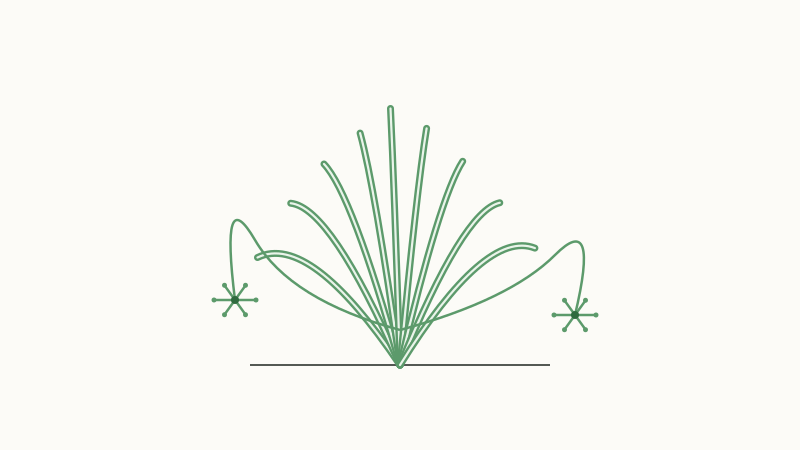
Spider plant goes into a standard houseplant mix in a pot with drainage holes, and a slightly snug pot encourages it to send out plantlets sooner. Pot or repot any time of year, though spring is fastest. Its thick, fleshy white roots are aggressive enough to crack a plastic pot or push the plant up out of the mix, which is your repotting signal. A hanging basket or a shelf edge shows off the arching leaves and gives the runners room to dangle. Outside, it survives only in zones 9 to 11.
Planting details
- Repot when fleshy roots crowd the pot or lift the plant, every 1 to 2 years
- Standard houseplant mix; drainage holes required
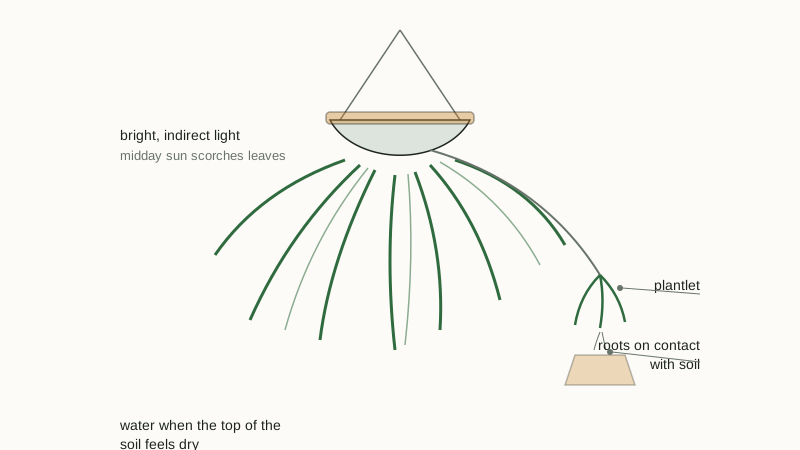
- Plantlets root in water or pinned onto moist mix while still attached
- Stolons form after a few weeks of short days under about 12 hours of light
- Outdoors year-round only in zones 9 to 11
Growing requirements
Medium to bright indirect light keeps the stripes bold and the plantlets coming; the plant tolerates shade but grows sparse and pale there, and direct sun scorches the leaves. Keep the mix evenly moist while it is growing, easing off in winter, though the fleshy roots forgive an occasional dry week. NC State Extension notes that chlorine and fluoride in tap water cause the classic brown tips, so rain water or distilled water is the fix when tips crisp despite good watering. Keep temperatures above about 50 F, hold fertilizer light, and give it average room humidity or a little more.
Harvesting and care
Trim brown tips off with clean scissors, cutting at an angle that follows the leaf shape rather than straight across. When runners appear, you can pin a plantlet onto a small pot of moist mix while it is still attached and snip it free once rooted, or drop it in a glass of water until roots reach an inch or two. Divide an overgrown clump at the roots in spring for instant full plants. Watch occasionally for scale and spider mites, the only pests that bother it much.
Common mistakes
- Direct sunlight, which bleaches and scorches the striped leaves
- Heavy feeding, which suppresses plantlet formation
- Blaming brown tips on thirst when the cause is fluoride or chlorine in tap water
- Letting the pot get so rootbound the plant stalls and the leaves go pale
- Overwatering through winter when growth slows
Companion plants
Spider plant is one of the few trailing houseplants listed as non-toxic to cats and dogs, which makes it the pet-safe answer to pothos on a high shelf. Cats still chew the leaves, reportedly attracted to a mild compound in them, so a hanging basket protects both parties. It pairs well with African violet and prayer plant, which like the same even moisture and indirect light.
Varieties worth growing
- Vittatum: green leaves with a wide cream stripe down the center; the most common form
- Variegatum: green leaves edged in white or cream margins
- Bonnie: leaves that curl and twist, good in small pots
- Hawaiian: variegated new leaves that fade to green with age
Frequently asked questions
Why are the tips of my spider plant turning brown?
Usually salts, chlorine, or fluoride in tap water, sometimes low humidity or a missed watering. Switch to rain or distilled water and trim the browned tips at an angle.
Is spider plant safe for cats?
Yes, it is listed as non-toxic to cats and dogs. Cats do like to chew it, so hanging it out of reach keeps the leaves intact.
Why won't my spider plant make babies?
It needs to be mature, a little pot-bound, and getting short days. Runners form after a few weeks of nights longer than about 12 hours, and heavy fertilizer suppresses them.
How do I root a spider plant baby?
Either pin the plantlet onto moist potting mix while it is still attached to the mother and sever it after rooting, or stand it in water until roots reach an inch or two and then pot it.