Tree growing guide
Amur maple
Acer tataricum subsp. ginnala · Sapindaceae
Sun
Full sun to part shade
Season
Deciduous tree
Maturity
15 to 20 ft at maturity
Water
Low to moderate
Soil pH
5.0 to 7.5
Spacing
15 to 20 ft
By Dandre Noah
Planting amur maple
Plant Amur maple in spring or fall in full sun to part shade. Native to northern Asia, it is one of the cold hardiest maples, technically hardy from zone 3 to 8 and at its best in zones 3 to 6, which is why it became a northern landscape staple for hedges, windbreaks, and small specimen trees. It adapts to almost any drained soil, shrugs off wind and drought, and transplants easily. Left alone it grows as a multi stemmed large shrub 15 to 20 feet tall and wide; pruned to a trunk it makes a tidy small patio or street tree. One honest caveat before planting: Amur maple self seeds so freely in parts of the Midwest and Northeast that several states list or regulate it as invasive, so check your state's status first and prefer a native alternative where it is a problem.
Planting details
- Mature size: 15 to 20 feet tall and wide, usually multi stemmed
- Hardiness: zones 3 to 8, best in 3 to 6; dislikes hot summers
- Fragrant creamy white flower clusters in spring, unusual among maples
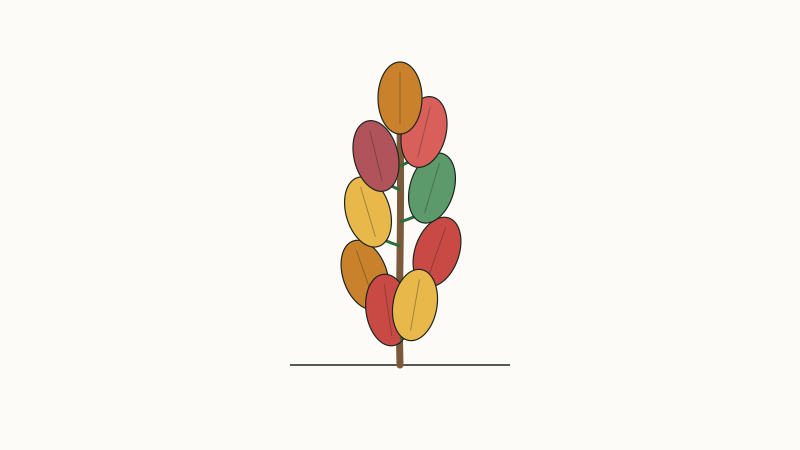
- Scarlet red fall color is the main selling point; samaras often turn red in summer
- Tolerates heavy pruning, hedging, containers, and even bonsai
Growing requirements
Amur maple asks for little: full sun to light shade and soil that drains. It tolerates a wide pH range, road salt, drought, dry soil, and wind, which made it a go-to for harsh northern sites and windbreaks. Its limits are heat and alkaline ground. South of about zone 6 it performs poorly in hot summers, and on heavy alkaline soil it develops the iron chlorosis typical of maples, with yellowing leaves and green veins. Water during establishment and dry spells; beyond that it is largely self sufficient. The creamy spring flowers are genuinely fragrant, a rare trait in a maple, and the paired samaras ripen to a showy red by late summer.
Harvesting and care
Maintenance is mostly shape management. To grow it as a tree rather than a shrub, select a single stem early and limb up gradually; otherwise it defaults to a dense multi stemmed mound. It takes heavy pruning well, which is why it works as a deciduous hedge or screen. Prune in late winter. Each spring, rake out or pull the seedlings it drops, because the samaras germinate eagerly in beds, cracks, and neighboring ground, and stay on top of volunteers before they root deeply. Serious pests are few; verticillium wilt and anthracnose occur occasionally, and iron chlorosis is the main issue on alkaline sites.
Common mistakes
- Planting it near natural areas or open woods where its seedlings invade
- Ignoring volunteer seedlings, which germinate everywhere and root fast
- Expecting a single trunk form without early training; it wants to be a shrub
- Alkaline soil, which brings on iron chlorosis and yellowing leaves
- Planting in hot climates; it is a northern tree and sulks south of zone 6
Companion plants
Where Amur maple is legally and ecologically acceptable, it works in utilitarian plantings: windbreaks, screens, and hedges with other cold tolerant species. Under its dense shade, little thrives, so give it a mulched ring rather than a planted border. In the eastern US, honestly, the better companionship question is what to plant instead: natives like serviceberry, American hornbeam, redbud, and red maple fill the same small tree niche without the invasive spread documented by Wisconsin and Minnesota. If you keep an existing Amur maple, controlling its seedlings is part of responsible ownership.
Varieties worth growing
- Embers: selected for brilliant red fall color and red fruit
- Flame: a large shrub form prized for intense scarlet autumn color
- Red Fruit: grown for the bright red samaras that color in summer
- Compactum: a smaller, denser form around 8 to 10 feet
Frequently asked questions
Is Amur maple invasive?
In parts of the US, yes. It is listed as invasive or regulated in several Midwestern and Northeastern states, where it escapes into prairies and wood edges. Check local rules before planting.
What is the difference between Acer ginnala and Acer tataricum?
Current taxonomy treats Amur maple as a subspecies, Acer tataricum subsp. ginnala. Older references and nurseries still use Acer ginnala.
What are good native alternatives to Amur maple?
Serviceberry, American hornbeam, red maple, and redbud offer similar size and fall color without the documented invasive spread in the eastern US.
Can Amur maple be kept small?
Yes. It tolerates hard pruning, hedging, and even container and bonsai culture better than most maples, which is one reason it persists in the trade.