Flower growing guide
Hardy begonia
Begonia grandis · Begoniaceae
Sun
Part to deep shade
Season
Perennial, blooms summer to frost
Maturity
1.5 to 3 ft
Water
Evenly moist
Soil pH
5.5 to 6.5
Spacing
12 to 18 in
By Dandre Noah
Planting hardy begonia
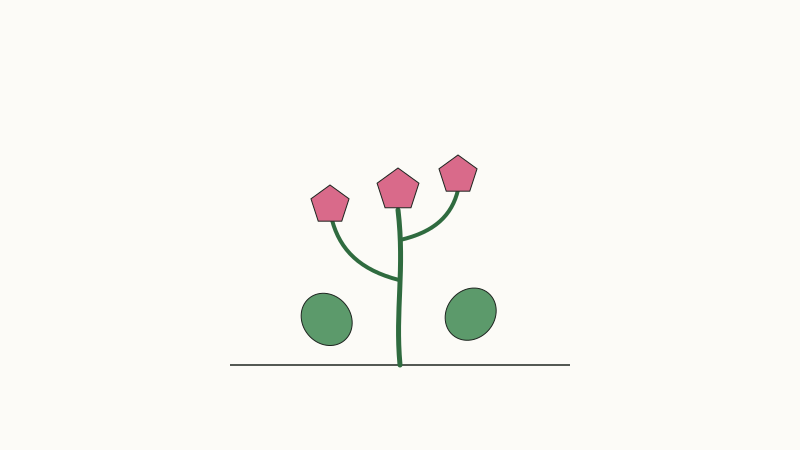
Plant tubers or nursery starts in spring in partial to deep shade with moist, humus-rich, well-drained soil, spaced 12 to 18 inches apart. This is the one begonia that survives real winters: the top dies back after frost and returns in late spring from the tuber, helped along by a cloud of self-sown bulbils. It is hardy in zones 6 to 9 but marginal at the cold end, so mulch the crown heavily in zones 6 and 7. Native to southern China and Japan, it forms a bushy mound of wing-shaped leaves with red undersides, then carries loose clusters of fragrant pink flowers from midsummer into fall, blooming when almost nothing else in the shade garden does.
Planting details
- Spacing: 12 to 18 inches
- Hardy in zones 6 to 9; mulch crowns heavily in zones 6 and 7
- Part shade to deep shade; one of the best bloomers for dark corners
- Spreads by pea-sized bulbils in the leaf axils; expect a colony in a few years
- Dies back after frost and emerges late; mark the spot so you do not dig through it
Growing requirements
Shade is the point: partial to deep shade, with afternoon sun guaranteed to scorch the thin leaves. It wants consistently moist, organically rich soil that still drains; never let the root zone dry out, but do not park it in a puddled hollow either, since the tuber rots in cold wet ground. Deep shade with thin dry soil is tolerated, which is exactly the spot where few other perennials bloom.
Harvesting and care
Deadhead spent clusters to stretch the bloom, which can run to frost. The interesting maintenance is the bulbils: as days shorten, pea-sized propagules form in the leaf axils, drop, and sprout the next spring, so a plant or two becomes a small colony in a few years. Transplant the extras or weed them out where they are not wanted. Seedlings vary; bulbil-grown plants are clones of the parent. Clean up the dead top after frost and renew the mulch in cold zones.
Common mistakes
- Afternoon or full sun, which scorches the thin leaves
- Letting the soil dry out, which stalls the plant mid-season
- Wet heavy soil over winter, which rots the tuber
- Digging up the bare spot in spring thinking it died; it emerges late, often May or June
- Skipping winter mulch in zone 6, where the crown can winter-kill
Companion plants
It is a natural companion for the classic shade perennials: hostas, ferns, and astilbe share its soil and light needs, and its late-summer pink bloom fills the gap after spring shade flowers finish. Plant it along shaded paths and woodland edges where its fragrance and late color actually get noticed. Like other begonias it contains oxalates, so site it away from pets that chew plants.
Varieties worth growing
- Begonia grandis: the species, pink flowers and red leaf undersides
- 'Alba': white-flowered form for a brighter look in deep shade
- subsp. evansiana: the form most often sold; the name may be on the label
Frequently asked questions
Is hardy begonia really winter hardy?
Yes, in zones 6 to 9. The top dies at frost but the tuber survives and resprouts. In zones 6 and 7 give the crown a heavy mulch, since hardiness is less certain there.
Why is my hardy begonia not coming up in spring?
It is one of the last perennials to emerge, often not until May or June. Give it time before assuming it died.
Will hardy begonia spread?
Yes, politely. Bulbils drop from the leaf axils each fall and sprout, naturalizing a colony over a few years. The extras lift easily if you want to move or remove them.
Can I grow hardy begonia as a houseplant?
It is a garden perennial, not a houseplant. For indoor begonias, look at the rex and cane types instead.