Fruit growing guide
Bing cherry
Prunus avium 'Bing' · Rosaceae
Sun
Full sun
Season
Deciduous; midseason harvest
Maturity
4 to 7 years to first fruit
Water
Moderate
Soil pH
6.0 to 7.5
Spacing
18 to 25 ft; 10 to 12 ft on dwarfing rootstock
By Dandre Noah
Planting bing cherry
Bing is the benchmark dark sweet cherry, a seedling of Black Republican raised in Oregon in 1875. Plant a dormant bare-root or potted tree in early spring, in full sun and well drained soil; sweet cherries will not tolerate wet feet, and NC State Extension lists that as a firm limit. Hardy in roughly zones 5 to 8. The non-negotiable detail: Bing is self-unfruitful, so it needs a second sweet cherry blooming at the same time within about 20 to 30 feet. Van, Rainier, or a self-fertile cultivar like Stella, Lapins, or Sweetheart all work as pollinizers.
Planting details
- Plant in early spring while dormant; full sun and sharp drainage are required
- Self-unfruitful: plant a compatible pollinizer (Stella, Van, Rainier, Lapins) within 20 to 30 ft
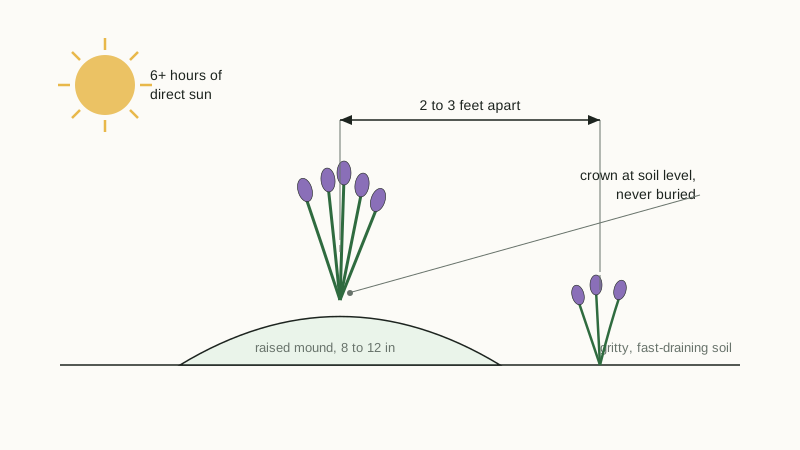
- Spacing: 18 to 25 ft for standard trees, 10 to 12 ft on dwarfing rootstock
- Sweet cherry does not tolerate waterlogged soil or high water tables
- Blooms early, so frost pockets and exposed cold sites cost you the crop
Growing requirements
Full sun and soil that drains quickly and stays moderately moist; NC State Extension is blunt that sweet cherry will not tolerate wet soils. Aim for pH around 6.0 to 7.5. Site on higher ground or a gentle slope, since Bing blooms early and late frosts damage buds and flowers. Washington State extension literature describes sweet cherry as more exacting than most fruit trees: winter cold below about -20 F injures the tree, and cool rainy weather during the week of bloom suppresses the bee activity the crop depends on.
Harvesting and care
Prune in late winter for structure, then again lightly after harvest; summer pruning is the safer window for pruning stone fruit prone to bacterial canker. Net the tree as fruit colors or birds will take the crop first, and pick when cherries turn deep mahogany with still-green stems. Watch for brown rot, bacterial canker, powdery mildew, and cherry fruit fly, and remove mummified fruit. A word on the pits: NC State notes that leaves, stems, and pits contain cyanogenic compounds, so pit cherries before running them through a blender or food mill.
Common mistakes
- Planting Bing alone; it is self-unfruitful and needs a pollinizer blooming at the same time
- Siting in wet or poorly drained soil, which sweet cherry will not tolerate
- Choosing a frost pocket; early bloom makes buds an easy kill
- Letting birds strip the crop before it fully colors
- Expecting fruit the first couple of years; grafted trees typically bear in 4 to 7 years
Companion plants
An orchard partner is not optional: another sweet cherry with overlapping bloom is the companion that matters most. Beneath the canopy, shallow rooted companions like chives and other alliums do fine, and comfrey or low clover suits the tree's appetite for bees. Keep the root zone clear of aggressive grass and avoid planting where a late frost settles, on low ground or against north facing walls.
Varieties worth growing
- Stella: self-fertile dark cherry; the classic pollinizer that needs no partner itself
- Lapins: self-fertile and late ripening; extends the season past Bing
- Rainier: the premium blush cherry; needs a pollinizer but blooms alongside Bing
- Van: traditional Bing pollinizer with heavy crops of dark fruit; needs its own partner
- Sweetheart: self-fertile, latest ripening of the group
Frequently asked questions
Does a Bing cherry tree need a pollinator?
Yes. Bing is self-unfruitful, so it needs a second sweet cherry cultivar that blooms at the same time planted within about 20 to 30 feet. Self-fertile types like Stella, Lapins, and Sweetheart are universal donors and work well; so do Van and Rainier.
How long until a Bing cherry tree fruits?
Grafted trees typically bear their first real crop in 4 to 7 years, with full production coming later. Dwarfing rootstocks often fruit a little sooner and keep the tree at 10 to 12 feet.
Why does my Bing tree flower but not set fruit?
The usual suspects are a missing or incompatible pollinizer, a spring frost that killed the bloom, or cold rainy weather during flowering that kept bees inside. Tiny, undersized fruit on an otherwise healthy tree is a classic sign of poor pollination.
Where does Bing cherry grow best?
Sweet cherry is hardy in roughly zones 5 to 8 but is pickier than that range suggests. It wants cold winters for chilling, dry summers to limit cracking and brown rot, and freedom from late spring frost, which is why the Pacific Northwest and similar climates produce it best.