Houseplant growing guide
Butterwort
Pinguicula spp. · Lentibulariaceae
Sun
Bright to full
Season
Warm
Maturity
1 to 2 years
Water
High
Soil pH
5.0 to 6.0
Spacing
4 to 6 in
Planting butterwort
The butterworts sold for windowsills are mostly Mexican species like Pinguicula moranensis and their hybrids, and they pot into an open, mineral-lean mix: equal parts peat, sand, and perlite or vermiculite, or straight long-fiber sphagnum, in a plastic or glazed pot with drainage holes. Terracotta wicks moisture away too fast. Set the pot in a bright spot and stand it in a tray of rain or distilled water, refilling the tray rather than wetting the sticky leaves. The temperate butterworts native to the Southeast are a different animal, bog plants for sunny wet ground that need a cold dormant winter.
Planting details
- Mix: peat with sand and perlite, or sphagnum; no fertilizer-rich soil
- Water: rain or distilled only, delivered from a tray, never overhead
- Plastic or glazed pots; porous terracotta dries the mix too fast
- Mexican types live on a bright windowsill; native species want bog conditions
- Dormancy is normal; many species rest or grow non-sticky winter leaves
- Keep it near other houseplants to intercept fungus gnats
Growing requirements
Bright light, including some direct sun, keeps the rosette compact and the leaves glistening with mucilage. The water rule matches every carnivore: rain or distilled only, since minerals in tap and well water burn the roots. Keep the mix consistently moist from a water tray, and give the plant humidity it can use rather than mist that sits on the leaves. No fertilizer, ever; the insects it catches are the feeding. Indoors it does real work, quietly clearing fungus gnats out of a houseplant collection.
Harvesting and care
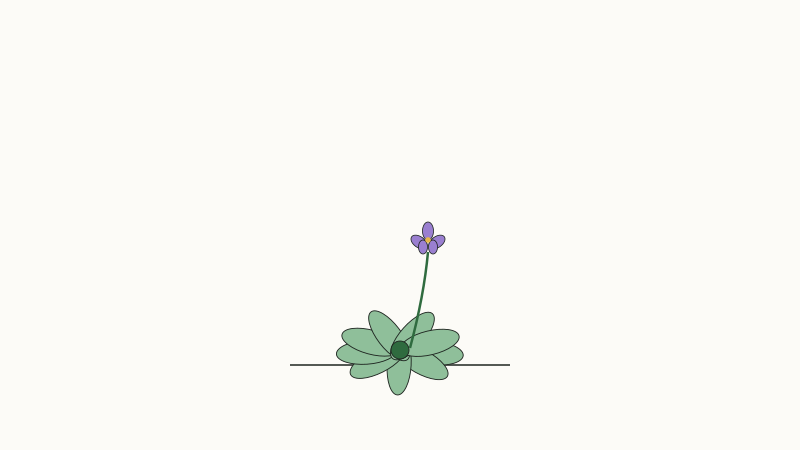
Trim off winter-killed or browned leaves in early spring before new growth, and the rosette refreshes itself. Flowers rise on slim stalks, mostly purple or pink, and some Mexican types bloom almost year-round. Many species shift into a non-carnivorous succulent winter rosette, which looks alarming the first time and is perfectly normal; keep the plant slightly drier through that rest. Leaf pullings pressed into damp mix root readily, so one plant becomes a colony in a season or two.
Common mistakes
- Tap or well water, whose dissolved minerals burn the roots
- Watering overhead onto the sticky leaves, which invites rot and ruins the glue
- Fertilizing; carnivorous plants need lean conditions
- Terracotta pots that wick the mix dry between waterings
- Expecting identical growth year-round; many species rest in winter
Companion plants
Butterworts belong with the other carnivores that share their water and soil rules: pitcher plants and sundews in a bog tray, or a dish garden of Mexican pings for the windowsill. In a mixed houseplant collection they work best in their own pot, since the water tray and pure-water rules do not match ordinary houseplant care.
Varieties worth growing
- Pinguicula moranensis: the standard windowsill butterwort; flowers nearly year-round
- Pinguicula gigantea: giant Mexican species with leaves the size of a hand
- Pinguicula Sethos: vigorous hybrid; a forgiving first butterwort
- Native butterworts: P. lutea and relatives; bog plants for sunny wet ground in the Southeast
Frequently asked questions
Do butterworts really kill fungus gnats?
Yes, and that is the main reason to grow one. The sticky leaves trap small flying insects; larger pollinators like bumblebees are too big to be caught.
Why is a leaf curling over?
That is the trap working. When an insect is caught, the leaf edge slowly rolls to digest it, then unfolds again over days.
Do I need to feed it insects?
No. Left alone it catches what it needs; a household fungus-gnat problem is a buffet.
Can butterworts grow outside?
Native and temperate species can, in boggy sunny ground roughly zones 7 to 10. The Mexican types sold as houseplants belong indoors.