Herb growing guide
Sage
Salvia officinalis · Lamiaceae
Sun
Full sun
Season
Warm
Maturity
70 to 80 days
Water
Low
Soil pH
6.0 to 7.0
Spacing
18 to 24 in
By Dandre Noah
Planting sage
Start seed indoors 6 to 8 weeks before the last frost, set out nursery starts around the last frost date or just after, or sow directly into warming soil once frost has passed. Germination is slow and uneven, so a start or a rooted cutting saves weeks on a first plant. Sage is perennial in roughly zone 4 or 5 and warmer, but cold is rarely what kills it. Wet winter ground is. On heavy soil, plant in a raised bed or on a mound so the crown stays dry, and in hot, humid climates treat it as the short-lived perennial it is.
Planting details
- Start indoors: 6 to 8 weeks before the last frost
- Transplant: around the last frost date or a week or two after
- Direct sow: after frost, into warm soil
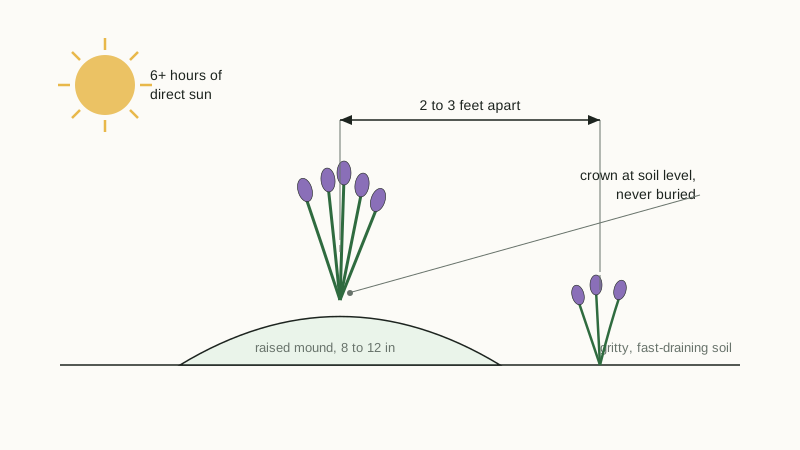
- Spacing: 18 to 24 inches; plants spread wider than tall with age
- Seed depth: about 1/8 to 1/4 inch
Growing requirements
Full sun and well-drained, average soil. Sage tolerates drought and poor ground but not wet feet, and it fails fastest in rich, moisture-holding beds. Keep fertility modest, since heavy feeding pushes soft, sprawling growth with diluted flavor. Good drainage and air circulation are the real defenses against the root rot, powdery mildew, and wilt that take sage out, so give plants their full spacing rather than letting them crowd into a damp thicket.
Harvesting and care
Harvest leaves anytime, lightly the first year while the plant establishes, then take no more than a third of the growth at once. Cut back after the early summer flower spike for a fresh flush of leaves, but leave the plant alone in fall so it enters winter strong. Prune in spring once new growth shows, shaping only into green wood, since old bare stems seldom resprout. Plan to replant every 4 to 5 years as the center goes woody and bare.
Common mistakes
- Wet soil, especially over winter, which rots the crown and roots
- Pruning hard in fall, which weakens the plant right before cold weather
- Cutting into bare woody stems in spring, which seldom regrow
- Harvesting heavily in the first year before the plant is established
- Keeping plants too long; sage is naturally short-lived and wants replacing every few years
- Rich, heavily fed soil, which produces lush growth with weak flavor
Companion plants
Sage pairs naturally with the other dry-soil Mediterranean herbs, rosemary, thyme, and oregano, which want the same lean conditions. Its early summer flower spikes feed bees for weeks, and in vegetable beds it sits well near cabbage-family crops. Keep it out of heavily watered rows and away from basil, whose thirst clashes with sage's needs.
Varieties worth growing
- Common sage: the cooking standard with gray-green, pebbly leaves
- Berggarten: broad silvery leaves on a compact mound that rarely flowers; milder flavor
- Purpurascens: purple-tinted leaves for cooking; less winter hardy than the species
- Tricolor: green leaves edged in cream and pink; ornamental and tender in cold climates
Frequently asked questions
Why did my sage die over winter?
Wet ground, not cold, is the usual cause. Sage is hardy to about zone 4 or 5 but rots in soil that stays saturated through winter, so raised beds and slopes are the fix.
When should I replace a sage plant?
Every 4 to 5 years, or sooner in hot, humid climates where sage runs short-lived. Once the center goes bare and woody, a new plant or a rooted cutting outproduces it.
Should sage be pruned in fall?
No. Prune in spring after new growth starts, shaping only into green wood. Bare stems rarely resprout, and fall cuts leave the plant weakened going into winter.
Is sage worth growing from seed?
Yes for common garden sage, though germination is slow. For colored-leaf cultivars like Tricolor, buy plants or take cuttings so the foliage comes true.
Sources
- NC State Extension Gardener Plant Toolbox, Salvia officinalis
- University of Illinois Extension, growing holiday herbs indoors
- Mississippi State University Extension, herb gardens
- Iowa State University Extension seed germination requirements
- Utah State University Extension vegetable planting groups
- University of Maryland Extension fall vegetable gardening
- University of Minnesota Extension vegetable garden planting