Houseplant growing guide
Yucca
Yucca gigantea · Asparagaceae
Sun
Full sun
Season
Year-round indoors
Maturity
5 to 10 years
Water
Low
Soil pH
6.0 to 7.5
Spacing
2 to 3 ft
By Dandre Noah
Planting yucca
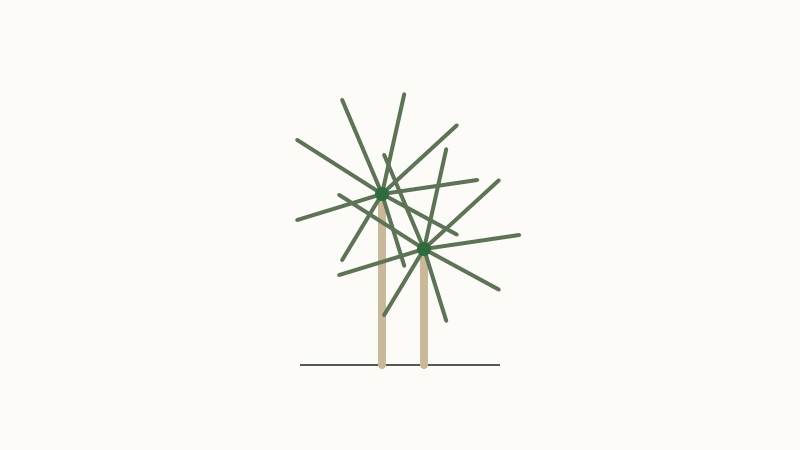
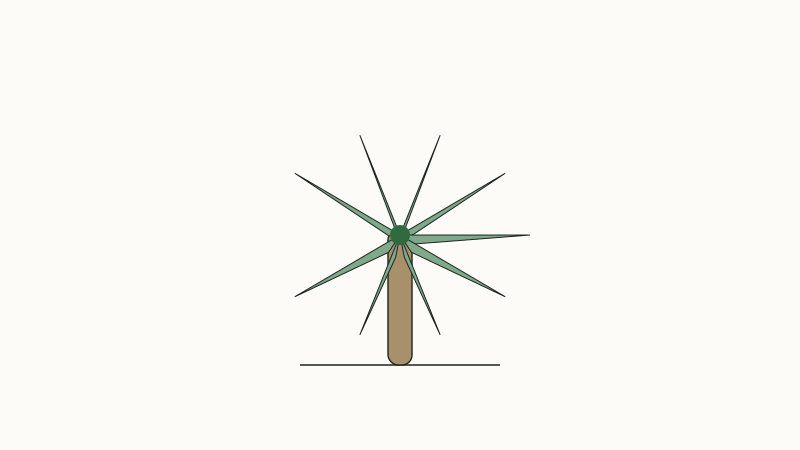
Spineless yucca, Yucca gigantea, still widely sold under its old name Yucca elephantipes, comes from the nursery as one or more woody cane sections, each crowned with a rosette of sword leaves. Pot it in a gritty mix, roughly one part potting soil to three parts perlite or coarse sand, and give it the sunniest window you have. It is a genuine desert-side plant, so err on the side of dry: water deeply, then let the mix dry out completely. Indoors it grows year-round and slowly; outdoors it is hardy in zones 10 to 12, where it can reach 15 to 30 feet.
Planting details
- Pot in a gritty mix of one part potting soil to three parts perlite or sand
- Nursery plants are cane sections; new plants come from cane cuttings or basal suckers
- Give it the sunniest spot available; low light produces weak, floppy leaves
- Water deeply, then let the mix dry fully; the plant stores water in its trunk
- Hardy outdoors in zones 10 to 12 in full sun; bring in before temperatures fall below 50 F
Growing requirements
Full sun to very bright light is what separates a sturdy yucca from a floppy one; a south or west window with direct sun is ideal. Drought tolerance is its other defining trait: the thick trunk stores water, so deep, infrequent watering beats frequent sips, and wet mix is the fastest way to kill it. Normal indoor temperatures and humidity suit it fine, though it dislikes cold drafts and sudden temperature swings. Feeding is a light hand: a diluted fertilizer a few times in the growing season at most.
Harvesting and care
Dead lower leaves pull off the cane easily once they dry, or snip them for a cleaner trunk. An overgrown cane can be cut at any height in spring: the stump resprouts below the cut, and the removed top roots in dry mix after the cut end calluses, which makes pruning essentially free propagation. Outdoors, mature plants send up a stalk of creamy white bell flowers in summer, a show indoor plants essentially never give. Root rot from wet mix is the one real killer; a wrinkled cane that firms up after watering is just thirst. Caution: the leaves and roots contain saponins toxic to cats and dogs, and while the leaf tips are soft by yucca standards, they are still pointed enough to warrant a spot out of traffic.
Common mistakes
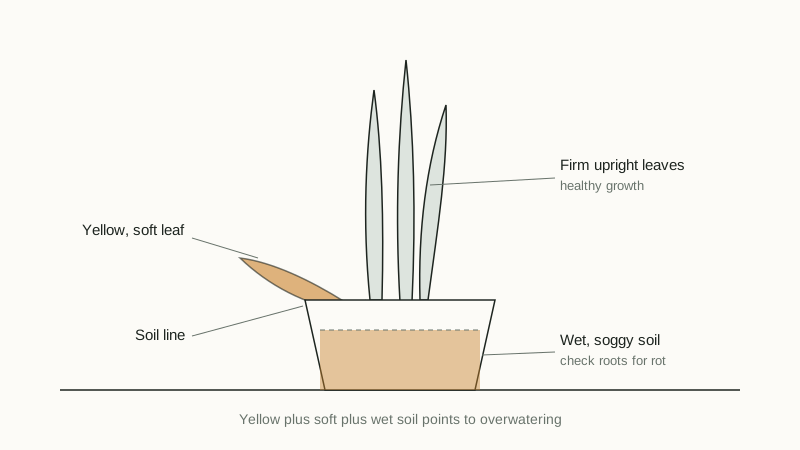
- Overwatering, which rots the cane and roots faster than any other error
- Low light, which produces stretched, floppy leaves and weak canes
- Rich, heavy soil that holds water against the roots
- Placing it where the pointed leaf tips snag passersby
- Confusing it with yuca, the edible cassava, which is a completely different plant
Companion plants
Yucca belongs on the sun porch with other heat-and-light lovers like croton and jade plant, which share its lean-water routine and tolerance for direct sun. In a bright room its stiff silhouette contrasts well with the thinner canes of dracaena marginata, which tolerates the same dry footing with less sun. Group it away from pet paths: it is one of the toxic plants in this collection, and the pointed leaves also deserve a corner where people do not brush past.
Varieties worth growing
- Variegata: soft-tipped leaves striped broadly in cream; needs the same full sun
- Marginata: pale green leaves with a narrow cream edge
Frequently asked questions
Is yucca safe for cats and dogs?
No. NC State Extension reports the leaves and roots contain saponins that are toxic to cats, dogs, and horses, causing vomiting if chewed. Keep it out of pet reach.
Is this the same plant as yuca or cassava?
No. Yucca gigantea is an ornamental asparagus relative. Yuca, the edible cassava root, is Manihot esculenta; the similar names cause constant mix-ups.
Will a yucca flower indoors?
Almost never. The creamy bell flowers on tall stalks appear on large outdoor plants in summer; indoor plants are grown for the foliage and cane form.
Why are the leaves going floppy?
Not enough light. Yucca holds its stiff, upright leaf posture only in strong sun; in dim rooms the new growth comes in soft and arching.