Fruit
How do you grow strawberries at home?
By Dandre Noah · Last reviewed 2026-11-17
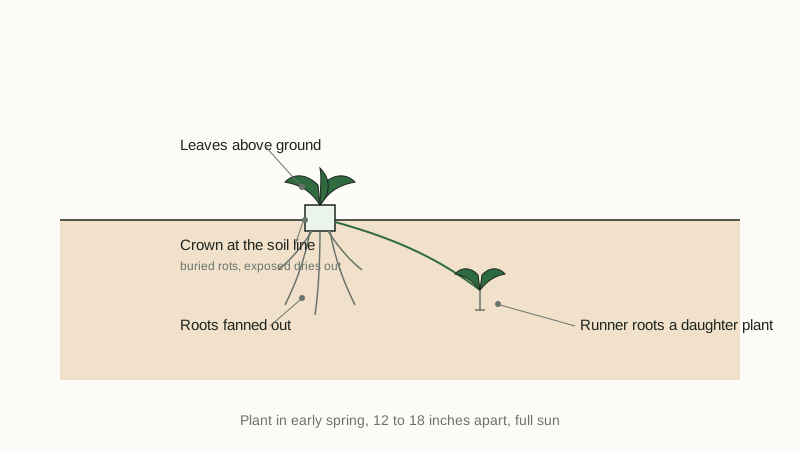
Plant strawberries in early spring as soon as the soil can be worked. Set the crown right at the soil line, space plants 12 to 18 inches apart in full sun, and pinch the first season's flowers on June-bearing types so roots establish first.
The first decision is the type, because it decides your harvest pattern: one concentrated June crop, two smaller crops, or steady picking all season. After that, success comes down to getting the crown depth right, managing runners, and keeping mulch under the fruit.
Pick a type first
| Type | Harvest pattern | Best for |
|---|---|---|
| June-bearing | One large crop over about 3 weeks in late spring to early summer | Jam, freezing, biggest total yield |
| Everbearing | A spring crop plus a lighter late-summer or fall crop | Two picking windows |
| Day-neutral | Small flushes continuously through the season | Steady fresh eating, containers |
Per University of Maryland Extension, June-bearing types fruit in May and June and are the most commonly grown, while day-neutral types flower over a longer season with peaks in spring and again in late summer or fall. Everbearing sits between the two: a spring crop, then a smaller second crop. Day-neutrals make few runners, which is why they suit pots and tidy beds, while June-bearers throw runners freely and suit a matted row.
One trade-off to know: a June-bearing bed gives you no fruit the first year because the first-season flowers get removed. Day-neutral plants can fruit in their first summer.
When and how to plant
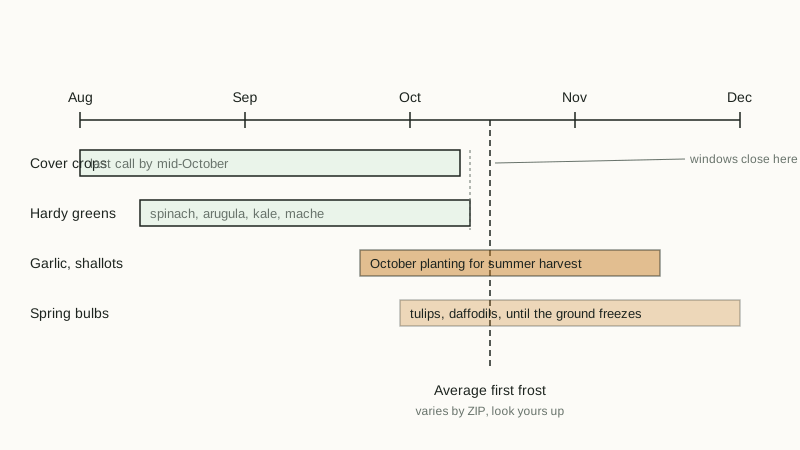
Plant in early spring, roughly March through May depending on your region, as soon as the ground is workable. Bare-root bundles are the usual way to buy them; University of Maryland Extension suggests ordering in January for early-spring delivery.
The planting step that kills the most strawberries is crown depth:
- Trim long roots to about 4 to 6 inches and spread them out in the hole.
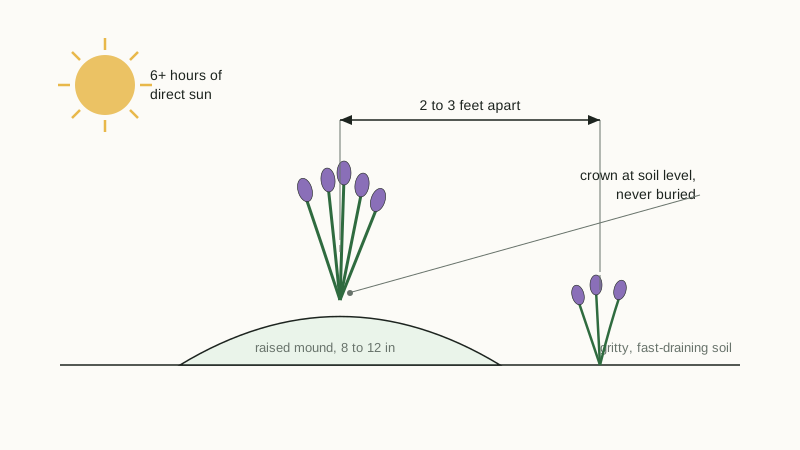
- Set the plant so the crown (the compressed stem where leaves and roots meet) sits right at the soil surface: roots buried, crown exposed. Maryland's guidance is about half the crown below the soil line.
- Buried crowns rot. Crowns set too high dry out and the plant stalls.
- Firm the soil, water in, and space plants 12 to 18 inches apart with 3 to 4 feet between rows if you want room to pick.
Choose a site in full sun, at least 6 to 8 hours. Strawberries have shallow, fibrous roots and resent both drought and soggy ground; on heavy soil, a raised bed at least 12 inches deep solves the drainage problem. Skip ground that recently held tomatoes, potatoes, or peppers, since it can carry verticillium wilt.
The first-year rules
For June-bearing types, remove every flower for the first season. It feels wrong, but University of Maryland Extension is direct about it: pinching the flowers sends the plant's energy into roots and runner daughters, which is where next year's crop comes from. For day-neutral and everbearing types, remove flowers for only the first few weeks, then let the plants fruit later that summer.
Keep new plants watered through their first season: the shallow root system dries out fast. Feed lightly at planting, then again in midsummer for day-neutrals or right after harvest for June-bearers.
Runners are the renewal system, until they are not
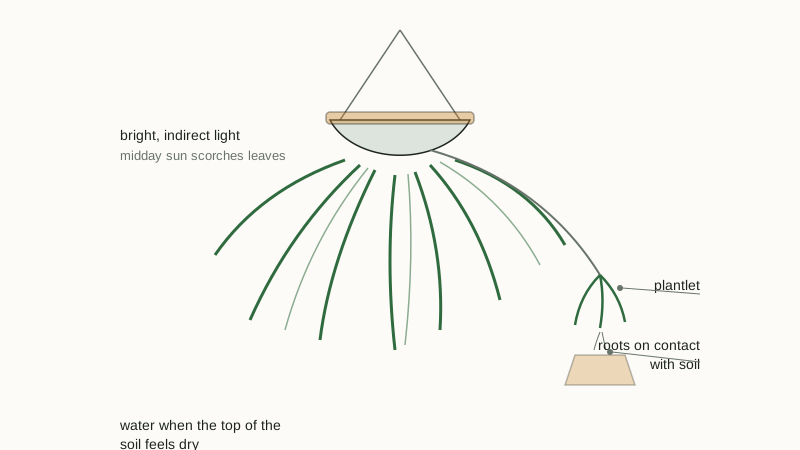
Strawberries propagate themselves: runners (stolons) grow from the mother plant and root daughter plants where they touch soil. A bed uses that on purpose. Let June-bearing runners fill in a matted row about 18 inches wide, then cut every runner beyond that or the bed becomes an unproductive tangle.
Each year after harvest, thin the oldest plants and keep the strongest daughters. Beds produce well for about 3 to 4 years before yields drop and disease builds up; at that point, start a new bed in fresh ground rather than nursing the old one.
Mulch, water, and the fruit itself
Mulch does three jobs: it keeps berries off damp soil (the main cause of rot), suppresses weeds that compete with shallow roots, and insulates crowns over winter. Straw is the traditional choice, applied after the ground cools in late fall in cold zones and pulled back from the crowns in spring. The mulch calculator sizes how much a bed takes.
Harvest when berries are fully red; they color up a bit more after picking but will not sweeten. Expect fruit roughly 5 weeks after bloom, over a 3-week window for June-bearers.
The problems worth expecting
Strawberries are largely pest-light, but three problems show up in most gardens:
- Birds and squirrels. They find ripe berries before you do. Netting draped over hoops at first ripening is the reliable fix; scare tactics wear off in days.
- Gray mold (botrytis). Berries rotting on the plant, especially in wet weather. Mulch under the fruit, space for airflow, and pick ripe berries promptly rather than letting them sit.
- Frosted flowers. Open blossoms are the most frost-vulnerable stage. A late frost on flowering June-bearers can erase most of that year's crop; row cover on forecasted cold nights protects the bloom. Day-neutral and everbearing types hedge this by flowering again.
Frequently asked questions
Can I grow strawberries in pots? Yes, and day-neutral types are the best pick because they stay compact and fruit the first season. Use a container at least 12 inches deep, water daily in summer heat, and plan to refresh the plants every couple of years.
How long until I get fruit? Day-neutral and everbearing plants can produce in their first summer. June-bearing plants give their real crop in year two, after a first season spent building roots and daughters.
Why are my berries small and misshapen? The usual causes are poor pollination (the seeds on the berry surface each need a bee visit), frost-damaged flowers, or an aging bed that needs renovation.
What to do next
Order bare-root plants in winter for spring delivery, and mark your planting window on the planting calendar once your last frost date is set. The strawberry page summarizes spacing and care, and the lettuce page covers a crop that grows politely between strawberry rows while the bed fills in.