plant biology
Companion planting
Last reviewed 2026-10-04
Companion planting means growing two or more plant types near one another for a stated garden purpose, such as using space efficiently, providing habitat, or matching crops with different harvest times. The term is also used for claims about pest control or improved growth, but many popular pairing charts are anecdotal rather than universal rules.
What it means
A useful companion relationship needs a mechanism and a context. A flowering plant may provide food for pollinators, a tall crop may change light for a shorter crop, and a fast crop may be harvested before a slow crop fills the bed. Other claimed benefits vary by species, pest pressure, weather, and layout.
How it affects the garden
Start with spacing, light, water, and timing. Do not crowd plants simply because a chart lists them as companions. Use the companion planting checker to compare practical compatibility, then plan the physical layout with the plant spacing calculator. Monitor the garden instead of assuming a pairing prevents pests or disease.
Example
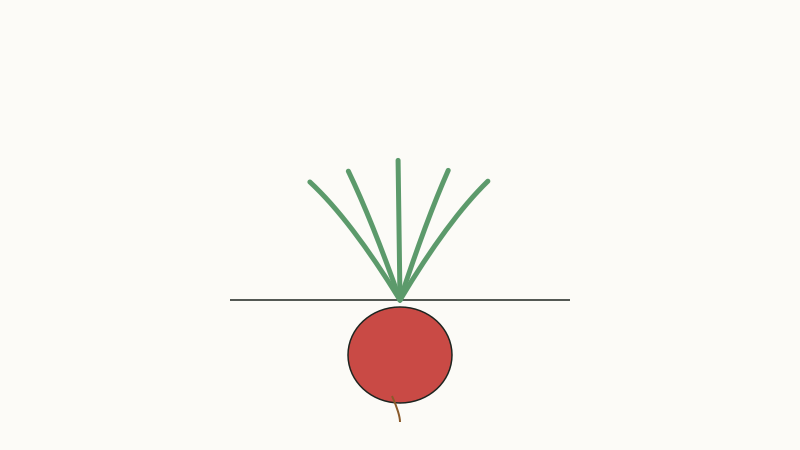
Radishes can mature before a slower crop needs the full bed, making them a practical time-based companion in some layouts. That benefit comes from different maturity speeds, not a guaranteed chemical effect between the plants.
Common confusion
Companion planting is not the same as intercropping, although the practices can overlap. It also does not mean every traditional pairing has been proven under every garden condition.
Sources
Washington State University Extension reviews evidence and cautions around companion planting claims.