Vegetable growing guide
Broccoli
Brassica oleracea var. italica · Brassicaceae
Sun
Full sun
Season
Cool
Maturity
60 to 100 days
Water
Moderate
Soil pH
6.0 to 7.0
Spacing
18 to 24 in
By Dandre Noah
Planting broccoli
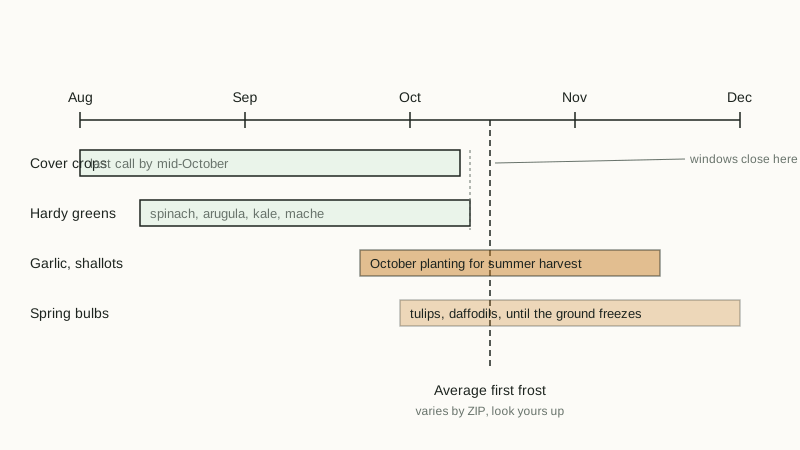
Broccoli heads best when it grows in cool weather, so the timing work is getting it established before heat and again before frost. For a spring crop, start indoors 6 to 8 weeks before the last frost and set out sturdy seedlings 2 to 3 weeks before that date, since broccoli tolerates a light freeze once hardened off. In zones 7 and colder, direct sowing is unreliable because spring warms too fast for heads to size up. For a fall crop, sow or transplant in mid to late summer so heads form as nights cool. Fall is often the easier of the two windows in warm climates.
Planting details
- Start indoors: 6 to 8 weeks before the last frost for spring
- Transplant out: 2 to 3 weeks before the last frost, hardened off
- Spacing: 18 to 24 inches; tight spacing gives smaller side shoots later
- Seed depth: about 1/4 to 1/2 inch
- Fall crop: sow or transplant in mid to late summer, counting back from first frost
Growing requirements
Broccoli needs full sun, fertile soil around pH 6.0 to 7.0, and very steady moisture while heads form. Heads develop tightest as temperatures drop, which is why spring crops in hot climates often bolt or flower loose before they size up. Side dress with a balanced fertilizer once heads button, or grow in soil enriched with compost at planting. Clubroot is a problem on acidic or poorly drained ground, so liming to the upper end of the pH range and rotating beds every few years pays off.
Harvesting and care
Cut the central head while the buds are still tight and dark, a few days before it looks perfectly finished, since heads open into yellow flowers fast once they start to loosen. Leave the plant in place after the main cut and it pushes smaller side shoots for weeks; that second harvest is usually worth more than the first. In cold climates, plants often keep producing light shoots under row cover after frost, and a few hard freezes actually improve flavor.
Common mistakes
- Waiting for a bigger head until the buds loosen and open into flowers
- Transplanting too late in spring, which forces heads to form in heat
- Ignoring small green worms, which can skeletonize plants quickly
- Pulling the whole plant after the first cut, which loses the side-shoot harvest
- Skipping row cover on young plants, since cabbage worms find them early
Companion plants
Beets, onions, lettuce, and dill fit well around broccoli because none of them compete for the same light or nutrient timing. Keep broccoli clear of tomatoes and other tall, heavy feeders that crowd its light, and rotate the bed yearly since clubroot and other brassica diseases linger in soil for years.
Varieties worth growing
- Calabrese: the classic heirloom type; dependable heads and good side shoots
- Waltham 29: cold-hardy open-pollinated strain for fall crops
- De Cicco: early Italian type that produces many small heads over a long season
- Packman: fast hybrid for spring when the cool window is short
Frequently asked questions
Why is my broccoli producing loose, small heads?
The usual cause is heat. Broccoli needs to finish sizing its head while temperatures are still cool, so spring plantings that lag into hot weather button up or flower instead of heading.
Can I grow broccoli in a fall garden?
Yes, and it is often easier than spring. Sow or transplant in mid to late summer so the head forms as nights cool, and the crop holds well into early frosts.
How do I keep cabbage worms off broccoli?
Cover young plants with lightweight row cover before the white butterflies find them. If worms get in, Bacillus thuringiensis (Bt) sprays control them without harming the crop.