soil
Compost
Last reviewed 2026-10-04
Compost is organic material that has decomposed under managed conditions into a relatively stable amendment. It can improve soil structure and add organic matter, but it is not a complete fertilizer and should not be treated as a cure for every soil problem.
What it means
Finished compost is usually dark and crumbly, with no strong smell of decay and few recognizable original materials. The appearance alone is not a laboratory test. Compost made from unknown feedstocks may contain salts, contaminants, weed seeds, or immature material.
How it affects the garden
Use compost to support structure, moisture management, and biological activity. Mix it into soil where appropriate or apply a measured layer as a topdressing. Avoid burying thick layers against plant crowns or stems. Compost can contain nutrients, so repeated heavy applications may raise salts or phosphorus, especially in containers.
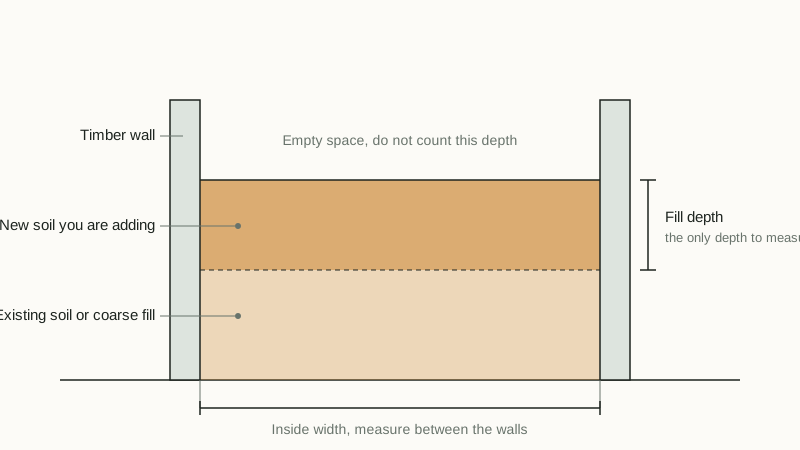
The compost calculator estimates volume for a bed, while the compost mix calculator helps plan a pile's carbon and nitrogen materials. Finished compost should be judged by its source and maturity as well as quantity.
Example
A gardener adds a moderate layer of finished compost to a vegetable bed before planting. The compost improves the bed's physical condition, but a soil test still determines whether additional nutrients or pH correction are needed.
Common confusion
Compost is not the same as mulch. Compost is generally incorporated or used as a soil amendment, while mulch is a surface layer that protects soil.
Sources
University of Minnesota Extension describes compost quality and garden use.