Vegetable growing guide
Beans
Phaseolus vulgaris · Fabaceae
Sun
Full sun
Season
Warm
Maturity
50 to 70 days
Water
Moderate
Soil pH
6.0 to 7.0
Spacing
4 to 6 in
By Dandre Noah
Planting beans
Beans are a warm-season crop that must go into genuinely warm soil, since cold, wet ground rots the seed before it sprouts. Sow directly after the last frost once the soil reads about 60 F, usually a week or two after the last frost date. They grow fast enough that starting indoors is rarely worth the trouble and transplants often sulk. Sow a short row every 2 to 3 weeks through midsummer for a steady supply rather than one large planting that comes in all at once.
Planting details
- Sow directly: after the last frost once soil reaches about 60 F
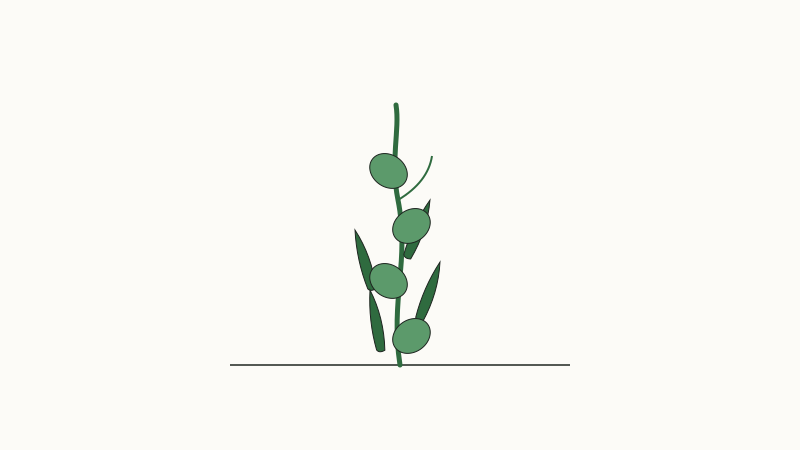
- Bush beans need no support; pole beans need a trellis or poles
- Sow a small row every 2 to 3 weeks for a steady harvest
- Seed depth: about 1 inch
- Spacing: 4 to 6 inches in the row
Growing requirements
Beans need full sun and evenly moist, well-drained soil. Because they fix much of their own nitrogen, heavy feeding produces leaves instead of pods; compost at planting is usually enough. Soil pH 6.0 to 7.0 suits them. The most important handling rule is to keep hands and tools off the plants while the foliage is wet, since working wet beans spreads bacterial blight and rust down the row. Mulch once they are up to hold moisture and keep soil from splashing onto the leaves during rain.
Harvesting and care
Pick pods while they are still slender and before the seeds inside bulge; daily picking at peak season keeps the plants setting new pods instead of finishing seed. Bush types produce most of their crop in a few weeks, while pole types keep going until frost. At the end of the season, cut the plants at the soil line and leave the roots in the ground to release the nitrogen they fixed for whatever follows.
Common mistakes
- Sowing into cold soil, which rots seed before it germinates
- Adding lots of nitrogen, which produces lush foliage and few pods
- Working or harvesting wet plants, which spreads bacterial blight down the row
- Sowing a single large block instead of a small row every few weeks
- Letting pods mature fully on the plant, which ends production
Companion plants
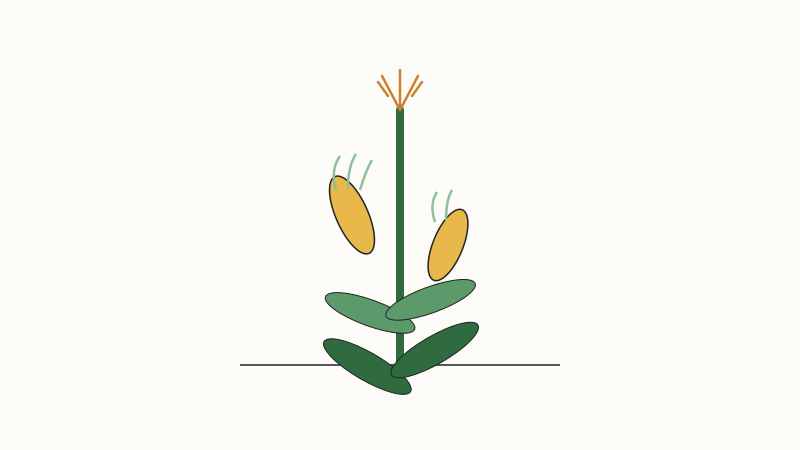
Corn, cucumbers, carrots, and squash are the traditional neighbors for beans because they share the warm-season window and do not compete for the same root space. Keep beans away from onions and garlic, which can slow their growth. Pole beans are often grown up corn or on a shared trellis in the classic three-sisters pattern, though they need the corn to get a head start before the vines are up.
Varieties worth growing
- Provider: early, dependable bush bean that germinates in coolish soil
- Kentucky Wonder: the standard pole bean; heavy yields on a trellis
- Contender: bush type that tolerates a little cold
- Romano: flat Italian type with rich flavor
Frequently asked questions
Why did my bean seeds rot before sprouting?
Cold, wet soil. Beans need about 60 F soil to germinate reliably, so sowing too early in cold spring mud is the usual cause. Wait until the soil warms.
Do beans need fertilizer?
Usually not much. They fix their own nitrogen once they are up, so compost at planting is enough; extra nitrogen gives leaves instead of pods.
Bush or pole beans, which should I grow?
Bush beans come in faster and need no support, while pole beans yield more per square foot over a longer season on a trellis. Most gardeners grow some of each.