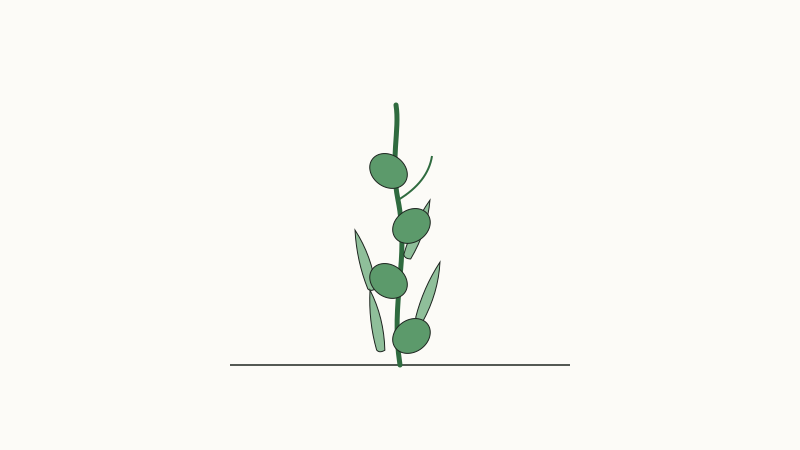
Vegetable growing guide
Peas
Pisum sativum · Fabaceae
Sun
Full sun
Season
Cool
Maturity
55 to 70 days
Water
Moderate
Soil pH
6.0 to 7.5
Spacing
2 to 3 in
By Dandre Noah
Planting peas
Peas are a true cool-weather crop and one of the first things to go in the ground in spring. Sow seed directly 4 to 6 weeks before the last frost as soon as the soil can be worked, since the plants thrive in cold, damp conditions that would rot most seed. In mild climates a fall crop can go in during late summer for a harvest into winter. Install the trellis or support at planting time rather than after, since the vines start climbing almost immediately and setting it late damages the roots.
Planting details
- Sow directly: 4 to 6 weeks before the last frost
- Install a trellis or support at planting for vining types
- Seed depth: about 1 inch
- Pea inoculant can improve germination and nodulation in new beds
- Bush types need less support; vining types need a sturdy trellis
Growing requirements
Peas grow best in cool weather, full sun, and steady moisture. Warm soil and hot days end flowering quickly, so getting the timing right matters more than fertilizer. Soil pH 6.0 to 7.5 suits them, and because they fix their own nitrogen they need little feeding; too much nitrogen produces leaves at the expense of pods. Keep the roots cool with mulch as the season warms, and water consistently once flowering starts since drought cuts pod set sharply.
Harvesting and care
Pick pods every day or two once they fill out, because peas left on the vine tell the plant to stop producing. Shell types are ready when the pods are round and full; snap and snow types are picked younger and flatter. At the end of the season, cut the vines at the soil line and leave the roots in place to release their fixed nitrogen into the bed for whatever follows. In warm climates the crop finishes fast once heat arrives, so pull and replant the space rather than trying to stretch it.
Common mistakes
- Sowing too late, which pushes flowering into summer heat
- Skipping support for vining varieties, which tangles plants and invites mildew
- Letting pods toughen on the vine, which tells the plant to stop producing
- Overfeeding with nitrogen, which grows leaves instead of pods
- Pulling the roots at cleanup, which wastes the nitrogen they fixed
Companion plants
Carrots, radishes, lettuce, and spinach share the same cool window and grow well beside peas without competing for the trellis space. Keep peas away from onions and garlic, which can stunt their growth. Peas are also useful as a living support for vining crops like cucumbers once the pea season ends, since the dead vines can be left on the trellis.
Varieties worth growing
- Sugar Snap: edible-pod type that needs no shelling
- Lincoln: reliable shelling pea for the home garden
- Oregon Sugar Pod: flat snow pea for stir-fries
- Wando: heat-tolerant shelling type for short springs
Frequently asked questions
Why did my peas stop flowering?
Heat. Peas shut down once days get hot, which is why the spring window is so important. In most climates the fall crop is easier to keep producing than the spring one.
Do peas need a trellis?
Vining types absolutely do, and it should go in at planting. Bush types are self-supporting but still produce better with a low support to keep pods off the soil.
Should I use pea inoculant?
In a new bed or where legumes have not grown before, it improves nodulation and yields. In established beds it is optional.