What does this compost calculator calculate?
This calculator estimates the volume of finished compost needed for a rectangular bed in one of two ways. Topdressing treats compost as a surface layer of a chosen depth. Mixing treats compost as a share of the soil you plan to work, such as 25 percent of the top 6 inches.
The result is reported in cubic feet and cubic yards, plus an estimated number of bags at the size you select.
What you will need
How you will use it
Choose spread on top for a surface layer, or mix into soil for a blended amendment. The method changes the math. A surface layer needs the layer depth. Mixing needs the depth of soil you plan to work and the compost share.
Length and width
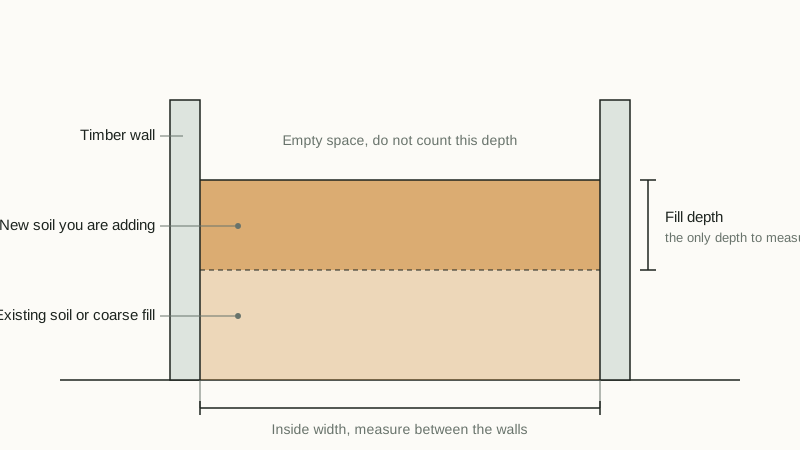
Measure the inside dimensions of the bed or the area that will actually receive compost. Skip paths and unplanted edges, or calculate planted sections separately and add the results.
Compost depth or mixing depth
For topdressing, enter the finished layer depth. University of Minnesota Extension suggests roughly an inch or less per year as a routine application, with deeper amounts reserved for building poor soil.
For mixing, enter how deep you will work the soil, usually 4 to 8 inches in a vegetable bed. Then pick the compost share. A 25 to 33 percent share is a common target when building a new bed; established beds usually need less.
Bag size
Bagged compost is sold by volume. Check the cubic-foot amount printed on the bag rather than its weight, since moisture makes the same volume weigh different amounts.
How the calculation works
For topdressing, the calculator finds the surface area and multiplies by the layer depth:
Length × width × depth in feet = cubic feet
For mixing, it first finds the volume of soil being worked, then takes the compost share:
Length × width × mixing depth in feet × compost share = cubic feet of compost
For example, a 10 foot by 4 foot bed worked 6 inches deep contains 20 cubic feet of soil in that zone. A 25 percent compost share needs 5 cubic feet of compost. Dividing by 27 gives about 0.19 cubic yards, or 4 bags at 1.5 cubic feet each.
Worked examples
Topdressing a vegetable bed
A 12 foot by 4 foot bed gets a 1 inch surface layer of compost. The area is 48 square feet, and one inch is about 0.083 feet, so the bed needs 4 cubic feet of compost. That is about 3 bags at 1.5 cubic feet each.
Amending a new raised bed
An 8 foot by 4 foot bed is being filled and the gardener wants a third compost mixed into the top 6 inches. The worked zone holds 16 cubic feet. A 33 percent share needs about 5.3 cubic feet of compost, leaving the rest for soil and other amendments.
Light top-up on an established bed
A 10 foot by 3 foot bed with decent soil gets a half inch topdressing before fall planting. The calculation gives 1.25 cubic feet, a single large bag.
How much compost is enough?
More compost is not always better. University of Minnesota Extension testing in community gardens found that repeated heavy applications pushed soil phosphorus well past the level vegetables need. Compost keeps releasing nutrients over time, and phosphorus in particular can build up when many inches are applied every year.
A soil test is the most reliable way to set the amount. Without one, an inch or less of compost per year on established beds is a conservative starting point, with deeper mixing reserved for new beds or soils low in organic matter.
Common measuring mistakes
Calculating the full bed depth for a topdressing
If compost sits on the surface, only the layer depth counts. Entering the bed height instead of the layer depth overstates the amount by a large factor.
Treating compost as the whole fill
Compost is a soil amendment, not a complete growing medium for most beds. For a new raised bed, calculate the total fill volume with the soil calculator first, then decide what share should be compost.
Mixing up finished compost and raw manure
Fresh manure is not finished compost. It can carry pathogens and release ammonia that damages roots. The calculator assumes finished, stable compost.
When this calculator may not be the right choice
The tool assumes a rectangular area and a single application method. For composting pile sizing, feedstock ratios, or compost tea brewing, a different calculation applies. For a round container, calculate the base area as a circle first, then enter an equivalent rectangle.
Frequently asked questions
Should I spread compost on top or mix it in? Topdress established beds, where worms and weather carry the compost into the root zone over time. Mix into the soil when building a new bed or fixing soil low in organic matter, because compost does its fastest work where roots grow.
How much compost is safe to add each year? About an inch or less as a routine topdressing is a conservative rate for established beds. Repeated heavy applications can push soil phosphorus past what vegetables need, so deeper amounts are best saved for new beds or set by a soil test.
Can I use it for a round bed or container? Yes. Work out the circle's area first (3.14 times the radius in feet, squared), then enter a rectangle with the same area. For filling pots rather than amending beds, the potting mix calculator is the better tool.