Native plant growing guide
Actaea
Actaea spp. · Ranunculaceae
Sun
Part to full shade
Season
Perennial; spring or late-summer bloom
Maturity
2 to 4 years to establish
Water
Moderate
Soil pH
5.0 to 7.0
Spacing
24 to 36 in
By Dandre Noah
Planting actaea
Actaea is a group of eastern North American woodland perennials, and the two you will meet are white baneberry, or doll's eyes, and black cohosh. Both want the conditions of a deciduous forest floor: part to full shade and humus-rich, moisture-retentive soil. Plant divisions or container plants in spring or fall at the same depth they grew. Baneberry is the smaller species at 1 to 3 feet, blooming in spring; black cohosh is the back-of-the-border plant, rising 4 to 7 feet in bloom from May to August. Both are hardy in zones 3 to 8, slow to establish, and resent being moved, so choose the site once and leave them alone.
Planting details
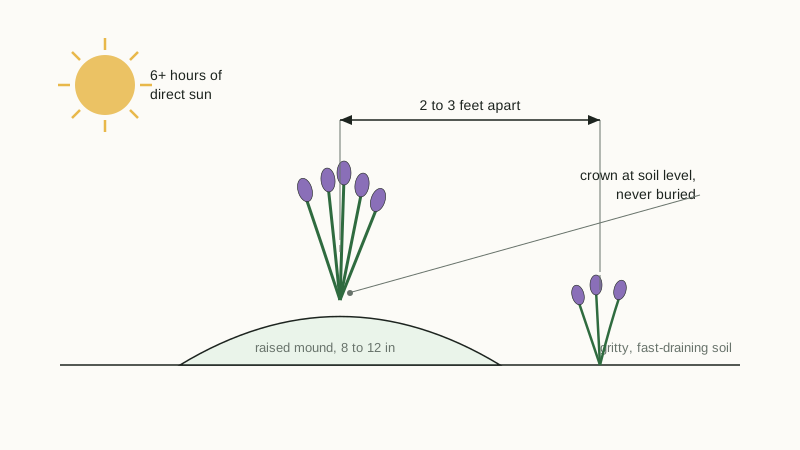
- Spacing: 2 to 3 feet; black cohosh wants the wider end
- Humus-rich, moisture-retentive soil in shade
- Hardy in zones 3 to 8
- Baneberry berries and roots are highly toxic; site accordingly
- Slow to establish and dislikes transplanting
Growing requirements
Give it dappled shade all day or a few hours of gentle morning sun. Black cohosh fails to flower in deep dark shade, while baneberry tolerates more. Both need soil that holds moisture like a woodland floor: high organic matter, consistently moist but never swampy, and rich soil matters more here than with most perennials. Deer and rabbits leave both species alone, and established plants ask almost nothing. Rust and leaf spot show up occasionally on black cohosh in stagnant air, and its tall wands appreciate shelter from strong wind.
Harvesting and care
The one real job is moisture: do not let the roots bake in August, and keep a 2 to 3 inch mulch of leaf mold or shredded leaves to hold the woodland-floor conditions they want. Cut black cohosh stems down after frost, but leave baneberry's red-stemmed berry clusters standing until the birds take them; the fruit display is half the reason to grow it. Divide a thriving clump in spring or fall only if you need to propagate it. Seed works too, but it takes a year to germinate and another to bloom.
Common mistakes
- Planting in dry sunny ground, which scorches the foliage and stalls the plant
- Setting baneberry where children or pets can reach the toxic berries
- Expecting fast coverage; it takes two to three years to hit its stride
- Deep shade for black cohosh, which then refuses to bloom
- Dividing often; both species sulk after being moved
Companion plants
These are anchor plants for the native shade border. Baneberry pairs naturally with other woodlanders like ferns, and its white berries show best against dark foliage or an evergreen backdrop. Black cohosh's vertical wands contrast well with mounding shade plants like hosta. Both feed early pollinators: baneberry's flowers offer pollen to short-tongued bees, and black cohosh hosts azure butterfly caterpillars.
Varieties worth growing
- A. pachypoda: doll's eyes; the 1 to 3 foot species with toxic white berries on red stalks
- Misty Blue: baneberry selection with blue-green foliage
- A. racemosa: black cohosh; 4 to 7 feet in bloom for the back of the shade border
- Atropurpurea: black cohosh with burgundy stems and leaves
- A. rubra: red baneberry, similar plant with red fruit
Frequently asked questions
Are actaea berries poisonous?
Yes, genuinely. Baneberry fruit and roots can cause serious illness in people and pets, though birds eat them without harm. Plant it where wildlife, not children, will find it.
Will actaea grow in deep shade?
Baneberry will; black cohosh will not flower well there. Black cohosh needs a couple of hours of morning sun or bright dappled light to bloom.
Is black cohosh the supplement herb?
Same plant. A. racemosa is the source of commercial black cohosh, and wild harvest has pressured native stands, which is a good reason to grow your own.
Do deer eat actaea?
Both species are strongly deer and rabbit resistant, which makes them staples for unfenced woodland edges.