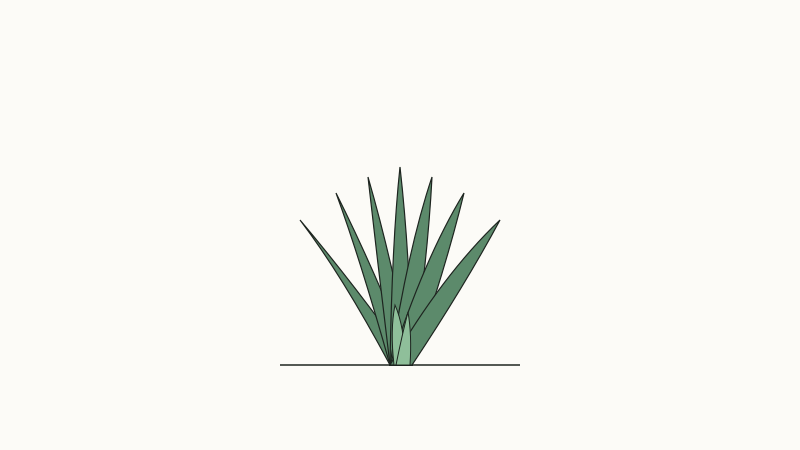
Native plant growing guide
Adam's needle
Yucca filamentosa · Asparagaceae
Sun
Full sun to part shade
Season
Evergreen perennial
Maturity
3 to 5 years to bloom
Water
Very low
Soil pH
6.0 to 7.5
Spacing
3 to 5 ft
By Dandre Noah
Planting adam's needle
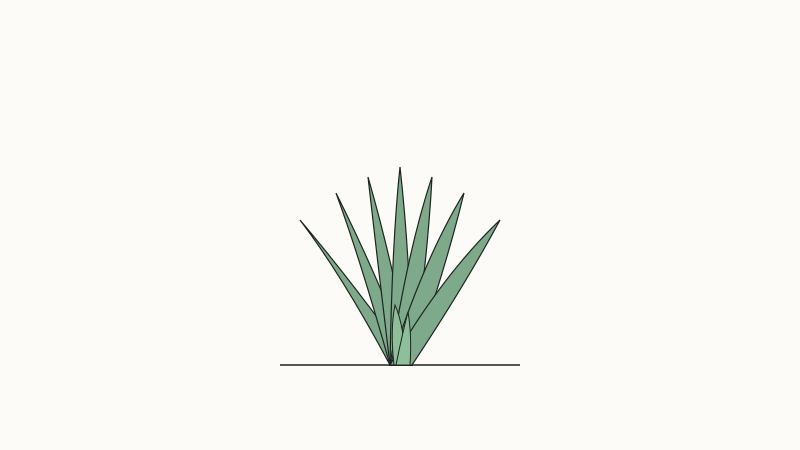
Plant Adam's needle in spring or early fall in the hottest, driest, most neglected spot you own, because that is where it thrives. A Southeastern US native, it is hardy in roughly zones 5 to 10, far beyond the desert-only reputation yuccas carry. The rules are simple: full sun to light shade, near-neutral soil, and drainage that never fails, since wet clay in winter is the one thing that kills it. Set the crown at the same level it grew in the pot, water it in once, and then step back. In bloom the flower stalk rises 4 to 8 feet, and the spiky rosette itself wants a 3 to 5 foot berth from paths and play areas, because those leaf tips are genuinely sharp.
Planting details
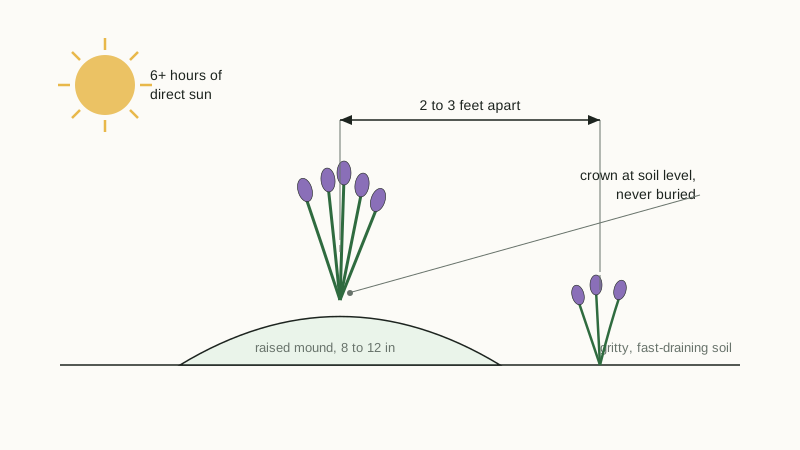
- Spacing: 3 to 5 feet between rosettes
- Sharp drainage required; wet winter soil rots it
- Creamy white bell panicles late spring to early summer
- Leaf tips are needle-sharp; site away from paths
- Pollinated only by yucca moths in a famous mutualism
Growing requirements
It is not picky about soil type as long as the pH runs near neutral and water never stands. Sand, gravel, thin rocky ground, and compacted roadside soil all suit it, and it tolerates salt spray for coastal plantings. Full sun produces the stoutest flower stalks, but it accepts part shade. Once established it needs no irrigation, no fertilizer, and no spraying, and deer and rabbits leave the fibrous leaves alone. Its only real enemies are moisture-related: leaf spot and blight show up in poorly drained or humid sites.
Harvesting and care
There is almost nothing on the calendar. After the flower stalk finishes in midsummer, cut it off at the base; the rosette keeps growing and offsets into a widening clump. Dead leaves collect under the rosette and can be pulled away in spring for tidiness. If the clump outgrows its spot, slice off offsets with a piece of root in spring or fall and replant them, or take root cuttings. The flowers are edible, tasting something like bitter artichoke, and Native Americans worked the leaves for some of the strongest natural fiber on the continent.
Common mistakes
- Planting in irrigated beds or wet clay; it wants the driest ground you have
- Setting it beside a walkway or patio where the spined tips catch people
- Rich amended soil and feeding, which soften the plant
- Cutting down the whole rosette after bloom; only the spent stalk comes off
- Overhead watering in humid climates, which invites leaf spot
Companion plants
It is a structural anchor for dry, sunny, native plantings: black-eyed Susan, butterfly weed, and coneflower share its lean soil and full sun, and their seasonal color plays off the evergreen rosette all year. Keep it clear of thirsty border perennials and lawns that need weekly irrigation, and give it low companions so its bloom spike stays the tallest thing in the bed.
Varieties worth growing
- Bright Edge: gold margins along the leaf edges
- Color Guard: broad creamy stripe down each leaf center
- Golden Sword: yellow-centered leaves, similar effect to Color Guard
- Garland Gold: another gold-variegated selection
Frequently asked questions
How often does Adam's needle bloom?
A mature clump sends up a flower spike most years in late spring to early summer. Young plants can take several years to flower for the first time.
Is Adam's needle the same as the houseplant yucca?
Different species. The spineless houseplant is Y. gigantea; this is the cold-hardy outdoor Y. filamentosa native to the Southeast.
Are the flowers really pollinated by one moth?
Yes. The yucca moth stuffs pollen into the flower while laying its eggs; the larvae eat some of the seeds and leave the rest viable.
Is Adam's needle safe near pets?
Keep dogs and cats from chewing it. The fibrous leaves end in sharp points and contain saponins that cause problems if eaten.