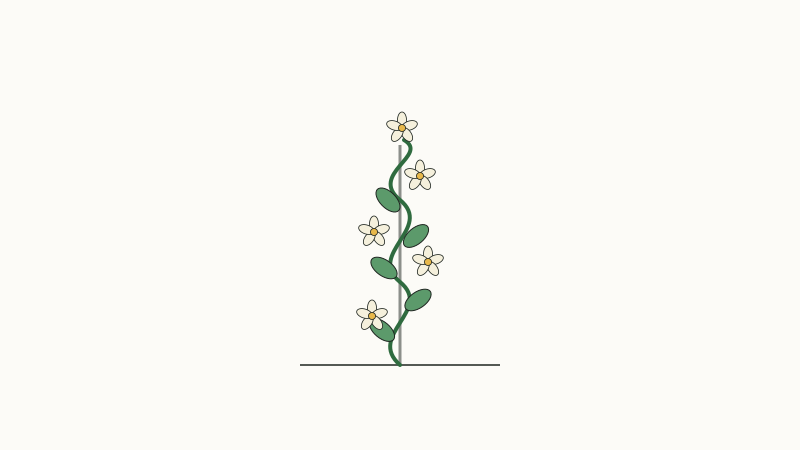
Houseplant growing guide
Arabian jasmine
Jasminum sambac · Oleaceae
Sun
Bright direct
Season
Year-round indoors
Maturity
2 to 3 years
Water
Moderate
Soil pH
6.0 to 7.0
Spacing
3 to 5 ft
By Dandre Noah
Planting arabian jasmine
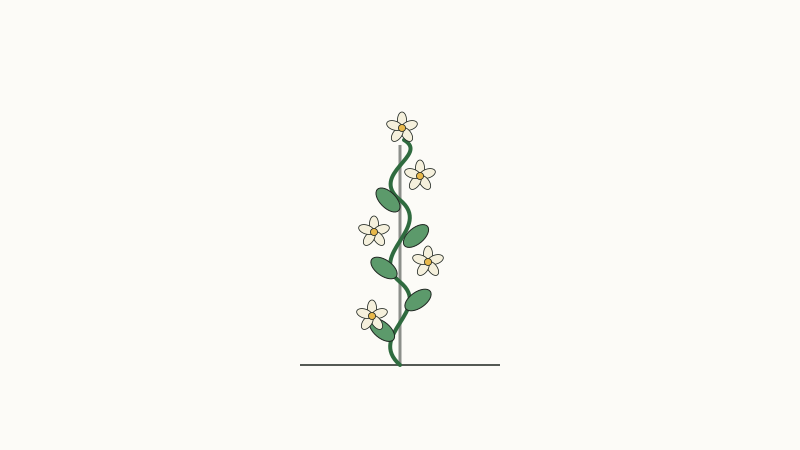
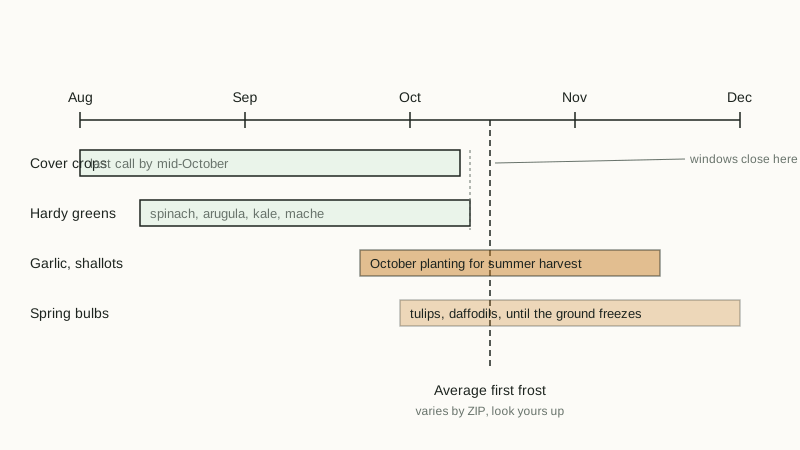
Arabian jasmine is a broadleaf evergreen shrub from tropical Asia, winter hardy outdoors only in zones 9 to 11, so most gardeners grow it as a potted plant that summers outside and winters on a bright sill. It grows as a sprawling shrub on its own or climbs as a loose twining vine if you tie the stems to a small trellis. Pot it in a loose, humusy, evenly moist but well-drained mix, repotting in spring when roots fill the container. Bring it inside before the first fall frost into the brightest room you have. This is the jasmine whose flowers scent jasmine tea, the pikake of Hawaiian leis, and the national flower of the Philippines, so a pot of it earns its keep well beyond the bloom.
Planting details
- Container culture everywhere north of zone 9; move outside after frost
- Grows as a shrub or a loose vine tied to a support; 4 to 5 feet in pots
- Clusters of 3 to 12 waxy white one-inch flowers, intensely fragrant
- Propagate from summer stem cuttings
- Prefers night temperatures above 60 F, warmer than most indoor jasmines
Growing requirements
Give it the brightest spot in the house with a few hours of direct sun a day; an east or west window suits it, and weak winter light is the main reason sambac stops blooming indoors. Keep the soil evenly moist while it grows, since it wilts hard and fast when it dries, and pull watering back a bit in winter when growth slows. It likes the warm side of the windowsill: nights above 60 F and humid air keep it happiest, so a pebble tray or humidifier helps in heated rooms. Feed monthly through the growing season with a standard water-soluble fertilizer. Outdoors it wants full sun to part shade in the same loose, moist ground.
Harvesting and care
In containers it blooms heaviest in summer, with scattered flushes the rest of the year if light and warmth hold up, and in the tropics it flowers nearly nonstop. Prune after each flush to keep the shrub compact; it tolerates hard shaping and can also be trained up a hoop or small trellis. Buds open in the evening, when the scent is strongest. Indoors the pests to watch are spider mites and whiteflies, so check the leaf undersides and rinse the foliage occasionally. Expect some leaf drop and sulking for a few weeks when the plant moves between the patio and the house; it adjusts.
Common mistakes
- Too little light indoors, which drops buds and stops bloom entirely
- Letting the soil dry out in summer; sambac wilts dramatically and loses buds
- Cold windowsills and nights below about 55 to 60 F
- Heavy watering through low-light winter, which rots roots on a stalled plant
- Pruning right before a bloom flush and cutting off the budded tips
- Leaving it outside into fall cold; it is tender below zone 9
Companion plants
On a summer patio it belongs with the other fragrant containers: lemon verbena scents the same corner from a different direction, and a pot near the regular jasmine vine layers two fragrances across the season. Indoors in winter it needs the same bright, warm window as parlor palm and citrus, which tolerate the identical indoor conditions. If it climbs, give it a hoop or obelisk of its own rather than a shared support, since its twining stems are looser and heavier than a true vine's.
Varieties worth growing
- Maid of Orleans: single flowers and the most reliable, steady bloomer for pots
- Grand Duke of Tuscany: double, rose-like blooms; slower and a bit fussier
- Belle of India: semi-double flowers with elongated petals and heavy scent
- Mysore Mulli: fast-growing single form common in Indian cultivation
Frequently asked questions
Why is my Arabian jasmine not blooming indoors?
Almost always light. It needs the brightest window you have plus a few hours of direct sun, and it shuts down bud production in weak winter light. Warm nights above 60 F and regular feeding help restart it.
Is Arabian jasmine a vine or a shrub?
Both, depending on how you grow it. Untrained it sprawls as a shrub; tied to a support it climbs loosely. Unlike star jasmine it cannot twine tightly on its own.
Can I use the flowers to make jasmine tea?
Yes. Jasminum sambac is the species used to scent commercial jasmine tea. Use only flowers from a plant that has never been sprayed with pesticides.
Is Arabian jasmine the same as regular jasmine?
No. It is Jasminum sambac, a tender evergreen shrub. The vine most gardens call jasmine is usually star jasmine, Trachelospermum jasminoides, which is not even a true Jasminum.