Houseplant growing guide
Parlor palm
Chamaedorea elegans · Arecaceae
Sun
Low to bright indirect
Season
Year-round indoors
Maturity
5 to 10 years
Water
Moderate
Soil pH
5.5 to 6.5
Spacing
2 to 3 ft
By Dandre Noah
Planting parlor palm
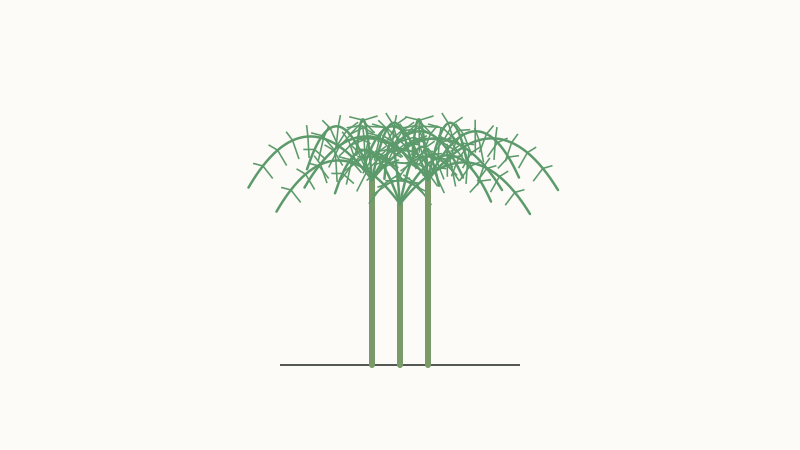
Parlor palm is usually sold as a pot of several seedlings grown together, which is what gives it that full, feathery look at only a foot or two tall. Repot in spring only when roots crowd the container, roughly every other year, into a humus-rich, well-drained houseplant mix one size up; palms dislike root disturbance, so resist annual repotting. Indoors it is a year-round plant near a north or east window. Outdoors it is hardy in zones 10 to 12 in shade, native to the rainforest floor of southern Mexico and Central America, which explains its unusual tolerance for dim rooms.
Planting details
- Repot every other year or so, one pot size up; over-potting invites soggy mix
- Sold as a clump of seedlings; keep them together for a full plant
- A north or east window is ideal; it tolerates low light that stalls other palms
- Hardy outdoors only in zones 10 to 12, in dappled to full shade
- New plants come from seed or by dividing the clump, never from cuttings
Growing requirements
Bright indirect light grows the lushest plant, but parlor palm is one of the few palms that genuinely tolerates low light and average household humidity, which is why it has been a parlor fixture since the Victorian era. Let the top inch of mix dry between waterings; it grows more lushly kept lightly moist but survives short dry spells. Temperatures of 65 to 80 F suit it, with a floor of about 50 F and protection from cold drafts near doors, windows, and vents. Higher humidity helps but is not demanded the way it is by a calathea, which makes this one of the lowest-maintenance palms for a typical heated home. Feed lightly a few times during the growing season and not at all in winter.
Harvesting and care
Cut browning fronds off at the base once they are mostly dead; a few yellowing lower fronds are normal aging. Spider mites and mealybugs are the pests to watch, especially in dry air, and a damp cloth or shower rinse keeps both the leaves clean and the mites down. Because growth is slow, resist the urge to fertilize heavily or repot often; too much care kills this plant faster than neglect. In Victorian homes it lived in coal-smoke parlors with little light and less heat, and modern apartments are easy by comparison. Parlor palm is non-toxic to cats and dogs, one of the reasons it tops pet-safe houseplant lists.
Common mistakes
- Overwatering, the most common killer; let the top inch dry first
- Direct sun, which bleaches and scorches the leaflets
- Repotting on a schedule rather than when roots demand it
- Cold drafts below about 50 F, including a leaky winter windowsill
- Expecting palm-tree speed; it adds only a few fronds a year
Companion plants
Parlor palm anchors the dim corner of a houseplant group alongside Boston fern and cast iron plant, which share its tolerance for low light and its preference for steady, moderate watering. It also pairs well with calatheas, which appreciate the same humidity without competing for a sunny sill. Keep it out of the harsh direct sun that would suit a yucca or croton.
Frequently asked questions
Is parlor palm safe for cats and dogs?
Yes. Parlor palm appears on pet-safe plant lists from the ASPCA and Clemson Extension as non-toxic to cats and dogs.
How big does a parlor palm get indoors?
Slowly to 2 to 4 feet in most homes, and up to 6 feet over many years in bright conditions. Outdoor plants in frost-free climates can reach 6 to 7 feet.
Why are the frond tips brown?
Usually dry air, inconsistent watering, or salt buildup from fertilizer and tap water. Flush the pot occasionally and keep the mix lightly and evenly moist.
Can parlor palm grow in a room with no windows?
It tolerates low light better than most palms, but no plant survives without light. Give it a spot within several feet of a window or under a grow light.