Houseplant growing guide
Calathea orbifolia
Goeppertia orbifolia · Marantaceae
Sun
Bright indirect
Season
Year-round indoors
Maturity
3 to 5 years
Water
High
Soil pH
5.5 to 6.5
Spacing
1 to 2 ft
By Dandre Noah
Planting calathea orbifolia
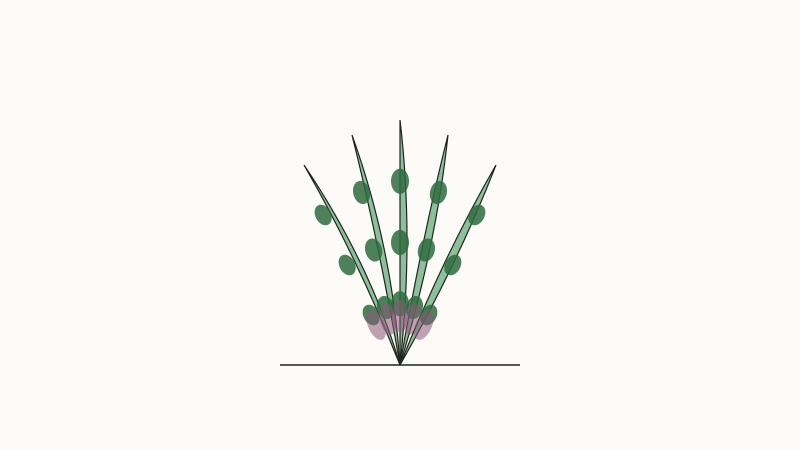
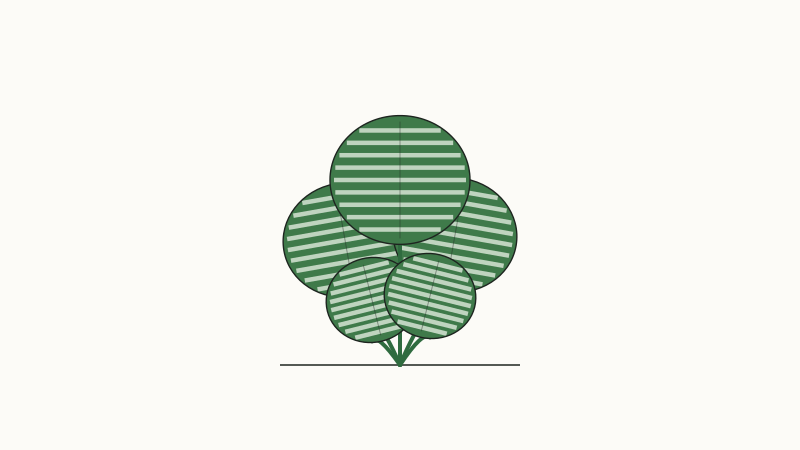
Calathea orbifolia, now classified as Goeppertia orbifolia, arrives as a clump of broad, silvery-striped leaves rising straight from the rhizome. Repot in spring into a slightly acidic mix that drains but holds moisture, a peat or coir base lightened with perlite, and only when roots visibly fill the pot. Spring repotting is also the time to propagate: tease the rhizome apart into clumps with a few leaves each. Indoors it grows year-round at room temperature; outdoors it is hardy only in zones 11 to 12, though it can summer in a shaded, sheltered spot.
Planting details
- Repot in spring when roots fill the pot; divide the rhizome at the same time to propagate
- Use a moisture-retentive but draining mix, coir or peat lightened with perlite
- Water with distilled, rain, or filtered water; fluoride in tap water browns the leaf tips
- Hold temperatures between 65 and 75 F and keep the pot away from drafts and vents
- Hardy outdoors only in zones 11 to 12
Growing requirements
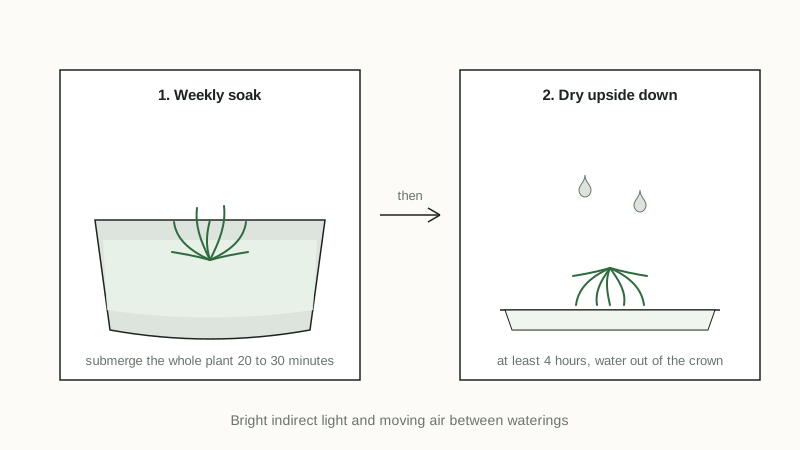
Bright indirect light or partial shade keeps the silver bands sharp; direct sun scorches the leaves and deep shade fades the pattern. The mix should stay consistently moist but never soggy, since both extremes curl and brown the leaves. Humidity is the hard requirement: at least 60 percent, which usually means a humidifier or a pebble tray rather than occasional misting. Grouping it with other tropical plants raises ambient humidity a few points, and a closed terrarium suits a small plant perfectly. Feed monthly during spring and summer with a diluted balanced fertilizer, wipe dust off the big leaves so they can photosynthesize, and use low-fluoride water year-round. Growth is slow to moderate, and the leaves can reach a foot wide on a mature plant, so give the clump elbow room rather than crowding it against a wall.
Harvesting and care
Like its prayer plant relatives, orbifolia lifts its leaves at night and lowers them by day, which is normal behavior rather than wilting. Browning edges trace to low humidity or fluoride; curling leaves mean the mix went too dry. Cut damaged leaves off at the base, and cut any fully browned leaf all the way back to the soil line so the plant puts energy into fresh growth. Spider mites and mealybugs appear when air is dry, so check the leaf undersides regularly. The plant is non-toxic to cats and dogs, one of the few statement foliage plants that is, though its leaves are delicate enough that a chewing cat will still ruin the look.
Common mistakes
- Tap water with fluoride or heavy salts, which burns brown tips into the leaves
- Letting the mix dry out fully, which collapses the leaves and curls the edges
- Humidity under about 60 percent, the main cause of crisp brown margins
- Direct sun, which scorches the wide leaf blades
- Cold drafts and temperature swings below about 60 F
Companion plants
The natural grouping is other high-humidity foliage: rattlesnake plant and the other Goeppertia species share identical water and humidity needs, and Boston fern thrives in the same moist air. Nerve plant works at its base as a living mulch of color. Keep orbifolia away from heating vents and from the dry sunny sill where succulents sit, since its rainforest-floor origins put it at the opposite extreme of a windowsill succulent.
Frequently asked questions
Is calathea orbifolia safe for cats and dogs?
Yes. NC State Extension lists Goeppertia orbifolia as non-toxic to cats and dogs, so it is one of the safer showy foliage plants for pet homes.
Why are the leaf tips and edges turning brown?
Two usual causes: fluoride or salts in tap water, and air that is too dry. Switch to distilled or rain water and raise humidity above 60 percent.
Why do the leaves fold up at night?
That is nyctinasty, the prayer plant family's nightly leaf movement driven by a joint at the leaf base. It is healthy behavior, not drooping.
Is calathea orbifolia the same as a prayer plant?
Same family, different genus name now. It was sold for years as Calathea orbifolia and is now classified as Goeppertia orbifolia; the care is identical either way.