Houseplant growing guide
Rattlesnake plant
Goeppertia insignis · Marantaceae
Sun
Bright indirect
Season
Year-round indoors
Maturity
2 to 3 years
Water
High
Soil pH
5.5 to 6.5
Spacing
1 to 2 ft
By Dandre Noah
Planting rattlesnake plant
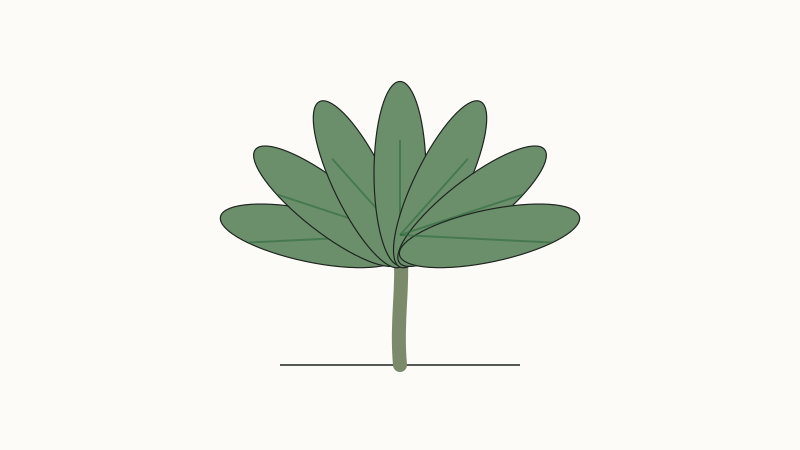
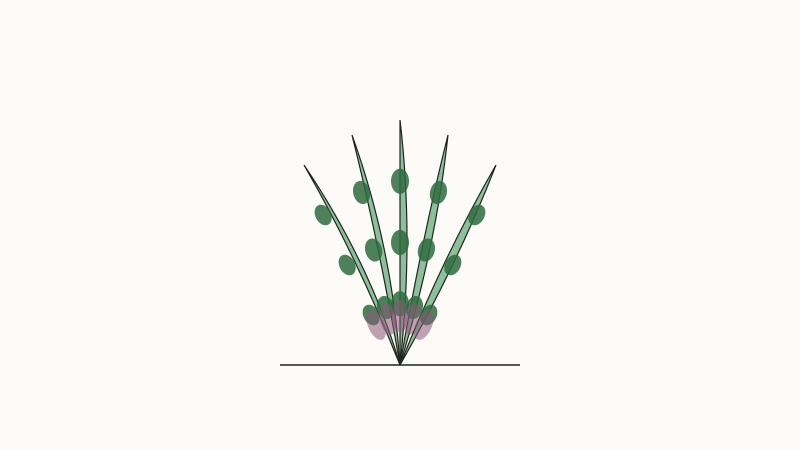
Rattlesnake plant, sold for years as Calathea lancifolia and now classified as Goeppertia insignis, grows as a fountain-shaped clump of long leaves straight from a rhizome. Repot in spring into a peaty, well-drained mix when the clump crowds the pot, and that is also the moment to propagate by division, since cuttings do not root. Each new leaf unfurls from the center of the clump, so a plant adding leaves steadily is a plant that is happy. Keep it in a warm, humid spot at 65 to 75 F in bright shade or filtered light. Outdoors it survives only in zones 11 to 12, though it can spend summer on a deeply shaded, sheltered patio.
Planting details
- Repot in spring into a peaty, well-drained mix; divide crowded clumps at the same time
- Keep the mix uniformly moist but never waterlogged
- Wants 65 to 75 F and high humidity; a pebble tray or humidifier earns its keep
- Water the mix, not the leaves; wet foliage invites fungal leaf spot
- Hardy outdoors only in zones 11 to 12
Growing requirements
Limited sun to bright shade suits it: gentle morning sun or diffused light is fine, but midday sun scorches the leaves and deep gloom stalls growth. The mix should stay uniformly moist, never soggy and never bone dry, and the leaves themselves tell you when air is too dry by crisping at the edges. Distilled or rain water is worth the trouble if your tap water is hard or fluoridated, since the edges brown the same way. Feed monthly through spring and summer with a diluted balanced fertilizer and back off in winter. Humidity is the deal-breaker requirement indoors, so plan on a humidifier, a pebble tray, or a naturally steamy room.
Harvesting and care
The leaves fold upward at night and spread again by day, the prayer plant family's signature move, and every sway shows off the purple undersides. Browning or curling edges mean low humidity; leaf spots mean water sat on the foliage. Wipe dust off with a dry or barely damp cloth rather than soaking the leaves, and check for aphids, mealybugs, and spider mites. Rattlesnake plant is non-toxic to cats and dogs, unusual for such a dramatic foliage plant.
Common mistakes
- Low humidity, which crisps and browns every leaf edge in a dry room
- Letting the mix dry out, which curls the leaves and stalls the plant
- Wetting the foliage when watering, which spreads fungal leaf spot
- Direct midday sun, which scorches and bleaches the markings
- Cold drafts and sudden temperature drops below about 60 F
Companion plants
Rattlesnake plant belongs with the rest of the humidity crew: calathea orbifolia shares identical water and humidity needs, and Boston fern thrives in the same moist air. Nerve plant makes a colorful living mulch at its base in a wide bowl. It has no business near a hot, dry, sunny sill where it would crisp in a week, and it should stay away from radiators and heating vents for the same reason.
Varieties worth growing
- Saint Paul: green leaves brushed with white strokes; the most common cultivar
- Silver Lance: silvery green blades with dark green striping
- Fun Star: vibrant green leaves marked with purple
Frequently asked questions
Is rattlesnake plant safe for cats and dogs?
Yes. NC State Extension lists Goeppertia insignis as non-toxic to cats, dogs, and horses, so it suits pet households that can meet its humidity needs.
Why do the leaves fold up every evening?
That is nyctinasty, the nightly leaf-folding shared by the whole prayer plant family. A flexible joint at each leaf base raises the blades after dark; it is a sign of a working plant.
Is rattlesnake plant the same as a calathea?
Close family, new name. It was long sold as Calathea lancifolia and is now classified as Goeppertia insignis; the care stays the same either way.
Why are the leaf edges browning and curling?
Dry air is the usual cause, with fluoride or salt in tap water a close second. Raise humidity and switch to distilled or rain water if browning continues.