Tree growing guide
Autumn Blaze maple
Acer x freemanii 'Jeffersred' · Sapindaceae
Sun
Full sun
Season
Deciduous tree
Maturity
40 to 50 ft at maturity
Water
Low to moderate
Soil pH
5.5 to 7.5
Spacing
30 to 40 ft
By Dandre Noah
Planting autumn blaze maple
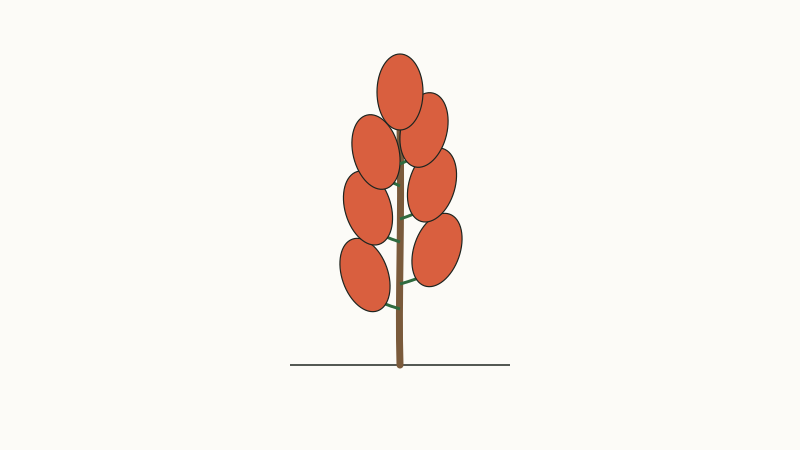
Plant Autumn Blaze maple in spring or fall in full sun, which is what drives the famous orange red fall color. Hardy in zones 3 to 8, this red maple and silver maple cross was bred to keep the best of each parent: red maple's color and form with silver maple's speed and toughness, but without silver maple's weak wood and surface roots. It adapts to clay, occasionally wet soil, and alkaline ground better than most maples, and South Dakota State Extension notes it handles alkaline soil better than other Freeman cultivars. Give it a genuinely big space: it adds 2 to 3 feet a year when young and finishes 40 to 50 feet tall and 30 to 40 feet wide, so keep it well away from the house, drive, and power lines.
Planting details
- Mature size: 40 to 50 feet tall, 30 to 40 feet wide
- Hardiness: zones 3 to 8; tip damage reported at the coldest northern plains edge
- Growth rate: fast, about 2 to 3 feet per year while young
- Fall color: orange red, often coloring by mid September in the north
- Nearly seedless; bred as a male selection, so few samaras to clean up
Growing requirements
Autumn Blaze is one of the least fussy shade trees you can plant: full sun, ordinary to clay soil, and tolerance of both drought and occasional wet feet once established. It prefers slightly acid to neutral ground but tolerates alkaline soil better than its parent maples, though very high pH sites can still bring on iron chlorosis. Water deeply and regularly for the first two or three years, then mainly during drought. Mulch a wide ring and keep turf off the trunk; SDSU notes that trees grown with a mulch ring, rather than grass to the bark, overwinter better in the northern plains. Feeding is rarely needed.
Harvesting and care
The care that matters happens in the first ten years and it is structural pruning. Freeman maples push tight, V shaped codominant leaders with included bark that can split out in storms decades later, so while the tree is young, establish one central leader and remove or shorten competing stems. Prune in late winter or after leaf drop, since maples bleed sap heavily if cut in spring. Young trees can pick up leafhoppers and scale, both cosmetic. Mature problems to watch for: verticillium wilt causing a section of canopy to wilt mid summer, and storm breakage on old, untrained trees. Raking is light duty since the tree sets few seeds.
Common mistakes
- Skipping structural pruning when young, leaving codominant stems that split in storms later
- Planting too close to the house, sidewalk, or power lines for a 50 foot shade tree
- Planting in deep shade, which weakens growth and mutes the fall color that is the whole point
- Topping or heading cuts; it responds with weak, densely attached water sprouts
- Turf to the trunk in cold climates, where a mulch ring measurably improves winter survival
Companion plants
This is a lawn and street tree, not a bed anchor, and its mature shade is dense enough that grass thins beneath it, so plan a wide mulch ring rather than fighting the shade. In larger plantings it mixes well with other big deciduous trees like American sweetgum and American hornbeam for staggered fall color. Keep new plantings, garden beds, and irrigation lines outside its future 30 to 40 foot drip zone, and skip shallow rooted shade plantings that will battle its feeder roots.
Varieties worth growing
- Autumn Blaze 'Jeffersred': the original; dense oval form, early orange red color, few seeds
- Celebration 'Celzam': stronger limb attachments resist breakage
- Firefall 'AF1': a Minnesota selection with better cold hardiness and red fall color
- Marmo: seedless, with red orange fall color
Frequently asked questions
How fast does Autumn Blaze maple grow?
About 2 to 3 feet per year while young, slowing as it matures. It is one of the faster shade trees, which is the main reason it gets overplanted in small yards.
Does Autumn Blaze maple have helicopter seeds?
Very few. It was selected as a male tree, so it produces little to no seed compared with a silver or red maple.
Is Autumn Blaze maple weak wooded?
It is stronger than silver maple but not as strong as red or sugar maple. Most failures trace to untrained codominant stems, which is why early structural pruning matters so much.
When does Autumn Blaze maple turn color?
Early for a maple, often mid September in the north and early to mid October farther south, in orange red tones rather than pure scarlet.