Vegetable growing guide
Bell pepper
Capsicum annuum · Solanaceae
Sun
Full sun
Season
Warm
Maturity
60 to 90 days
Water
Moderate
Soil pH
6.0 to 6.8
Spacing
18 to 24 in
By Dandre Noah
Planting bell pepper
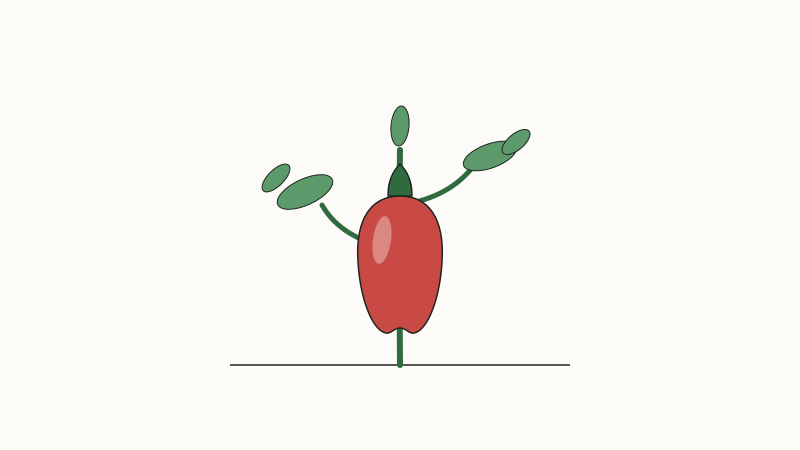
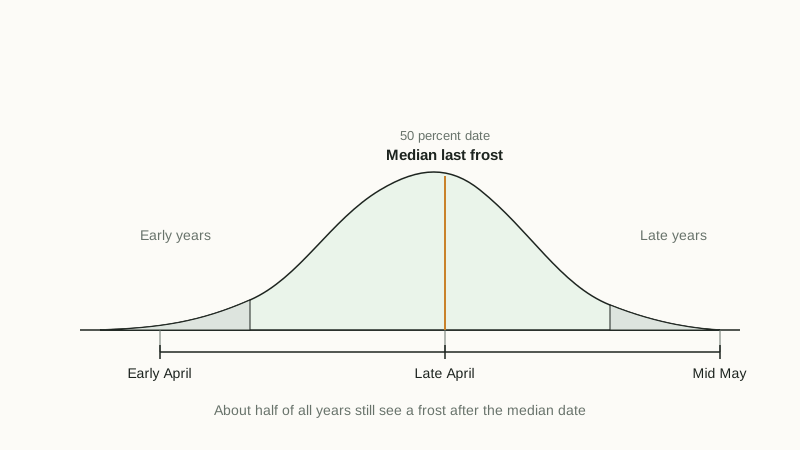
Bell peppers are the sweet, thick-walled peppers, blocky pods that are edible at the mature green stage and ripen through red, orange, or yellow if you leave them. They need the longest head start of the common garden crops: sow indoors about 8 weeks before the last frost, about 1/4 inch deep, on a heat mat or warm shelf since germination is slow and uneven below about 80 F. Transplant out 1 to 3 weeks after the last frost once nighttime lows hold above 50 F and the soil is genuinely warm; cold soil stalls pepper transplants for weeks. UMN Extension recommends black plastic mulch to warm the soil, suppress weeds, and hold moisture. Expect mature green pods roughly 60 to 70 days after transplanting, plus another two to three weeks for full color.
Planting details
- Start indoors: about 8 weeks before the last frost, with bottom heat
- Transplant: 1 to 3 weeks after last frost, once nights stay above 50 F
- Spacing: 18 to 24 inches
- Seed depth: about 1/4 inch
- Green stage harvest around 60 to 70 days after transplant; color takes weeks longer
Growing requirements
Full sun and warm soil are non-negotiable; bells are less forgiving of cool nights than thin-walled chile types. Aim for soil pH 6.0 to 6.8 with moderate fertility, and resist heavy nitrogen, which grows bushy plants that flower late and set poorly. Water deeply and evenly, roughly an inch a week, and mulch once the soil warms; hot, dry swings are the usual trigger for blossom drop and the sunken leathery patch of blossom end rot on ripening fruit. Flowers drop when nights fall below 55 F or days run above 90 F, so in hot climates expect a big spring set and a fall flush rather than midsummer fruit.
Harvesting and care
Pick pods at usable size while still green for everyday eating, or leave them to ripen to red, yellow, or orange for a sweeter, softer-walled fruit. Every pod left to color slows the next set, so steady picking gives the biggest season total. Cut fruit with snips rather than pulling, since loaded branches snap easily, and cage or stake plants in windy sites. Bells keep producing until frost stops them, and a healthy plant can be potted up and overwintered indoors for an earlier second-year crop in cold climates.
Common mistakes
- Transplanting into cold soil, which stalls plants for weeks
- Waiting for a green bell to turn red; many cultivars stay green or color slowly
- Overfeeding nitrogen, which grows lush bushes with few pods
- Erratic watering, which causes blossom end rot on ripening fruit
- Expecting fruit through extreme heat; set stalls above about 90 F
Companion plants
Basil, carrots, and onions share a pepper bed well; none shade the low plants or ask for different watering. Keep peppers clear of fennel, which is broadly allelopathic, and give them space from brassicas, which want cooler conditions and heavier feeding. Interplanting with a quick crop of lettuce or spinach uses the bed while the slow peppers are still small.
Varieties worth growing
- California Wonder: the standard blocky green-to-red bell; dependable and widely adapted
- King of the North: early and compact; the bell for short, cool seasons
- Lady Bell: medium pods with a strong midseason peak; disease resistant
- Archimedes and Currier: resistant to phytophthora and bacterial leaf spot; steady yield in UMN Extension trials
- Purple Beauty and Orange Sun: colored bells for the salad bowl
Frequently asked questions
Why are my bell peppers green instead of red?
That is normal. Green bells are simply the unripe stage; left on the plant another few weeks they color up and sweeten. Colored peppers cost more at the store for exactly that reason: they take longer to produce.
Are bell peppers the same species as hot peppers?
Yes, both are Capsicum annuum. Bells simply lack the capsaicin that makes hot types burn, thanks to a recessive gene. Any pepper can cross-pollinate with a bell, but crossing affects seed saved from the fruit, not the fruit itself.
Why is my plant flowering but not setting fruit?
Temperature. Fruit set fails below 55 F nights or above about 90 F days. The plant resumes setting once temperatures come back into range, so patience beats extra feeding.
How many bell peppers does one plant produce?
Commonly 5 to 10 full-sized pods over the season under good conditions. Regular picking and steady moisture push plants toward the high end.
Sources
- University of Minnesota Extension: Growing peppers in home gardens
- University of Minnesota Extension: Disease resistant bell peppers for home gardens
- NC State Extension Gardener Plant Toolbox: Capsicum annuum
- Iowa State University Extension seed germination requirements
- Utah State University Extension vegetable planting groups
- University of Maryland Extension fall vegetable gardening
- University of Minnesota Extension vegetable garden planting