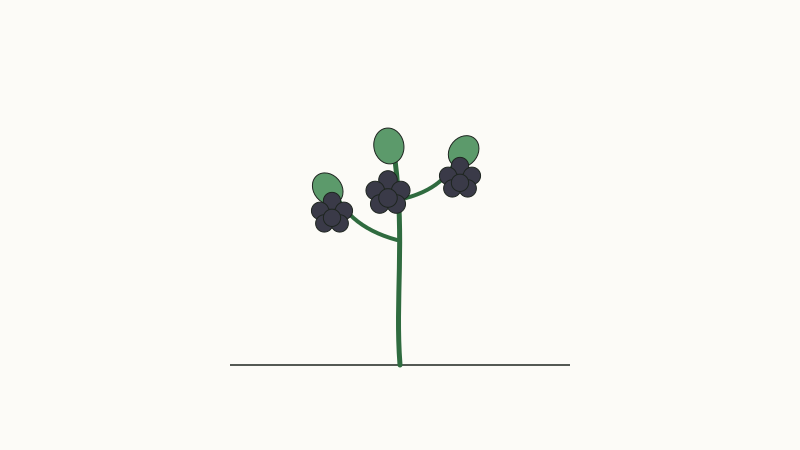
Flower growing guide
Belladonna
Atropa belladonna · Solanaceae
Sun
Full sun to part shade
Season
Perennial
Maturity
3 to 4 ft
Water
Moderate
Soil pH
5.5 to 8.0
Spacing
3 to 4 ft
By Dandre Noah
Planting belladonna
Start here: NC State Extension is blunt that belladonna is poisonous in all of its parts and should never be planted in home landscapes. This page exists mostly for identification. Deadly nightshade is a branching herbaceous perennial, hardy in zones 5 to 9, native to England, central and southern Europe, and the Mediterranean, and naturalized in disturbed ground in parts of New York, Michigan, California, Oregon, and Washington. Where it grows on its own it favors well-drained sandy loam in full sun to part shade, along roads, woodland edges, and waste sites. If a clump turns up in a yard with children, pets, or livestock, the right move is removal with gloves, not cultivation.
Planting details
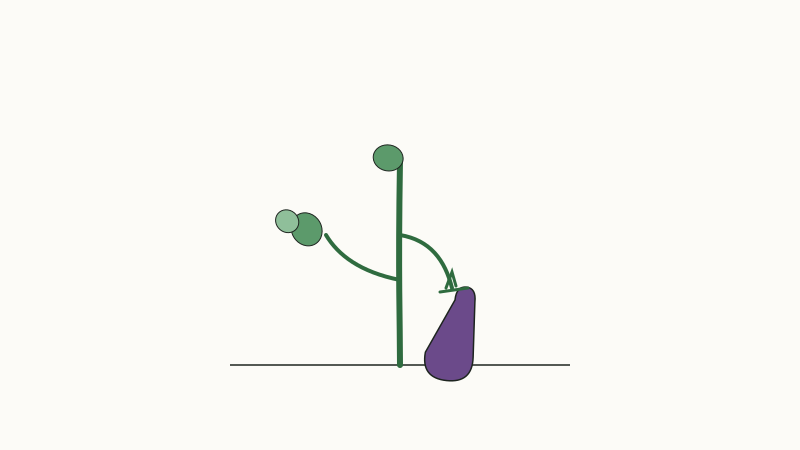
- Size: 3 to 4 feet tall and wide, multi-stemmed and branching
- Hardiness: zones 5 to 9; dies back to thick roots in winter
- Flowers: drooping, dull reddish purple bells with a green tinge, June to September
- Fruit: glossy purple-black berries under an inch, sweet-tasting and highly toxic
- Leaves: simple, alternate, 3 to 10 inches long; lower leaves solitary, upper in pairs
Growing requirements
Left to itself it is undemanding: well-drained sandy loam, full sun to partial shade, and ordinary moisture suit it, which is part of the problem, since it naturalizes readily in disturbed ground. It propagates by seed and spreads into rough, untended corners. Slugs are its most common pest. The same toughness that makes it easy to grow is what lets it persist where it is not wanted; thick roots resprout if the top is merely cut.
Harvesting and care
Identification is the care that matters. The dull purple bell-shaped flowers, large oval leaves, and single glossy black berries distinguish it from look-alikes: bittersweet nightshade, also toxic, is a vine bearing berries in clusters, while belladonna is an upright bush with solitary fruit. To remove it, dig out the thick root system wearing gloves, bag it, and keep it out of compost that feeds edibles. Any skin contact through an open wound can be dangerous, per NC State, and the sweet-looking berries are the deadliest lure for children.
Common mistakes
- Planting it near children, pets, or livestock; every part is poisonous
- Assuming berries birds eat are safe for people; birds are unaffected where we are not
- Confusing it with bittersweet nightshade or edible nightshade relatives
- Handling roots or foliage with bare hands or open wounds
- Cutting the top and calling it done; the thick roots resprout
- Tossing pulled plants into compost that will feed a vegetable bed
Companion plants
There is no honest companion planting advice for a plant extension services say not to grow. In botanical and medicinal collections it is isolated from edible beds and play areas and clearly labeled. The useful association is the family one: it sits in the nightshade family with tomatoes, peppers, eggplants, and potatoes, which is exactly why its leaves and berries can fool a gardener. If you want the gothic look without the hazard, foxglove and angel's trumpet carry similar drama, though both are also toxic and need the same siting care.
Frequently asked questions
How dangerous is belladonna?
Genuinely dangerous. All parts contain tropane alkaloids including atropine. NC State rates it high severity: small doses cause delirium and hallucinations, larger doses can kill, and contact with an open wound can be fatal.
Is it legal to grow belladonna?
Growing it is generally legal in the US, but NC State Extension advises it should never be planted in home landscapes. The liability of a sweet-tasting deadly berry in a yard outweighs the ornamental appeal.
Why is it called belladonna?
Italian for beautiful lady. The species name references the historical cosmetic use of its extract to dilate pupils. The genus name Atropa comes from Atropos, the fate who cuts the thread of life.
How do I tell belladonna from other nightshades?
It is a 3 to 4 foot upright bush with large oval leaves, dull purple bell flowers, and single glossy black berries. Bittersweet nightshade climbs and carries berries in clusters; black nightshade is smaller and weedy with clustered fruit.