Houseplant growing guide
Bleeding heart vine
Clerodendrum thomsoniae · Lamiaceae
Sun
Bright indirect to some direct
Season
Year-round indoors; heaviest bloom summer
Maturity
Vine to 10 to 15 ft
Water
Even in growth, less in winter
Soil pH
6.0 to 7.0
Spacing
Container with trellis or basket
By Dandre Noah
Planting bleeding heart vine
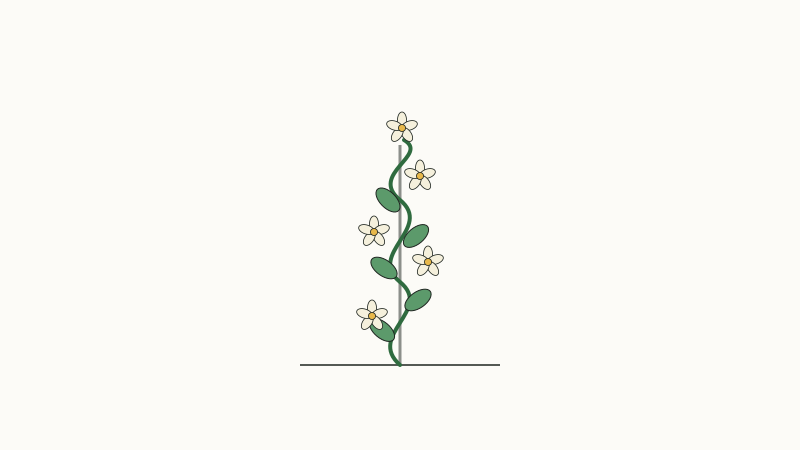
Pot it in a rich, well-drained mix with a small trellis or hoop already in place: Wisconsin Extension describes a twining evergreen vine from tropical west Africa that reaches 10 to 15 feet and needs light plus warmth to flower well. Outdoors it survives only where temperatures stay above roughly 45 degrees F, so in most of the country it lives in a container that can summer outside and come in before fall. It has no tendrils or suckers, so expect to tie and tuck the stems onto their support.
Planting details
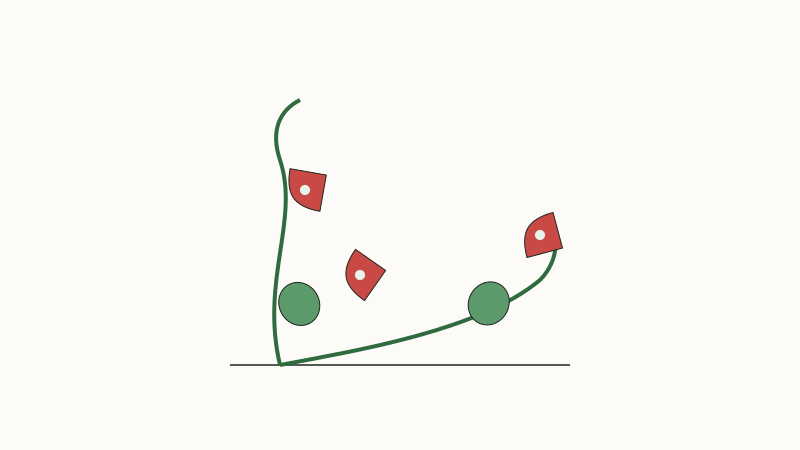
- Support: a hoop, small trellis, or hanging basket; it twines but cannot grip flat surfaces
- Flowers: white inflated calyces holding a crimson corolla, in clusters of 8 to 20
- The red corolla is short-lived; the calyx lingers, aging pink to tan
- Prune hard in late winter to keep it bushy rather than leggy
- Root and stem cuttings root readily for sharing
- Pollinated flowers form fruits that split to show black seeds against an orange interior
Growing requirements
Light is the gatekeeper: a bright window with some direct sun is what makes it flower rather than just vine. It wants high humidity and even moisture while actively growing, then a drier, cooler winter rest that helps set the next flush of buds, per University of Florida IFAS guidance for the species. Feed monthly in the growing season. Average room temperatures suit it, but keep it away from drafts below about 45 degrees, which it cannot forgive.
Harvesting and care
Prune freely: it blooms on growth it makes after pruning, so a hard cutback in late winter produces a fuller, heavier-flowering plant than polite tip-pinching. When it rests in winter, water less and keep it bright. Indoors its common pests are mealybugs and whiteflies, so inspect stems when you bring it in from a summer outside. In frost-free climates it can be a strong grower that spreads by rooting shoots, so container culture is the sane default for most gardeners.
Common mistakes
- Too little light, the main reason a bleeding heart vine never blooms
- Keeping it warm and wet through winter instead of giving a cool, drier rest
- No support and no pruning, which produces a leggy tangle
- Leaving it out past the first cold nights; damage starts around 45 degrees F
- Confusing it with Lamprocapnos, the hardy garden bleeding heart, an unrelated plant
Companion plants
On the bright window it shares conditions with other flowering tropicals: lipstick plant, Arabian jasmine, and hibiscus take the same warm, well-lit, humid routine. In a hanging basket it trails handsomely over the edge; underplanting with a humidity-loving fern uses the same watering rhythm. Keep it out of arrangements with drought plants like succulents, whose schedules fight its thirst.
Varieties worth growing
- Species form: white calyx with crimson corolla, the standard
- Delectum: larger flower clusters with a deeper red corolla
- Variegated form: cream-edged leaves, slightly less vigorous
Frequently asked questions
Is bleeding heart vine related to bleeding heart?
No. Wisconsin Extension notes it is a tropical vine in the mint family, while the garden bleeding heart is Lamprocapnos, a hardy woodland perennial. Only the flower shape links them.
Why is my bleeding heart vine not blooming?
Usually light, or a missing rest. It needs a genuinely bright window plus a cooler, drier winter pause to set flower buds. Pruning in late winter also pushes it into bloomable new growth.
Can it grow outside?
Year-round only where it stays above about 45 degrees F, roughly zones 10 to 12. In mild-winter parts of the Gulf Coast it survives with dieback; everywhere else it summers on the patio and winters indoors.
How big does it get?
Ten to fifteen feet in the ground in the tropics, but a container and regular pruning keep it a manageable 3 to 6 feet indoors.