Houseplant growing guide
Bleeding heart indoors
Lamprocapnos spectabilis · Papaveraceae
Sun
Bright, cool window
Season
Late winter to spring indoors
Maturity
Blooms in 4 to 6 weeks after cold rest
Water
Even moisture while growing
Soil pH
6.5 to 7.5
Spacing
One plant per 10 to 12 in pot
By Dandre Noah
Planting bleeding heart indoors
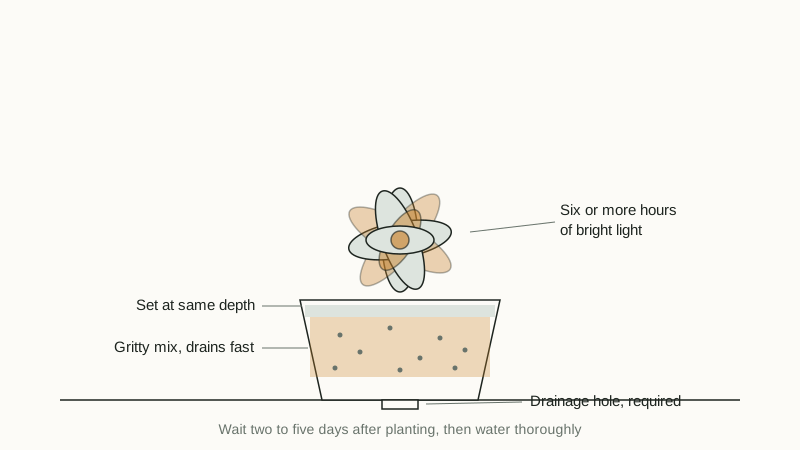
Growing bleeding heart indoors means working with its biology, not around it. Pot up a dormant root division in fall, sink the crown an inch or two deep in rich potting mix, and give it a cold rest: 8 to 12 weeks at 35 to 45 degrees F in an unheated garage, cold frame, or refrigerator shelf it cannot share with fruit. Then bring it into a cool, bright room and buds appear in weeks. NC State Extension notes growers force dormant rhizomes into Valentine's Day bloom this way in a cool greenhouse, which is exactly the home version.
Planting details
- Cold rest: 8 to 12 weeks at 35 to 45 degrees F before it will wake and bloom
- Pot size: 10 to 12 inches for one established root clump
- Keep the room cool after forcing; a 60 to 65 degree room holds blooms longest
- After bloom, let foliage die back naturally or plant it outside
- All parts are toxic if eaten, and the foliage can irritate skin
Growing requirements
A cool, bright room is the whole setup: a sunny window where temperatures stay under about 65 degrees keeps forced plants compact and blooming longer than a warm living room does. Potting mix should be rich and well-drained, kept evenly moist while the plant is in growth. The requirement you cannot buy is the cold rest; without those chilled weeks the roots will not break dormancy properly, which is why this is a seasonal guest and not a permanent houseplant.
Harvesting and care
Water steadily through the growing phase, then taper off as the foliage yellows after bloom; the plant is going dormant on schedule, not dying. Two honest end-of-season options: plant the root outside in a shady bed where it will come back as a garden perennial, or keep the pot barely moist in a cold spot and force it again next winter. Do not expect it to sit green on a shelf all year; that is not a life it will live.
Common mistakes
- Skipping the cold rest and wondering why it never blooms
- Forcing in a warm room, which gives weak, leggy, short-lived growth
- Watering a dormant pot like a growing one, which rots the roots
- Throwing out the 'dead' plant after bloom, when it is only dormant
- Placing it where pets or children can reach the toxic foliage
Companion plants
While it is in bloom indoors, set it among other cool-season guests: forced daffodils, potted ferns, and primroses all like the same bright, cool window. Once it moves outside, it belongs with hostas and ferns that fill the space its summer dormancy leaves. Keep it apart from warm-room tropicals; its needs run colder than the rest of the houseplant shelf.
Varieties worth growing
- Alba: white flowers, slightly more tolerant of warmth while forcing
- Gold Heart: gold foliage that brightens a cool window even before bloom
- Valentine: red flowers on dark stems, the showiest forcing choice
Frequently asked questions
Can bleeding heart live as a permanent houseplant?
Not honestly. It needs a cold dormant period each year and hot, dry rooms exhaust it. Treat it as a forced seasonal plant or grow it in a pot that summers outside.
How do I get it to rebloom indoors?
Pot a dormant root in fall, chill it 8 to 12 weeks at 35 to 45 degrees F, then bring it into a cool bright room. It blooms about a month later, the same way florists force it for February.
Why did my forced plant flop over?
Almost always warmth and weak light. Forced stems stretch hard in a hot dim room. Give it the coolest sunny window you have.
Is indoor bleeding heart the same plant as bleeding heart vine?
No. Bleeding heart vine is Clerodendrum thomsoniae, an unrelated tropical vine that does live as a true houseplant. This page is the hardy perennial Lamprocapnos, grown indoors temporarily.