Houseplant growing guide
Pothos
Epipremnum aureum · Araceae
Sun
Low to bright indirect
Season
Year-round indoors
Maturity
Decades
Water
Low to moderate
Soil pH
6.0 to 7.0
Spacing
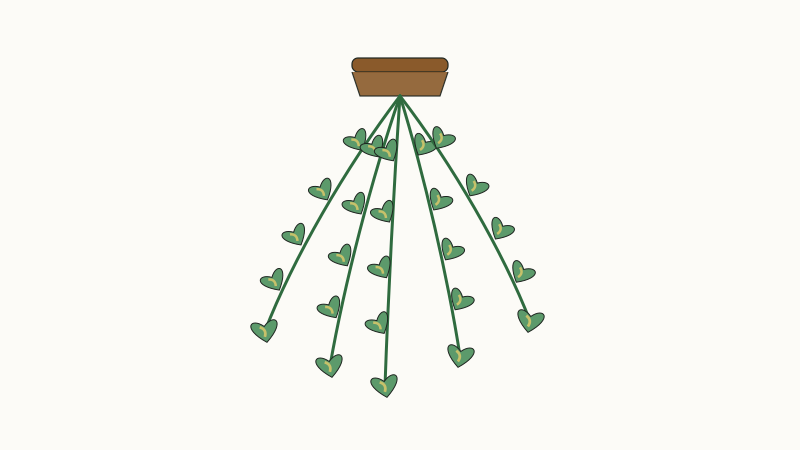
Container; trails 6+ ft
By Dandre Noah
Planting pothos
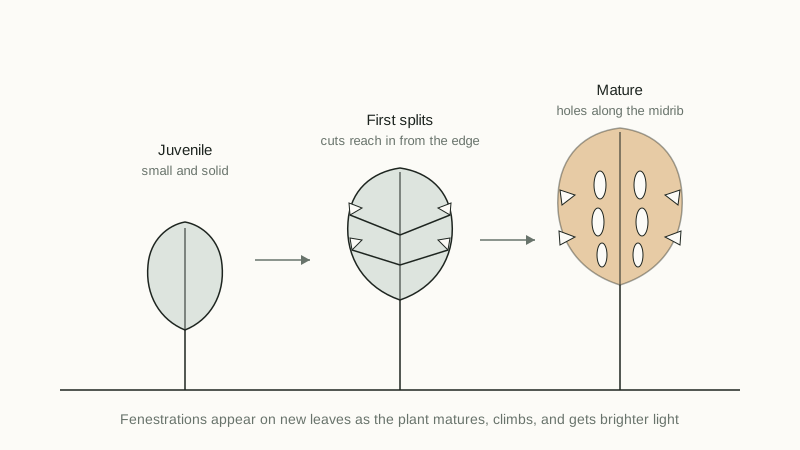
Pothos lives in a pot anywhere outside frost-free zones, and nearly every plant starts life as a cutting. Root a stem piece in water until roots reach about 2 inches, then pot it into a well-drained houseplant mix in a container with drainage holes. Repot in spring when roots circle, going up one size. Decide early whether you want it to trail or climb: a pothos allowed to climb a moss pole produces noticeably larger, mature leaves, while a hanging basket keeps the smaller juvenile form.
Planting details
- Repot every 1 to 2 years in spring, one pot size up
- Standard houseplant mix; drainage holes required
- Cuttings root in water in a few weeks; pot when roots hit about 2 inches
- Climbing support produces bigger mature leaves than trailing
- Closely related lookalike: heartleaf philodendron, which has thinner matte leaves
Growing requirements
Bright indirect light keeps the variegation strong; pothos survives genuinely low light for months but slowly reverts toward plain green. Water when the top 1 to 2 inches of mix dry, then water thoroughly. The plant droops visibly when thirsty and perks back within hours, which makes it an honest communicator. NC State Extension recommends feeding every other month except in winter dormancy. Normal room temperatures of 65 to 85 F suit it, and it accepts average home humidity without complaint.
Harvesting and care
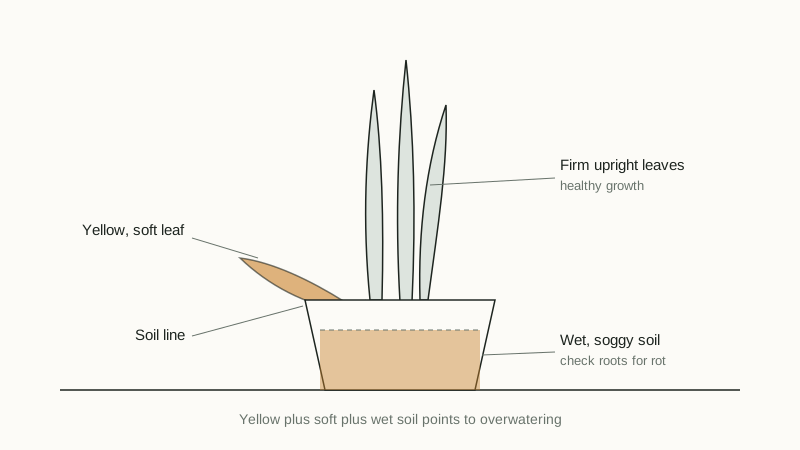
Left alone, pothos vines go bare at the base while all the leaves migrate to the tips. Cut vines back hard in spring and the plant pushes fresh growth; every trimmed piece with a leaf node roots into a new plant to fill the pot. Wipe dust off the waxy leaves occasionally. Older leaves yellow and drop naturally over time, which is not a problem unless it happens fast or in clusters, where the first suspect is a soggy mix.
Common mistakes
- Overwatering, which shows up as widespread yellow leaves and blackened margins
- Dim corners fading variegated cultivars back toward solid green
- Never pruning, which leaves long bare stems with leaves only at the ends
- Trailing it within reach of pets that chew
- Heavy feeding in winter when the plant is dormant
Companion plants
It sits happily beside snake plants, ZZ plants, and philodendrons, which share the bright-indirect light and dry-down watering rhythm. It is the plant most often sold as money plant in shops, sharing that name with the unrelated Pilea. Pothos is toxic to cats and dogs, so hang it or shelf it out of reach rather than trailing it to the floor.
Varieties worth growing
- Golden: the classic, green leaves splashed yellow
- Marble Queen: heavily marbled white; needs brighter light to hold the pattern
- Neon: solid chartreuse leaves that brighten a dim shelf
- Jade: plain deep green, the best choice for genuinely low light
- Njoy and Pearls and Jade: smaller leaves with crisp cream edging
Frequently asked questions
How do I propagate pothos?
Cut a stem section below a node, where a leaf joins the stem, and stand it in water or moist mix. Roots appear in a couple of weeks; pot it when they reach about 2 inches.
Why is my pothos losing its variegation?
Not enough light. Variegated leaves revert toward plain green in dim spots. Move the plant nearer a bright window and new growth comes in patterned again.
Is pothos toxic to pets?
Yes. The leaves contain calcium oxalate crystals that irritate the mouth and cause drooling and vomiting in cats and dogs.
What is the difference between pothos and philodendron?
They are different genera that look alike. Pothos has thicker, waxier leaves and grooved petioles, while heartleaf philodendron has thinner matte leaves and a papery sheath on new growth.