Houseplant growing guide
Monstera
Monstera deliciosa · Araceae
Sun
Bright indirect
Season
Year-round indoors
Maturity
Decades
Water
Moderate
Soil pH
5.5 to 7.0
Spacing
Container; 6 to 8 ft
By Dandre Noah
Planting monstera
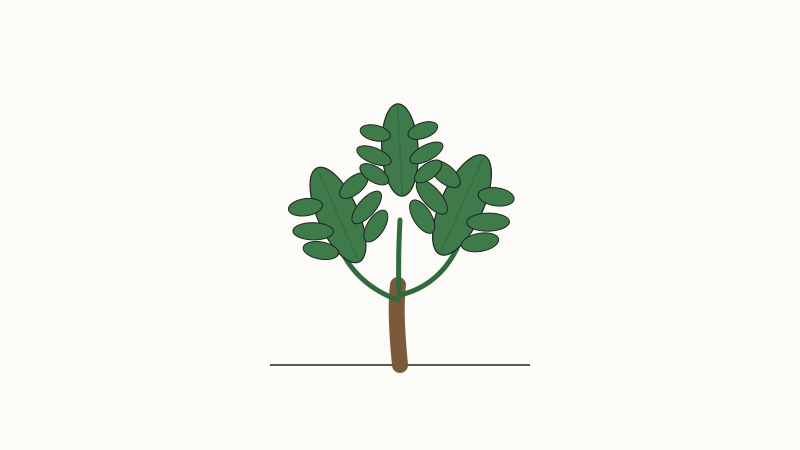
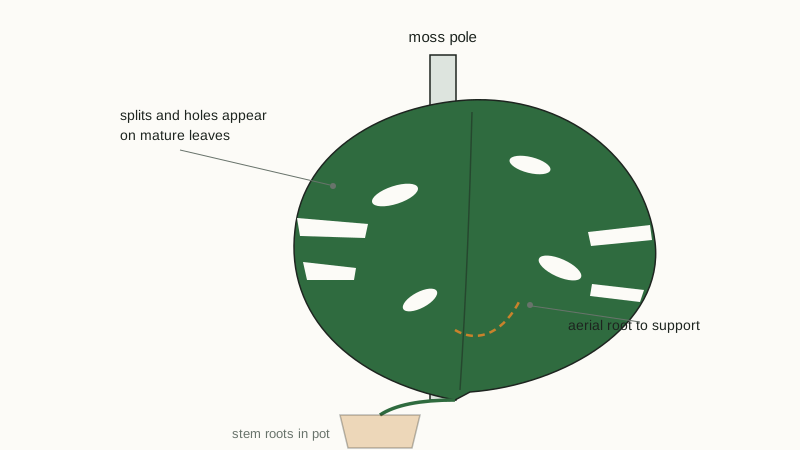
Monstera is a container plant everywhere outside zones 10 to 12, and what you pot it in matters: use a chunky aroid mix, roughly potting soil loosened with orchid bark and perlite, in a container with drainage holes. Repot in spring, going up one pot size. Think about support early, because wedging a moss pole into the pot while the plant is young is far easier than trying to support a flopping 6-foot vine later. The aerial roots that sprout along the stem are normal; guide them into the pole or back into the pot.
Planting details
- Repot every 1 to 2 years in spring, one pot size up
- Chunky aroid mix: potting soil plus orchid bark and perlite
- Give it a moss pole or sturdy support; stems break without one
- Stem cuttings with a node and an aerial root root readily in water or mix
- Outdoors year-round only in zones 10 to 12
Growing requirements
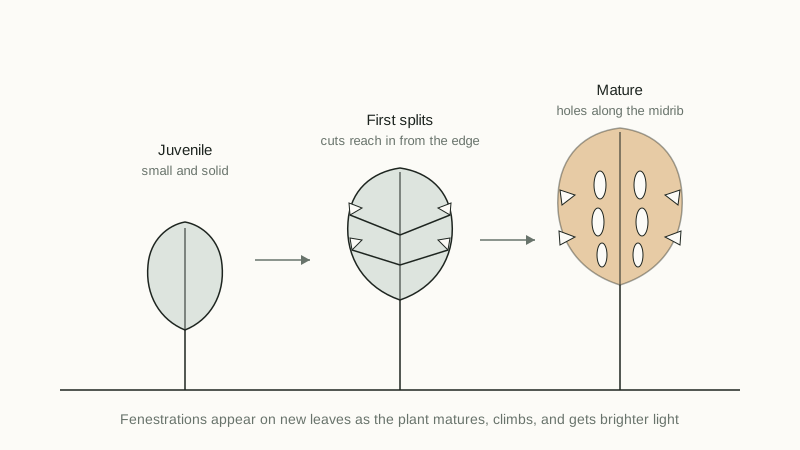
Bright indirect light a few feet from an east or south window is the sweet spot. Direct midday sun scorches the leaves, while dim corners produce small leaves that never develop splits, which is why light, not fertilizer, is the answer to a solid-leafed plant. Water thoroughly, then let the top quarter to third of the mix dry before watering again. It wants 60 to 85 F and appreciates humidity: a pebble tray or humidifier helps the aerial roots take hold of a moss pole. Feed monthly at half strength in spring and summer.
Harvesting and care
Wipe the big leaves so dust does not steal light. Prune in spring to keep the plant in bounds, and every cutting with a node becomes a new plant. Tuck stray aerial roots into the moss pole or the pot rather than snipping them off, since they pull moisture and hold the vine up. Rotate the pot now and then so growth stays even. Splits and holes arrive with age plus light plus something to climb; a juvenile plant trailing off a shelf may stay whole-leafed for years.
Common mistakes
- Expecting splits on a young or low-light plant; fenestrations need age and brightness
- No support, which leaves heavy stems to bend and break
- Letting the mix stay wet, which yellows leaves and rots roots
- Direct afternoon sun, which scorches patches on the big leaves
- Cold drafts and temperatures below about 55 F
Companion plants
It shares the bright-indirect floor with pothos, tree philodendron, and fiddle-leaf fig, all of which take the same water-then-dry rhythm. Do not confuse it with tree philodendron, the other plant sold as split-leaf philodendron: monstera leaves develop interior holes, while philodendron leaves only lobe at the edges. Monstera is toxic to cats and dogs, so keep leaves out of chewing range.
Varieties worth growing
- Albo Variegata: white-marbled leaves; rare, expensive, and slower growing
- Thai Constellation: cream speckles like a starfield; more stable than Albo
- Borsigiana: smaller, faster form often sold as the species
Frequently asked questions
Why won't my monstera develop splits?
Almost always light or age. Juvenile leaves are naturally solid, and low light keeps mature ones that way. Move it closer to a bright window and give it a pole to climb.
Is monstera toxic to pets?
Yes. All parts contain calcium oxalate crystals that burn the mouth and cause drooling and vomiting in cats and dogs.
How big does monstera get indoors?
Typically 6 to 8 feet with support, versus 70 feet climbing trees in its native Mexico to Panama range. Prune in spring to keep it smaller.
Are monstera and split-leaf philodendron the same plant?
The trade has confused them for decades. True split-leaf philodendron is Philodendron bipinnatifidum, whose leaves lobe deeply but do not get interior holes. Monstera leaves do both.