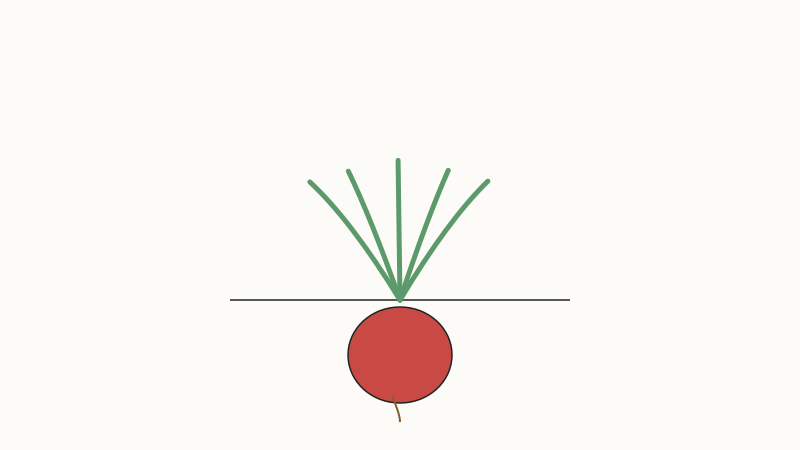
Vegetable growing guide
Radishes
Raphanus sativus · Brassicaceae
Sun
Full sun
Season
Cool
Maturity
25 to 35 days
Water
Moderate
Soil pH
6.0 to 7.0
Spacing
1 to 2 in
By Dandre Noah
Planting radishes
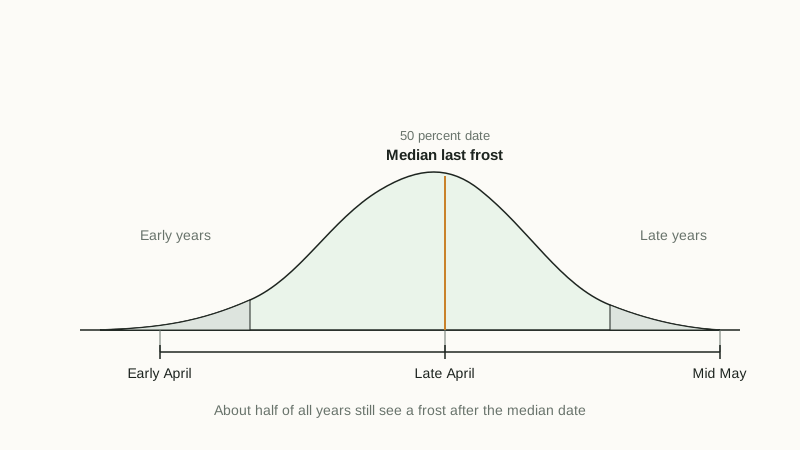
Radishes are among the fastest crops in the garden and the most useful for filling gaps between slower plantings. Sow seed directly as soon as the soil can be worked in spring, 2 to 4 weeks before the last frost, and repeat every 10 days to 2 weeks while the weather stays cool. They dislike both heat and transplanting, so summer sowings bolt fast and give poor roots. In mild climates a second crop can go in during late summer for a fall harvest.
Planting details
- Sow directly: 2 to 4 weeks before the last frost, then every 10 days in cool weather
- Thin promptly to 1 to 2 inches so roots have room to swell
- Seed depth: about 1/2 inch
- Sow among slower crops like carrots to mark the row
- Germination is fast, often under a week in cool soil
Growing requirements
Radishes want cool weather, loose soil, and very even moisture. Crowded or dry-grown roots come out small, woody, or unpleasantly hot. Soil pH 6.0 to 7.0 suits them, and they need little feeding; rich or freshly manured ground gives more top than root. Because they mature in 3 to 4 weeks, they are a good crop for the spaces between slower vegetables, and the loosening action of the root actually improves the bed for what follows.
Harvesting and care
Pull radishes as soon as they reach usable size, because quality declines within days once they pass their peak. The window is short: a root that is perfect on Monday can be pithy and hot by Friday. Cut the tops before storing so they do not draw moisture out, and keep the roots in the refrigerator crisper. In a long cool spell, a bed of radishes can be harvested steadily for weeks, which is why repeated small sowings beat one large one.
Common mistakes
- Skipping thinning, which produces a mat of roots that never size up
- Leaving roots in the ground too long, which turns them pithy and hot
- Sowing in hot weather, which gives poor roots and fast bolting
- Overfeeding, which grows tops instead of roots
- Letting the bed dry out, which makes the roots woody and sharp
Companion plants
Radishes are the classic row-marker for slow-germinating carrots and beets, since they come up in days and show where the slower crop is coming. They loosen the soil as they grow and are harvested before taller neighbors fill in. They also work well interplanted with cucumbers and squash, where their quick harvest clears space before the vines spread.
Varieties worth growing
- Cherry Belle: the standard round red radish; fast and dependable
- French Breakfast: elongated and mild, good for slicing
- Daikon: large Asian type for fall; loosens deep soil
- Watermelon: white outside, red inside; mild and slower to bolt
Frequently asked questions
Why are my radishes hot and woody?
Usually heat, crowding, or being left in the ground too long. Radishes need cool weather, even moisture, and prompt harvest.
Can I grow radishes in summer?
Not well in most climates. They bolt and turn woody in heat, so they are a spring and fall crop; a quick succession before summer crops fill in works better than trying to stretch them.
What do I do with radish greens?
They are edible. Young tops can go into salads or be sauteed like other brassica greens, though they get hairy and strong once the root is mature.