Houseplant growing guide
Amaryllis
Hippeastrum spp. · Amaryllidaceae
Sun
Bright to direct
Season
Winter bloom indoors
Maturity
6 to 8 weeks to bloom
Water
Low to moderate
Soil pH
6.0 to 6.5
Spacing
1 bulb per 6 in pot
By Dandre Noah
Planting amaryllis
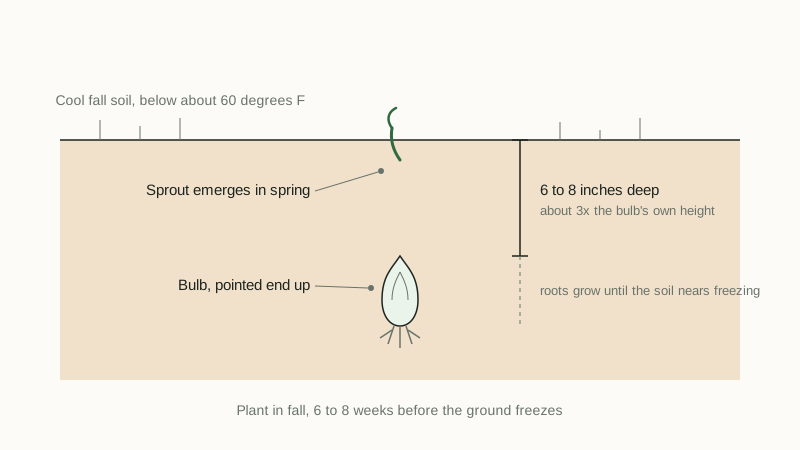
Most gardeners meet amaryllis as a holiday bulb, and the planting rule is unusual: set the bulb in a snug pot with the top third of the bulb sitting above the potting mix. A pot only 1 to 2 inches wider than the bulb is right, because excess wet mix around the roots rots the bulb before it blooms. Use fresh, well drained potting mix, water once to settle it, and place the pot in bright light at normal room temperature. Flower stalks emerge within a few weeks and open roughly 6 to 8 weeks after potting, so bulbs potted in late October bloom for the holidays and later potting pushes bloom into late winter. Stagger plantings two weeks apart for a long show. In zones 8 to 11, amaryllis also lives in the ground year round in a sunny, well drained spot.
Planting details
- Pot depth: top third of the bulb stays above the mix; never bury it
- Pot size: snug, just 1 to 2 inches wider than the bulb
- Water sparingly until growth shows, then moderately as leaves and stalk grow
- Rotate the pot weekly so the tall stalk grows straight
- Stake stems over 18 inches; a loaded stalk can tip a light pot
Growing requirements
During growth and bloom, give the pot the brightest spot you have, ideally a south or west window; weak light makes leggy, floppy stalks and short leaf growth that fails to recharge the bulb. Water when the top inch of mix dries, always into the mix rather than into the bulb's nose, and never let the pot sit in a saucer of water. Normal room temperatures suit it, though cooler nights around 60 to 65 F extend the life of open flowers. Soil should be slightly acidic and fast draining. After bloom, the plant wants full sun conditions to rebuild the bulb through its leaves, which is why many gardeners summer it outdoors in light shade.
Harvesting and care
The bloom is the beginning, not the end. Cut the spent flower stalk an inch above the bulb once flowers fade but leave every leaf. Keep the plant in bright light, water when dry, and feed monthly at half strength from spring through summer; the leaves are the factory that builds next year's flowers. Move the pot outside to a lightly shaded patio after frost danger passes. For holiday rebloom, bring it in by late summer and give an 8 to 10 week dry rest at 50 to 55 F, letting leaves yellow and die back, then cut them off, refresh the top inch of mix, and wake the bulb with water and light. Skipping the rest period still produces flowers, just later and less reliably.
Common mistakes
- Burying the bulb completely, which invites rot and can prevent blooming
- A pot much wider than the bulb, which holds wet mix around the roots
- Cutting off healthy leaves after bloom, which starves next year's flowers
- Watering during the dormant rest, the main cause of bulb rot
- Assuming it is a one season throwaway; bulbs rebloom for decades with a rest
Companion plants
Amaryllis is toxic to cats and dogs, especially the bulb, so it belongs on high shelves or in rooms pets cannot access. In mixed indoor displays it pairs with other winter bloomers like paperwhite narcissus, which share the same bright, cool window needs. Outdoors in zones 8 to 11, bulbs naturalize happily among daylilies and agapanthus, which cover the same sun and drainage conditions and hide the amaryllis foliage as it finishes.
Varieties worth growing
- Red Lion: the classic deep red; the most widely sold bulb
- Minerva: red with a white central star, very reliable
- Apple Blossom: soft pink and white, a longtime favorite
- Nymph: double white flowers brushed with pink
- Faro: ruffled salmon pink double blooms
Frequently asked questions
Is amaryllis the same as Hippeastrum?
Not botanically. Holiday amaryllis are Hippeastrum hybrids from South America. True Amaryllis belladonna, the naked lady, is a different South African genus.
How do I get my amaryllis to rebloom?
Grow the leaves hard through spring and summer with light, water, and monthly feeding, then give 8 to 10 weeks dry and cool around 50 to 55 F in fall before waking it.
Is amaryllis toxic to pets?
Yes. All parts contain alkaloids and the bulb is the most concentrated; it is toxic to cats and dogs, so keep it out of reach.
Can I plant my amaryllis outside?
In zones 8 to 11, yes, in sun and well drained soil. Colder zones can summer the pot outdoors and bring it in before frost.