Flower growing guide
Angelina stonecrop
Petrosedum rupestre 'Angelina' · Crassulaceae
Sun
Full sun
Season
Evergreen perennial
Maturity
Fills in 1 to 2 seasons
Water
Very low
Soil pH
6.0 to 8.0
Spacing
12 to 18 in
By Dandre Noah
Planting angelina stonecrop
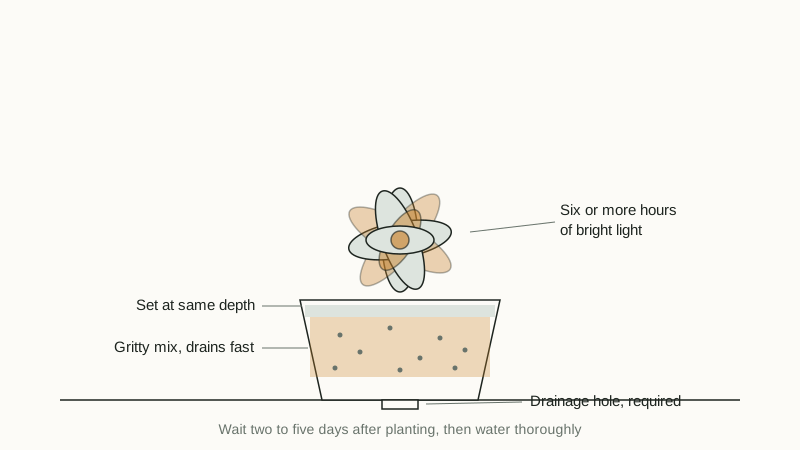
Plant Angelina in spring or fall in the driest, sunniest spot you have; this is a plant for the ground nothing else tolerates: rock gardens, wall crevices, gravel mulches, thin soils over stone, and the hot edge of a path. Hardy in zones 5 to 9, it forms a 4 to 6 inch mat of fleshy chartreuse needle leaves that flush orange red in cold weather. Space plants 12 to 18 inches apart and they knit into a solid carpet in a season or two, since the trailing stems root as they spread. The one absolute requirement is drainage; everything else about it is optional. Nursery pots or divisions are the usual start, though a single stem fragment pressed into soil roots with embarrassing ease.
Planting details
- Spacing: 12 to 18 inches for a groundcover that closes in 1 to 2 seasons
- Hardiness: zones 5 to 9
- Height: a 4 to 6 inch mat; spreads to 1 to 2 feet per plant
- Prefers neutral to alkaline soil and avoids acidic sites, unusual for a sedum
- Foliage goes bronze orange in cold weather for winter interest
Growing requirements
Full sun keeps the foliage its signature electric chartreuse; in shade the plant goes green, leggy, and sparse. Soil must drain fast. Unlike most garden plants it prefers neutral to alkaline ground, tolerating sandy, gravelly, and shallow rocky soils where richer plants starve, and it resents acidic sites. Water to establish, then essentially never again: established plants shrug off drought, heat, and poor soil that would kill most groundcovers. Fertilizer is unnecessary and counterproductive, producing soft growth that flops. Deer and rabbits leave it alone. The only real failure condition is wet feet, especially in winter, which rots the shallow crown fast.
Harvesting and care
Maintenance is nearly nil. In early summer, flat clusters of small yellow star flowers rise an inch or two above the mat; leave or snip them as you like. Trim the edges with shears whenever the mat wanders onto paths or into neighboring plants, since it spreads steadily and roots where it touches soil. Every few years, rake out dead thatch from the mat's center to keep it dense. Propagation is trivially easy: stem pieces or even fallen leaves dropped on soil root and grow, which is why clippings should go to the compost pile rather than the bed edge. In containers it trails over rims nicely, but bring succulent mixes, not rich potting soil.
Common mistakes
- Any standing water or wet winter soil, which rots the crown
- Shade, which turns the chartreuse needles green and straggly
- Rich, heavily amended soil, which produces soft floppy growth
- Acidic sites, which this species specifically dislikes
- Dropping trimmings in beds; every fragment roots where it lands
Companion plants
Angelina is the carpet under and around bigger dry garden plants: upright sedums, ice plant, lavender, ornamental grasses, agastache, and agave all share its love of sun, lean soil, and drought, and the chartreuse mat makes their colors pop. On rock walls it drapes over edges with trailing rosemary and creeping thyme, provided the thyme gets equal drainage. Do not plant it at the feet of thirsty perennials like hostas or astilbes, where regular irrigation rots it, and keep it out of beds with rich soil, where it grows loose and loses its tight mat.
Frequently asked questions
Is Angelina stonecrop a succulent?
Yes, a creeping evergreen succulent formerly classed as Sedum rupestre. It stores water in its needle leaves and tolerates severe drought once rooted.
Will Angelina grow in shade?
It survives light shade but loses the yellow color and grows thin. Full sun is what produces the tight, bright chartreuse mat it is planted for.
Is Angelina stonecrop invasive?
It spreads by rooting stems and rooting fragments, so it wanders out of bounds in beds. In most gardens shearing the edges once or twice a year keeps it in line.
Does it flower?
Small yellow star shaped clusters appear in early to midsummer just above the foliage. The foliage, not the flower, is the main show.