Flower growing guide
Annual vinca
Catharanthus roseus · Apocynaceae
Sun
Full sun
Season
Warm
Maturity
90 to 110 days
Water
Low once established
Soil pH
5.5 to 6.5
Spacing
8 to 12 in
By Dandre Noah
Planting annual vinca
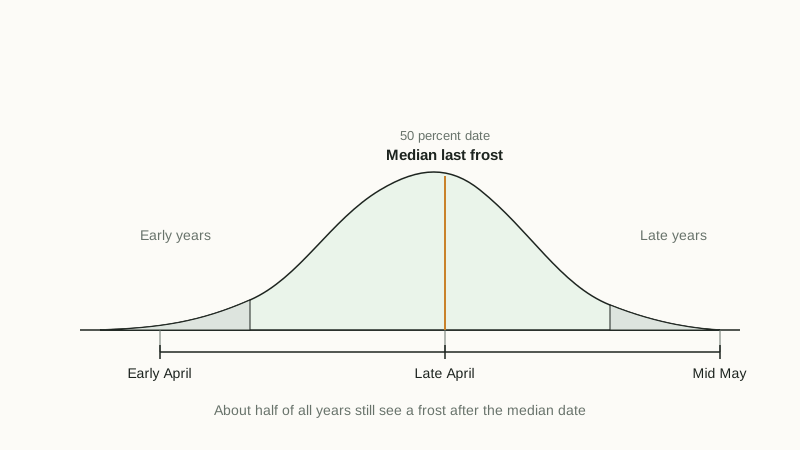
The first rule of annual vinca is patience: it does not go into the ground until the soil is genuinely warm. Set transplants out a week or two after the last frost once soil temperatures are above 60 F, which in much of the country means May rather than April. Vinca planted into cold, wet ground stalls and often rots before it ever grows. Starting from seed takes a long lead time, roughly 10 to 12 weeks indoors before the last frost, so most gardeners buy starts. It is a true tender plant: a perennial only in zones 10 and 11, grown everywhere else as a summer annual that ends with the first frost.
Planting details
- Start seed indoors 10 to 12 weeks before the last frost; it is slow to reach bloom
- Seed depth: about 1/4 inch; keep the tray dark and warm, 70 to 75 F
- Spacing: 8 to 12 inches for upright types, wider for trailing cultivars
- Transplant only into warm soil above 60 F after frost risk passes
- Modern hybrids need no pinching or deadheading to stay covered in bloom
Growing requirements
Full sun is where vinca earns its reputation, blooming through heat that stops petunias and impatiens cold. It tolerates part shade but flowers thinner there. Drainage is the dealbreaker: it handles sandy or average soil, drought, and reflected heat, and it rots in ground that stays wet. Clemson Extension puts its preferred soil pH at 5.5 to 6.0, though it tolerates higher. Water to establish, then let the bed dry between waterings; the plant runs better dry than wet. Containers need more regular water but still want a pause between soakings. Fertilizer needs are modest, and rich feeding mostly grows leaves.
Harvesting and care
There is almost nothing to do once it is in warm ground, which is the point of the plant. Spent flowers drop on their own, so deadheading is unnecessary on modern cultivars. Water at the base rather than overhead, since wet foliage in humid weather is what lets aerial phytophthora blight collapse a whole bed. In zones 10 and 11 it carries over as a short-lived perennial; elsewhere it sometimes self-sows a few volunteers near last year's plants, but never enough to replace replanting.
Common mistakes
- Planting into cold, wet soil in early spring, which is how nearly all vinca failures start
- Overhead watering or frequent irrigation, which invites phytophthora blight and root rot
- Confusing it with Vinca major and Vinca minor, the shade-tolerant periwinkle vines that can be invasive
- Overfeeding, which pushes leafy growth over flowers
- Deep shade, which cuts bloom to almost nothing
- Starting seed late; it needs 10 to 12 weeks indoors to flower on time
Companion plants
Annual vinca pairs with the other heat-proof sun lovers that share its dry-down rhythm: lantana, zinnia, and marigold in beds, and petunia or angelonia in mixed containers. It fills the hot edge of a border where irrigation does not reach and the front of vegetable beds, where its constant bloom feeds pollinators without competing for water. Keep it out of shade beds and away from plantings that need frequent overhead watering; wet feet are how you lose it.
Varieties worth growing
- Cora group: bred for real resistance to phytophthora root rot and aerial blight
- Titan: the largest flowers in the group on heat-tolerant plants
- Pacifica: early, uniform bloomers in a wide color range
- Mediterranean and Soiree: low trailing types for baskets and bed edges
- Jams 'N Jellies Blackberry: deep purple, one of the darkest vinca flowers available
Frequently asked questions
Is annual vinca the same plant as periwinkle groundcover?
No. Annual vinca is Catharanthus roseus, a sun-loving bedding plant. The shade groundcovers sold as periwinkle or vinca are Vinca major and Vinca minor, unrelated vines that are invasive in many regions.
Does annual vinca need deadheading?
No. Modern cultivars drop spent blooms on their own and keep flowering from early summer to frost without pinching or deadheading.
Why did my vinca collapse in midsummer?
Usually phytophthora root rot or aerial blight after wet, humid weather. Improve drainage, water at the base only, and choose the Cora series where blight has been a problem.
Will annual vinca come back next year?
Only in zones 10 and 11, where it survives as a tender perennial. Elsewhere it may self-sow a few seedlings, but plan to replant each spring.