Houseplant growing guide
Anthurium
Anthurium andraeanum · Araceae
Sun
Bright indirect
Season
Year-round indoors
Maturity
2 to 4 years
Water
Moderate
Soil pH
5.5 to 6.5
Spacing
1 to 2 ft
By Dandre Noah
Planting anthurium
The flamingo flower is a rainforest epiphyte from Colombia and Ecuador, and that origin dictates the whole care routine. Pot it in a coarse, fast-draining aroid mix: a soilless blend of peat, pine bark, and perlite, or simply half cactus mix and half orchid bark. Dense regular potting soil suffocates the roots and rots them. Anthuriums bloom best slightly potbound, so repot in spring every two to three years and only one size up, when roots crowd the pot. Outdoors they survive only in zones 11 to 12, so everywhere else this is a windowsill plant or a summer patio guest that comes in well before cold nights.
Planting details
- Pot in a chunky aroid mix of bark, peat, and perlite; dense soil rots the roots
- Repot every 2 to 3 years in spring; they flower best slightly potbound
- Water when the top inch of mix dries; rainwater or filtered water is best
- Keep temperatures 65 to 80 F and humidity 60 percent or better
- Toxic to cats, dogs, and people if chewed; every part carries oxalate crystals
Growing requirements
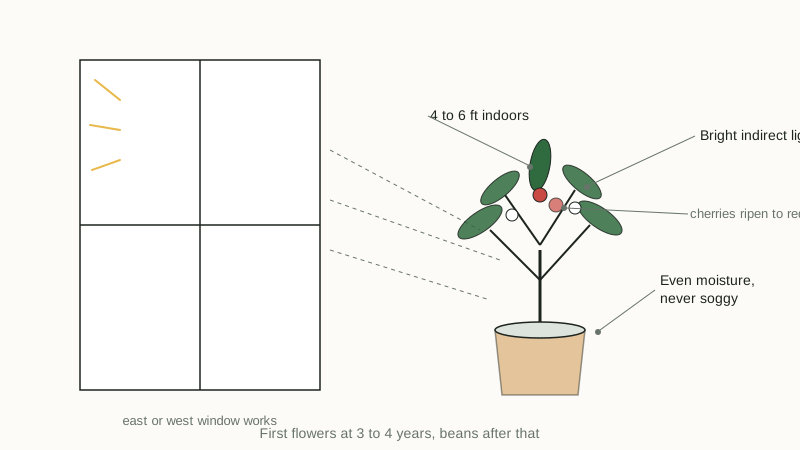
Bright indirect light is the target, and a south or west window works as long as direct sun never touches the leaves, which scorch fast. Too little light is the common reason anthuriums stop blooming. Keep the mix lightly moist, watering when the surface dries rather than on a schedule, and never leave the pot standing in water. Warmth is non-negotiable: hold 65 to 80 F and keep the plant away from drafts and cold glass. Humidity of 60 to 80 percent keeps the leaf tips from browning, so a pebble tray or humidifier earns its keep in heated homes. Feed with a dilute liquid fertilizer through the growing season; a higher-phosphorus formula encourages more bloom.
Harvesting and care
Each waxy spathe lasts up to four weeks, and a happy plant throws several rounds a year. Cut spent blooms at the base to keep new ones coming, and wipe the glossy leaves now and then so dust does not block light. Yellowing leaves usually trace back to overwatering or a dense mix; brown tips mean the air is too dry. Propagate by division at repotting or by stem cuttings with aerial roots attached. The caution that matters most: all parts contain calcium oxalate crystals that burn mouths and irritate skin, so treat it as out of reach for pets and small children.
Common mistakes
- Dense potting soil, which suffocates the roots and causes rot
- Direct sun on the leaves, which bleaches and scorches them
- Watering on a calendar instead of when the top inch dries
- Expecting blooms in low light; dim corners stop flower production
- Cold drafts and windowsills under about 60 F
- Leaving it where cats or dogs can chew; the whole plant is toxic
Companion plants
Anthurium shares its bright, humid corner with the rest of the aroid and tropical understory crowd. Peace lily wants the identical light and watering rhythm, and prayer plant or calathea fills the space under its leaves with contrasting texture. In pet households remember the whole grouping is only as safe as its most toxic member: anthurium and peace lily both need elevation, while calathea and rattlesnake plant deliver the same look without the hazard.
Varieties worth growing
- A. scherzerianum: pigtail plant; smaller, with a corkscrew spadix instead of a straight one
- A. clarinervium: velvet heart-shaped leaves with bold white veins; grown for foliage
- A. crystallinum: larger velvety leaves with silver veining; a collector favorite
- A. veitchii: king anthurium; long corrugated pendant leaves, needs real humidity
- 'Midori' and 'Acropolis': green and white spathe cultivars of the florist's andraeanum
Frequently asked questions
Why is my anthurium not blooming?
Almost always too little light. Move it to bright indirect light, feed dilute fertilizer through the season, and remove spent blooms. Repotting into a fresh airy mix also restarts stalled plants.
Is anthurium toxic to cats and dogs?
Yes. Every part contains calcium oxalate crystals that cause mouth burning, drooling, and vomiting if chewed. Keep it on a high shelf or in a pet-free room.
How often should I water an anthurium?
When the top inch of mix is dry, typically about once a week in summer and less in winter. The rhythm matters more than the schedule: never let it sit in water.
Can anthurium live outside?
Year-round only in zones 11 and 12. Elsewhere it can summer outdoors in full shade once nights stay warm, and comes back inside well before fall cold.