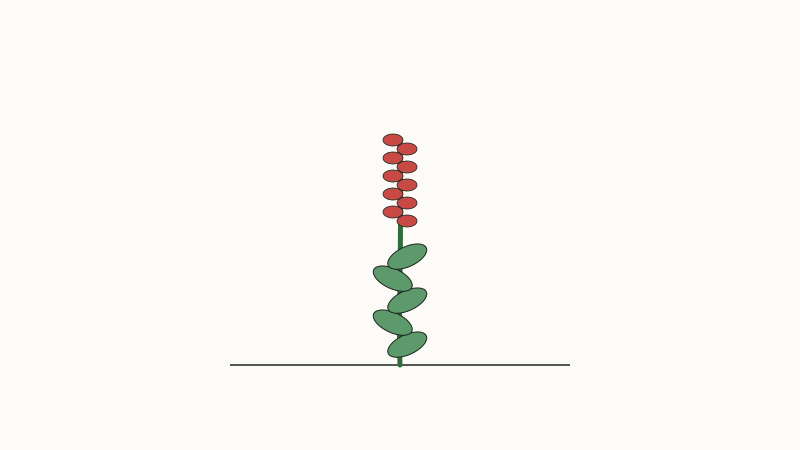
Flower growing guide
Autumn sage
Salvia greggii · Lamiaceae
Sun
Full sun
Season
Semi-evergreen subshrub
Maturity
Full size in 1 to 2 years
Water
Low
Soil pH
6.0 to 8.0
Spacing
24 to 36 in
By Dandre Noah
Planting autumn sage
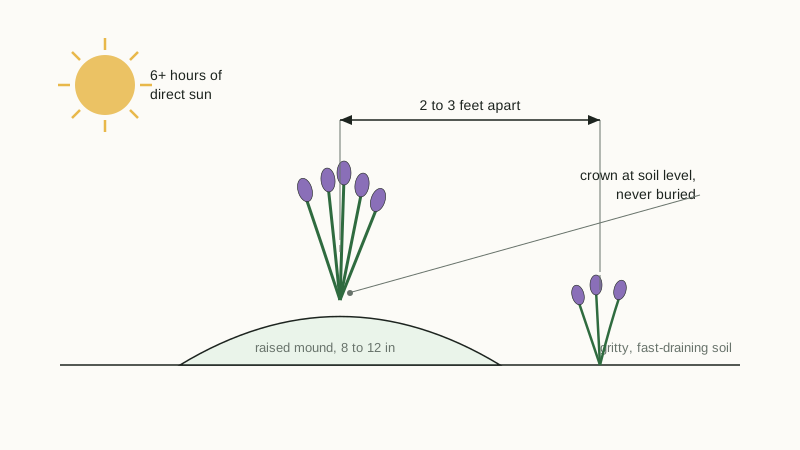
Plant autumn sage in spring after frost in full sun and fast draining soil, in zones 6 to 9. This little subshrub comes off the rocky slopes of Texas and northern Mexico, and it wants to be planted like it: gravelly, alkaline to neutral, lean ground, not amended garden loam. Set plants 2 to 3 feet apart and water them through their first summer; after that it is one of the most droughtproof flowering perennials you can grow. In zones 6 and 7 it often dies to the ground in winter and resprouts, so give it a mulch and patience in spring. The single rule that kills it is wet feet, especially winter wet in heavy clay, where it rots instead of freezing.
Planting details
- Mature size: 2 to 3 feet tall and wide, with woody, brittle stems
- Hardiness: zones 6 to 9; root hardy to zone 6 with mulch, evergreen further south
- Blooms spring to frost, pausing in peak heat and flushing again in fall
- Flower colors: red, pink, coral, white, and bicolors on one inch lipped blooms
- Leaves are edible and fragrant; flowers are edible too
Growing requirements
Full sun and drainage, and then near total neglect. Autumn sage thrives in rocky, gravelly, or sandy soil of low to average fertility and does poorly in rich, moist, or heavily amended beds, where it goes leggy and rots. Once established it is genuinely drought and salt tolerant, needing irrigation only in extreme dry spells; overwatering is far more dangerous than underwatering. In the hottest parts of its range it appreciates a little afternoon shade, which also reduces the midsummer bloom pause. Fertilizer is unnecessary and counterproductive. Its aromatic foliage makes it reliably deer resistant, and its tubular flowers feed hummingbirds, butterflies, and bees from spring to frost while seed eaters work the fall heads.
Harvesting and care
Autumn sage stays dense only with regular cutting. Shear the whole plant back by about a third in late winter or early spring before new growth, which keeps it compact instead of woody and open. In midsummer, when heat pauses the bloom, a light shear triggers a heavy fall flush, the display that earns it the name autumn sage. Do not cut into old bare wood in fall, since the brittle stems resent late hard pruning and winter damage needs spring to assess. Remove spent flower spikes to keep it tidy. It has no serious pest or disease problems in the right spot; root rot in wet soil is the only real killer. Semi-ripe cuttings root easily, which matters because named cultivars do not come true from seed.
Common mistakes
- Heavy clay or wet winter soil, which rots the roots instead of the cold killing it
- Overwatering and rich soil, which make it leggy, floppy, and sparse blooming
- Skipping the late winter shear, so it grows woody, sparse, and open in the center
- Hard pruning in fall, which it cannot recover from before winter
- Too much shade, where it stretches thin and barely flowers
Companion plants
Autumn sage belongs in the dry, sunny pollinator border with plants that share its low water needs. Lantana blooms alongside it in the same hot, dry conditions, and agastache adds a contrasting flower shape for hummingbirds on identical lean ground. Butterfly weed rounds out a southwest style bed that stays colorful with almost no irrigation. It also fills the edge of a rock garden or a low, informal hedge line. Keep it out of irrigated beds and away from thirsty perennials, whose watering will kill it faster than any pest.
Varieties worth growing
- Furman's Red: deep red flowers; a Texas A&M recognized standard for the region
- Lipstick: bright magenta pink blooms on a tidy plant
- Wild Thing: pink flowers and the best cold hardiness of the group
- Dark Dancer: burgundy flowers; a prolific bloomer per NC State
- Elk Pomegranate: raspberry colored flowers in the Elk series
Frequently asked questions
Does autumn sage come back every year?
Yes, as a perennial subshrub in zones 6 to 9. In the colder end it may die to the ground in winter and resprout from the base in spring, so wait for new growth before assuming it is dead.
Is autumn sage deer resistant?
Yes. The aromatic foliage is one of its best traits, and both NC State and Texas sources list it among the plants deer rarely browse.
When does autumn sage bloom?
Spring through fall in waves, despite the name. It pauses in the hottest weeks, then puts on its heaviest flush in late summer and autumn until frost.
Can autumn sage grow in clay soil?
Not well. Wet clay in winter is the main way gardeners kill it. If you have clay, plant it on a slope, a raised bed, or a rock garden where water never stands.