Fruit growing guide
Avocado
Persea americana · Lauraceae
Sun
Full sun
Season
Broadleaf evergreen
Maturity
3 to 4 years grafted
Water
Moderate; deep and infrequent
Soil pH
5.0 to 7.0
Spacing
20 to 30 ft
By Dandre Noah
Planting avocado
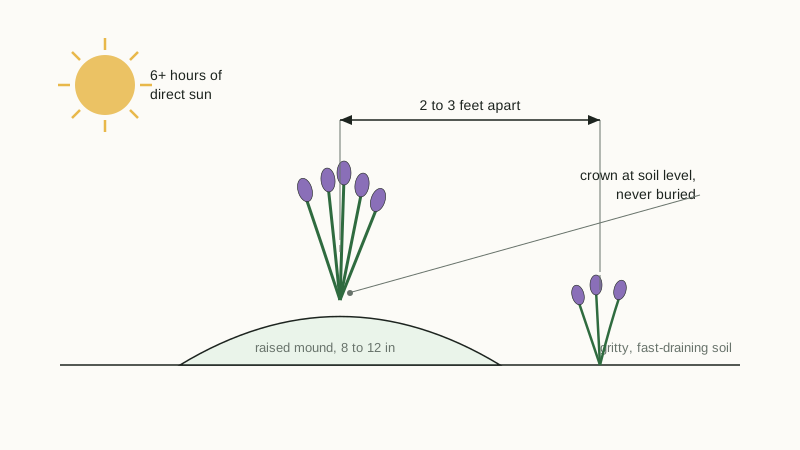
Growing avocado for fruit is a warm climate project: the species is rated for zones 9 to 12, and only the Mexican race types handle even the lightest frost. Plant a grafted, named tree in spring in full sun and rich, sharply drained soil, because avocado has zero tolerance for wet feet and rots fast in waterlogged ground. Dig a wide hole, set the tree so the first root flare sits at or just above grade per UF/IFAS guidance, and mulch a broad ring while keeping mulch off the trunk. A grafted tree fruits in 3 to 4 years; a seedling can take 8 to 15 years and will not come true to the fruit it came from. Where frost is possible, plant cold hardy Mexican cultivars like Mexicola, Lila, or Brogdon on a sheltered south or west wall and be ready with frost cloth.
Planting details
- Mature size: 30 to 60 feet unpruned; can be held at 12 to 15 feet with annual pruning
- Hardiness: Mexican types to about zone 8b to 9 with protection; Guatemalan and West Indian need 10 to 12
- Three races: Mexican (hardiest, highest oil), Guatemalan, West Indian (most tropical)
- A grafted tree fruits in 3 to 4 years; a seedling takes a decade and varies wildly
- Shallow feeder roots: mulch wide, never cultivate under the canopy
Growing requirements
Avocado wants full sun, deep rich soil, and impeccable drainage above all else; Phytophthora root rot in wet soil is its most common killer. Water deeply but infrequently, letting the soil dry somewhat between waterings, because a constantly wet root zone is fatal. It dislikes salt, so coastal gardeners and those on salty well water will see leaf burn. Feed two to three times during the warm months with a balanced fertilizer, and add chelated iron on alkaline sites. Wind protection matters for young trees, and in marginal zones frost protection on cold nights is the difference between a tree and a stump. Humidity is not required; it fruits in dry California as well as humid Florida.
Harvesting and care
Avocado needs little pruning once shaped; selective annual pruning holds a grafted tree at a manageable 12 to 15 feet, and UF/IFAS recommends removing strong vertical shoots to favor lateral fruiting wood. Protect young bark from sunscald and keep string trimmers and mowers off the shallow trunk. The flowers are unusual: each opens as female one day and male the next, in either a morning female or morning male sequence called type A and type B. A lone tree can set fruit, but planting an A type like Hass near a B type like Bacon or Fuerte noticeably improves the crop. In the Southeast, watch for laurel wilt, a beetle carried disease that has killed tens of thousands of trees; a sudden full canopy wilt with dark streaked sapwood is a report it, don't prune it situation. As a houseplant, a store bought pit grows into a handsome foliage tree but will never fruit.
Common mistakes
- Planting a seed from the grocery store and expecting fruit; it takes a decade and comes untrue
- Poor drainage or overwatering, the root rot that kills more trees than frost does
- Setting the graft or root flare below grade at planting
- Buying a tropical West Indian cultivar for a zone 9 garden; match the race to your cold
- Cultivating or planting under the canopy, which damages the shallow feeder roots
Companion plants
In the warm climates where avocado fruits, it sits in a subtropical orchard with banana, which shares its love of rich soil, deep water, and frost free air and helps humidify the microclimate. Comfrey is the classic orchard floor companion under the canopy, feeding pollinators and pulling up minerals without competing with the avocado's shallow roots. Keep lawn, vegetables, and anything needing cultivation out from under the drip line, since avocado's feeder roots sit at the surface and resent being disturbed or shaded by taller neighbors.
Varieties worth growing
- Hass: the standard; type A flower, rich nutty fruit, zone 9b to 10
- Mexicola: a hardy Mexican type; thin edible skin, cold tolerant
- Bacon: a type B pollinator for A types like Hass; fairly cold hardy
- Brogdon: a cold hardy Florida selection for marginal zone 9 sites
- Monroe: a large Florida green skin type for warm, humid sites
Frequently asked questions
Will my avocado tree grown from a pit ever fruit?
It can, but it usually takes 8 to 15 years and the fruit will not match the parent. For a real crop, buy a grafted named cultivar.
Do I need two avocado trees to get fruit?
One tree can set fruit on its own, but pairing a type A with a type B cultivar improves pollination and yield, since their male and female flower phases overlap.
When do you pick avocados?
Pick them mature but still hard. Avocado does not soften on the tree; harvest when the fruit reaches full size and the seed coat turns brown, then ripen indoors for days.
What is killing avocado trees in Florida?
Laurel wilt, a fungal disease spread by the redbay ambrosia beetle, has killed tens of thousands of Florida trees since 2012 and is the serious threat to watch for.