Houseplant growing guide
Basket plant
Callisia fragrans · Commelinaceae
Sun
Low to bright indirect
Season
Year-round indoors
Maturity
Up to 3 ft spread
Water
Moderate
Soil pH
6.0 to 7.5
Spacing
Pot
By Dandre Noah
Planting basket plant
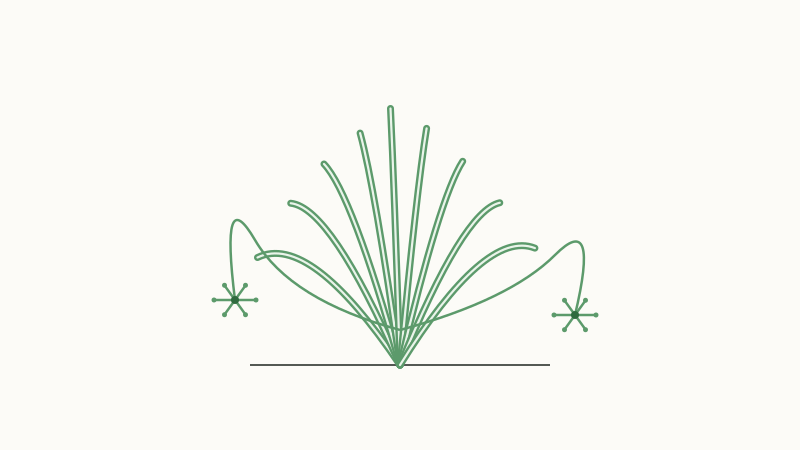
Hang it or set it on a shelf in low to medium indirect light and let the stems spill. Callisia fragrans is a Mexican member of the spiderwort family, kin to inch plants and wandering dude, and it grows the same way: rosettes of strap-shaped leaves ride out on long stolons that root wherever they touch soil. Indoors it stays evergreen all year and grows fast enough to need yearly repotting. Outdoors it is hardy only in zones 9 to 11, and in central and south Florida it is listed as a Category II invasive, so keep it in a container there. Mature rosettes send up clusters of small white flowers that are genuinely fragrant, unusual for a plant grown for foliage.
Planting details
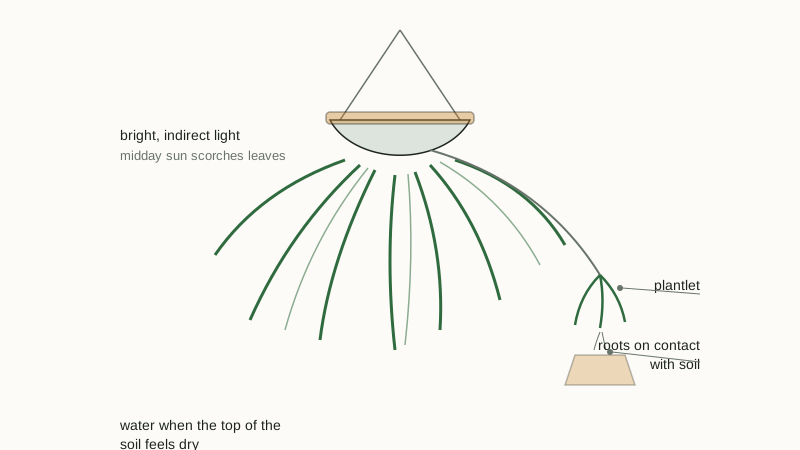
- Low to medium indirect light; direct sun scorches the leaves or turns them purple
- Water when the top inch of mix dries; even moisture, never soggy
- Fast grower: plan on repotting or refreshing the basket every year
- Stolons root at every node; snip off plantlets to propagate
- Hardy outdoors only in zones 9 to 11; treated as invasive in parts of Florida
Growing requirements
Bright indirect light is ideal, though it tolerates the low light of a north window better than most trailing plants; a little direct sun pushes attractive purple tones, while too much scorches the straps. Use a peat-based potting mix with some grit for drainage and keep it evenly moist through the growing season, backing off in winter so the upper mix dries between waterings. Average room humidity is fine, and a monthly balanced feed from spring through fall keeps the growth dense. Warm rooms suit it; anything near frost damages it.
Harvesting and care
Pinch stem tips to keep the plant bushy, since unpinched growth goes long and leggy with bare stretches between rosettes. Propagation could not be easier: the plantlets at the end of each stolon root in moist mix or a glass of water in days. Repot yearly because a rootbound basket plant stalls, and step up only one pot size. Trim out tired bare stems at the base rather than shortening them. In warm zones it can summer outdoors in shade; bring it back in well before frost.
Common mistakes
- Hanging it in direct sun, which scorches or bleaches the strap leaves
- Letting the mix dry out for weeks, which thins the foliage and stalls growth
- A pot with no drainage, which rots the rooted nodes at the base
- Planting it as groundcover in frost-free areas, where it escapes into hammocks and disturbed ground
- Never repotting; a crowded rootball stops producing new trails
Companion plants
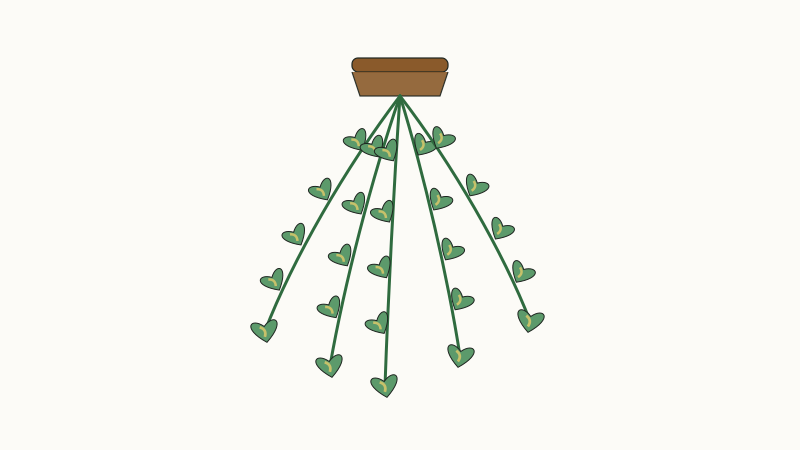
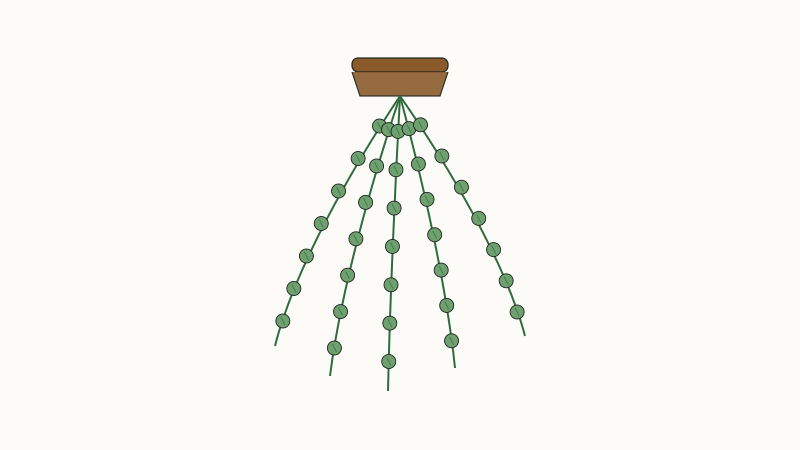
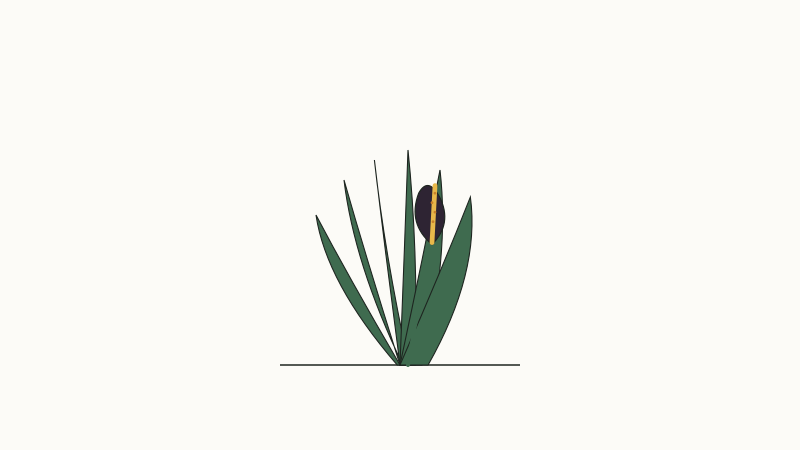
It shares the same care rhythm as spider plants, pothos, and string of pearls, which makes those the natural neighbors in a grouped display. The strappy rosettes contrast well against heart-shaped or bead-like foliage. Outdoors in warm zones it can underplant shade-tolerant tropicals, but keep it in its own pot where invasiveness is a concern.
Varieties worth growing
- Melnikoff: variegated form with cream, pink, and purple streaked leaves
- Callisia repens (turtle vine): tiny-leaved cousin sold alongside it; same care
- Callisia elegans (striped inch plant): velvety leaves striped silver above, purple beneath
Frequently asked questions
Is basket plant a bromeliad?
No. The tight rosettes make it look like one, which is why it is also called false bromeliad, but it is a spiderwort relative in the Commelinaceae family.
Why is my basket plant turning purple?
Light. Sun stress brings out purple pigment in the leaves. It is harmless, but move the plant back for greener growth.
How do I propagate a basket plant?
Snip the plantlets that form at the ends of the trailing stems and set them on moist mix or in water. They root within days.
Is basket plant invasive?
In frost-free climates it can be. The Florida Invasive Species Council lists it as Category II in central and south Florida, where it escapes into hammocks and displaces native groundcover.