Houseplant growing guide
Bat flower
Tacca chantrieri · Dioscoreaceae
Sun
Bright indirect or shade
Season
Year-round indoors
Maturity
2 to 3 ft
Water
Evenly moist
Soil pH
5.5 to 6.5
Spacing
Pot
By Dandre Noah
Planting bat flower
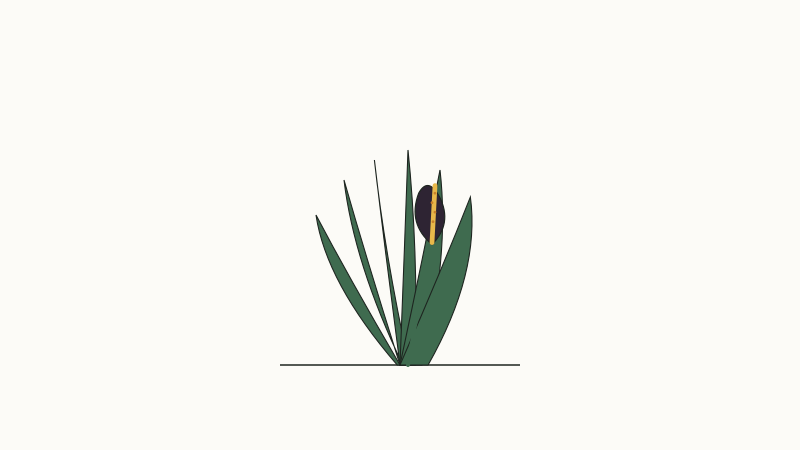
Pot it in a wide, shallow container in a porous orchid-style mix and give it bright indirect light indoors or full shade outside. Tacca chantrieri is a tropical understory herb in the yam family, native to Malaysia, and its conditions read like an orchid bench: high humidity, moving air, low to moderate light, and a rich mix that drains fast. A good working blend is roughly half pine bark, most of the rest peat, and a little sand. The flower is the reason to grow it: two dark bat-wing bracts up to 6 inches across frame a cluster of maroon-black blooms, with about 30 threadlike whiskers hanging 8 to 10 inches below. It is hardy only in zone 11, so everywhere else it is a container plant.
Planting details
- Bright indirect light indoors, full shade outdoors; direct sun burns the pleated leaves
- Keep the mix consistently moist but never waterlogged; it will not tolerate wet feet
- Use a porous orchid-style mix: bark, peat, and sand rather than standard potting soil
- Humidity plus real air circulation, the same conditions orchids get
- Hardy only in zone 11; a container plant everywhere else
Growing requirements
Shade to bright indirect light, steady moisture, humidity, and airflow are the whole game. A wide shallow pot suits its rhizomatous roots better than a deep one. Water to keep the mix consistently moist; a saucer under the pot can help hold moisture as long as the roots do not sit in standing water. During active growth feed lightly and often with a dilute orchid or acid fertilizer. In cool dry months the plant can go semi-dormant and drop leaves: water just enough to keep the mix from drying completely, and do not fertilize until warm nights restart growth.
Harvesting and care
Leave the flower stems on the plant and let them decline naturally; bat flowers collapse quickly in a vase and are not worth cutting. A plant can bloom up to eight times in a season once it is holding two or more healthy leaves, with the main flush in late summer and fall. Repot into fresh porous mix in spring before growth resumes rather than midwinter. When the plant goes quiet in cool months, do not mistake it for dead: keep the mix barely moist and wait for warmth.
Common mistakes
- Direct sun, which scorches the big pleated leaves
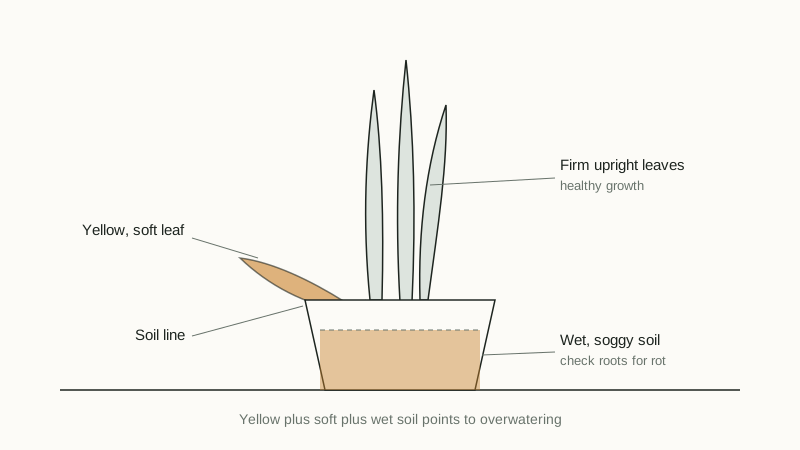
- Heavy waterlogged soil, which rots the tuberous roots
- Dry still air, which stalls growth and invites mites
- Cutting the blooms for a vase; they decline fast off the plant
- Fertilizing or soaking the plant through its winter rest
Companion plants
It belongs with other humidity-loving tropicals: alocasias, calatheas, and peace lilies share the same indirect light and moisture rhythm, and the dark bloom is a natural companion to oddities like the pitcher plant. Keep it away from sun-hungry plants whose window it cannot share.
Varieties worth growing
- Tacca chantrieri: the black bat flower, deep purple wing bracts and whiskers
- Tacca integrifolia: white bat flower, larger pale wing bracts; same care
- Tacca nivea: also sold as white bat flower, greener winged bracts
Frequently asked questions
Why is my bat flower not blooming?
It needs enough healthy foliage first; plants generally bloom only after holding two or more good leaves. More humidity and brighter indirect light help, and the natural season is late summer into fall.
Is bat flower hard to grow?
It is a collector plant, not a beginner plant. If you can keep an orchid in a humid, shaded, airy spot with a barky mix, you can grow bat flower.
Did my bat flower die over winter?
Probably not. It is semi-evergreen and often drops leaves in cool or dry months. Keep the mix barely moist, skip fertilizer, and new leaves usually return when nights warm.
Where do people get bat flower plants?
They are a specialty item rather than a garden-center staple. Tropical plant nurseries, orchid growers, and online sellers carry them, sometimes marketed around Halloween.