Native plant growing guide
American beautyberry
Callicarpa americana · Lamiaceae
Sun
Full sun to part shade
Season
Deciduous shrub, berries in fall
Maturity
4 to 8 ft
Water
Moderate
Soil pH
5.5 to 7.0
Spacing
48 to 72 in
By Dandre Noah
Planting american beautyberry
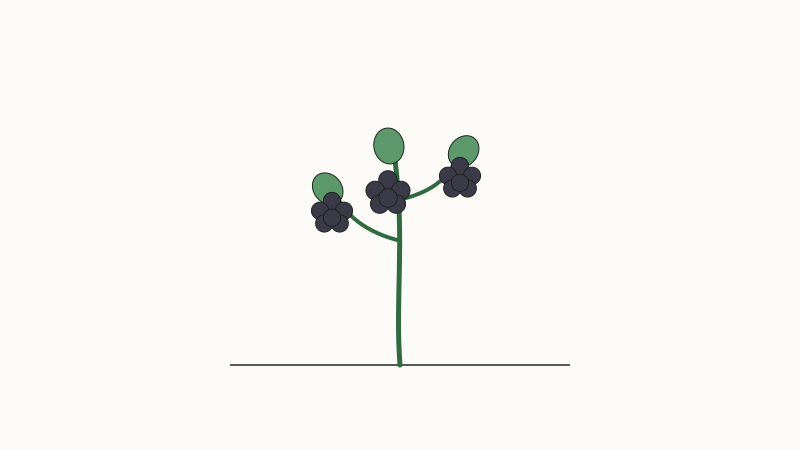
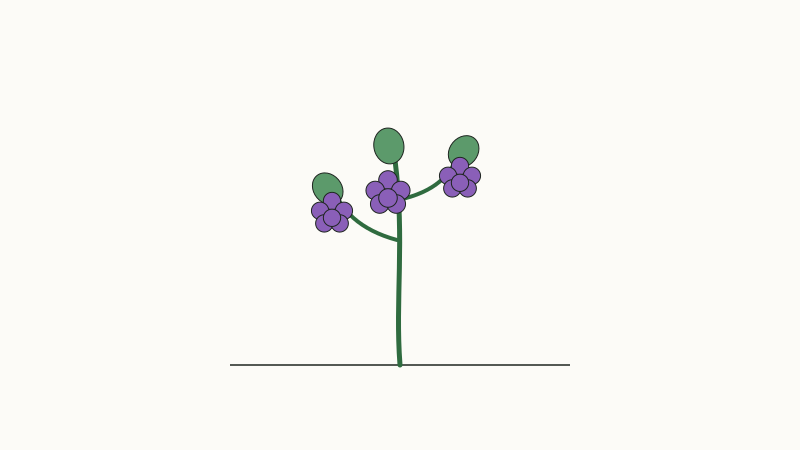
Plant container shrubs in spring or fall in full sun to part shade, spacing them 4 to 6 feet apart; more sun means a heavier berry crop. American beautyberry is a deciduous shrub in the mint family, native to the central and southeastern United States where it grows on woodland edges, in thickets, and along fencerows. For most of the season it is an unremarkable arching green shrub; then August through October arrives and tight clusters of violet-purple berries ring every stem. It is hardy roughly in zones 6 to 10, takes nearly any soil that drains, and was the North Carolina Botanical Garden's 2021 Wildflower of the Year.
Planting details
- Spacing: 4 to 6 feet; it grows about as wide as it is tall
- Hardy in zones 6 to 10
- Berries ripen August through October and can hold into early winter
- Flowers and fruit form on new wood: prune in late winter, not summer
- Fruit feeds songbirds; crushed leaves are a traditional mosquito repellent
Growing requirements
Full sun to part shade suits it, but it is intolerant of deep shade, which thins the growth and cuts the berry crop. Soil requirements are easy: it grows in nearly any soil type as long as drainage is decent. Water moderately while it establishes; after that it handles ordinary rainfall and dry spells without fuss. Left unpruned it gets leggy and sparse, so the one care ritual that matters is a hard late-winter cutback, since it blooms and fruits on the current year's shoots.
Harvesting and care
For the heaviest berry display, cut the whole shrub back to about a foot tall in late winter before growth starts; it responds with dense new shoots that flower and fruit the same year. If you prefer a larger, looser shrub, tip-prune instead, but always prune before spring growth so you do not remove fruiting wood. The berries persist into early winter or until the birds take them. It propagates easily from seed or softwood cuttings, and volunteer seedlings sometimes appear where birds drop the fruit.
Common mistakes
- Deep shade, which produces a thin shrub with almost no berries
- Pruning in summer or fall, which cuts off the new wood that carries fruit
- Never pruning at all, which grows a leggy, sparse plant
- Wet compacted soil, the one condition it does not tolerate
- Expecting instant drama; young shrubs need a season or two to fruit heavily
Companion plants
Beautyberry fits the woodland edge with other southeastern natives: American elderberry, aronia, and arrowwood viburnum share its soils and fruit for the same birds. Underplant it with native ferns, sedges, or woodland asters where it gets afternoon relief. It also holds its own in a mixed shrub border, where the fall berries outshine everything beside them.
Varieties worth growing
- Callicarpa americana: the straight species, vivid purple fruit on arching canes
- 'Welch's Pink': pink berries instead of purple; a softer look
- var. lactea: white-berried form, striking against dark foliage
- Callicarpa dichotoma: smaller Asian cousin sold alongside it; check labels if you want the native
Frequently asked questions
Are beautyberries edible?
Birds strip them eagerly, and people traditionally cook them into jelly. Raw, they are bland and seedy rather than a snack.
When do I prune beautyberry?
Late winter, before new growth. It flowers and fruits on new wood, so you can cut it hard, to about 12 inches, without losing the berry crop.
Is American beautyberry native?
Yes, to the central and southeastern United States, plus Bermuda and Cuba. Asian Callicarpa species are also sold, so check the botanical name if native matters to you.
Why doesn't my beautyberry have berries?
Usually too much shade, or pruning after spring growth had already begun. Young plants also need a season or two to fruit heavily.