Houseplant growing guide
Begonia maculata
Begonia maculata · Begoniaceae
Sun
Bright indirect
Season
Year-round indoors
Maturity
2 to 3 ft in a year or two
Water
Moderate
Soil pH
5.5 to 6.5
Spacing
1 to 3 ft
By Dandre Noah
Planting begonia maculata
Begonia maculata is a cane-type begonia from Brazil, the species behind the names polka dot begonia and angel wing begonia, with silver-spotted leaves that are red underneath. Pot it in a loose, humus-rich mix with sharp drainage: a standard potting mix lightened with perlite and a little bark works well, because the bamboo-like canes rot at the base in heavy, wet soil. Give it bright indirect light, an east window or a few feet back from a south window. Outdoors it is only hardy in zones 10 to 11, though it summers happily on a shaded patio anywhere after frost. Repot in spring when the plant crowds its pot, and take a 4 to 6 inch stem cutting below a node at the same time; it roots in water or moist mix within a few weeks.
Planting details
- Light: bright indirect; direct sun scorches and bleaches the spotted leaves
- Temperature: keep above 55 F; happiest at normal room temperatures
- Humidity: aim for 50 to 60 percent; do not mist, since wet foliage invites mildew
- Propagation: stem cuttings below a node root readily in water or moist mix
- Toxicity: contains insoluble oxalates; a low-severity poison for cats and dogs per NC State Extension
Growing requirements
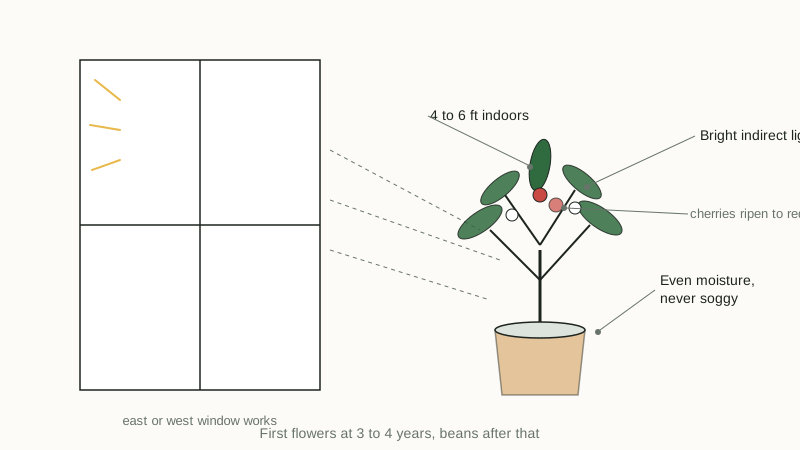
The silver polka dots stay crisp in bright indirect light; too little light fades them and stretches the canes, while direct sun burns the thin blades. Keep the mix evenly moist, watering when the top inch dries, and never let the pot sit in water. Humidity around 50 to 60 percent prevents the brown, crisped leaf edges that show up in dry winter rooms, but raise it with a humidifier or pebble tray rather than misting, which spots and mildews the leaves. Feed with a diluted balanced fertilizer every few weeks through spring and summer, and keep it away from cold drafts and windows that drop below 55 F.
Harvesting and care
Growth is fast and upright, and left alone the canes go leggy with bare stems at the base. Pinch or cut canes back to a node in spring to force branching, and do not be shy about it; every cut produces two shoots and gives you a cutting. Clusters of white to pale pink flowers dangle from the cane tips through the growing season. The main pests are whiteflies, thrips, spider mites, and mealybugs, and stagnant air brings powdery mildew, botrytis, and stem rot, so give the plant breathing room. Like all begonias it is toxic to pets, so keep it above cat height or in a room animals cannot reach.
Common mistakes
- Direct sun, which bleaches and crisps the spotted leaves
- Soggy soil or a pot without drainage, which rots the canes at the base
- Cold below 55 F or a drafty windowsill, which triggers leaf drop
- Never pinching the canes, which produces a tall, leggy, bare-stemmed plant
- Misting the leaves for humidity, which invites powdery mildew and botrytis
Companion plants
Group it with other bright-indirect, humidity-loving plants so they share the same microclimate: calathea and prayer plants want nearly identical care, and the spotted leaves contrast well against plain green foliage. It also mixes naturally with other begonias, since cane, rex, and rhizomatous types share the same light and water rhythm. Because of the oxalate toxicity, the practical companion question is placement rather than neighbors: shelf and hanging displays keep it away from pets that chew.
Varieties worth growing
- 'Wightii': the classic form most often sold; silver spots, red leaf undersides
- 'Lucerna': the older angel wing hybrid the species is often confused with; red-flushed leaves
- 'Medora': trout begonia; smaller leaves with heavier spotting
- 'Cracklin Rosie': ruffled, deeply spotted leaves and dangling pink flowers
Frequently asked questions
Is begonia maculata toxic to cats and dogs?
Yes. Like other begonias it contains insoluble oxalates that cause mouth burning and drooling. NC State Extension rates cane-type begonias low severity, but keep it out of reach of pets that chew.
Why is my begonia maculata leggy?
Not enough light and no pruning. Move it closer to bright indirect light and cut canes back to a node; each cut branches into two shoots and the tip roots as a new plant.
Can begonia maculata live outside?
Permanently only in zones 10 to 11. Elsewhere it can summer on a shaded patio after all frost danger and must come inside before temperatures approach 55 F.
Why are the leaf edges turning brown and crispy?
Low humidity or inconsistent watering, usually both in heated winter rooms. Raise humidity with a humidifier rather than misting, and water when the top inch of mix dries rather than on a fixed schedule.