Vegetable growing guide
Black Krim tomato
Solanum lycopersicum 'Black Krim' · Solanaceae
Sun
Full sun
Season
Warm
Maturity
75 to 80 days
Water
Moderate
Soil pH
6.0 to 6.8
Spacing
24 to 36 in
By Dandre Noah
Planting black krim tomato
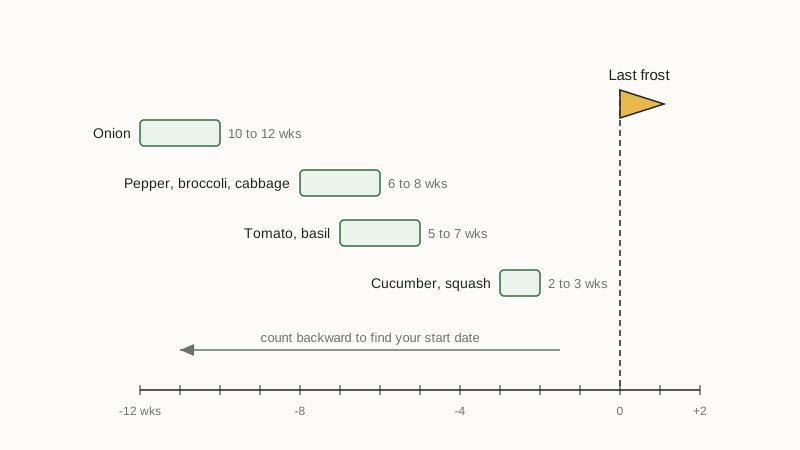
Black Krim is an open-pollinated heirloom beefsteak from the Crimean region, passed to the Seed Savers Exchange around 1990. Cornell lists it at about 80 days from transplant as a main-season, indeterminate variety. Start seed indoors 5 to 7 weeks before your last frost, about 1/4 inch deep, and transplant out 1 to 2 weeks after the last frost once nights hold above 50 F and the soil is warm. It is a vigorous vine, not a bush, so the support goes in at planting time.
Planting details
- Start indoors: 5 to 7 weeks before the last frost
- Transplant: 1 to 2 weeks after last frost, nights above 50 F
- Spacing: 24 to 36 inches; indeterminate vine needs a tall cage or stake
- Seed depth: about 1/4 inch
- Maturity: about 75 to 80 days from transplant
Growing requirements
Full sun and fertile, well drained soil at pH 6.0 to 6.8, same as any tomato, with a steady supply of compost or balanced feed; the vine is vigorous and the fruit is heavy. Water deeply and evenly, about an inch a week, because Black Krim's thin-skinned heirloom fruit cracks readily when a dry spell ends in a deluge. The dark color deepens with heat and sun exposure, so cool, cloudy summers produce browner rather than nearly black fruit. Mulch to hold moisture steady and keep soil-borne disease off the lower leaves.
Harvesting and care
Ripeness is the tricky part with any dark tomato. Do not wait for uniform color: pick when the fruit's lower half turns deep mahogany and it yields slightly to a gentle squeeze, even while the shoulders stay green to green-black. University of Delaware extension puts the fruit at 8 to 16 ounces with rich, complex flavor that tastes almost smoky and slightly salty. Harvest promptly at that stage; left hanging, the fruit softens and splits fast. Stake or cage hard, since loaded branches snap.
Common mistakes
- Waiting for a fully dark, uniform look; overripe Black Krim softens and splits fast
- Under-supporting the vine, which drops heavy fruit on the ground
- Erratic watering, which cracks the thin-skinned fruit
- Planting out into cold soil or while nights still dip below 50 F
- Heavy nitrogen feeding, which grows vine instead of fruit
Companion plants
Basil, carrots, onions, and parsley share the bed without competing for light or feeding. Keep it away from potatoes and corn, which share diseases and pests, and from brassicas that compete hard for fertility. The tall vine also shades anything small planted on its north side, so give neighbors their own light.
Varieties worth growing
- Cherokee Purple: the other famous dusky heirloom; similar flavor, slightly earlier
- Carbon: dark beefsteak with richer fruit that resists cracking better
- Japanese Black Trifele: pear shaped dark tomato; harvest while shoulders are still green
- Paul Robeson: maroon slicer with a similar smoky depth of flavor
Frequently asked questions
What does a Black Krim tomato taste like?
Richer and more complex than a standard red slicer. Gardeners and seed preservation sources describe it as smoky, full flavored, and slightly salty, with the dark pigments adding real depth rather than just novelty color.
How do I know when Black Krim is ripe?
Ignore the shoulders. When the lower half of the fruit turns deep mahogany and it gives slightly under a gentle squeeze, pick it. Waiting for the whole fruit to darken evenly almost always means an overripe, split tomato.
Is Black Krim a hybrid or heirloom?
Heirloom and open-pollinated, from the Crimean Peninsula. It entered the US through the Seed Savers Exchange around 1990, so you can save true seed from it.
Why is my Black Krim fruit brown instead of black?
The dark pigments intensify with heat and strong sun. Cool, cloudy, or short summers produce browner fruit; the flavor is unaffected.
Sources
- Cornell Vegetable Varieties for Gardeners: Black Krim
- University of Delaware Cooperative Extension: Heirloom Tomatoes
- Iowa State University Extension seed germination requirements
- Utah State University Extension vegetable planting groups
- University of Maryland Extension fall vegetable gardening
- University of Minnesota Extension vegetable garden planting