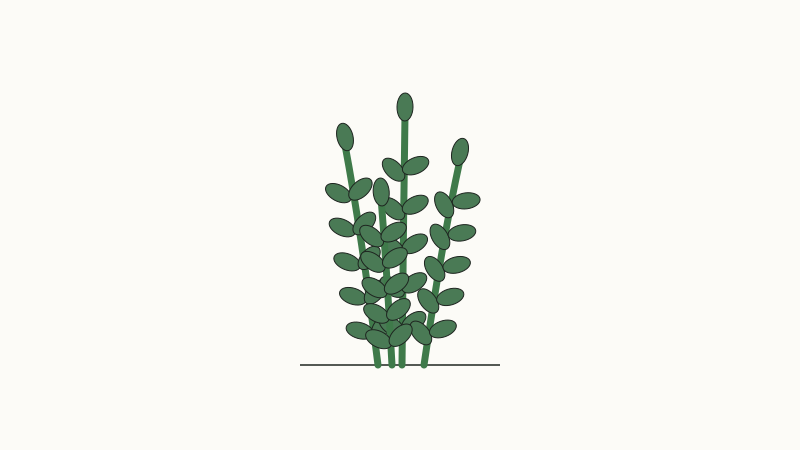
Houseplant growing guide
ZZ plant
Zamioculcas zamiifolia · Araceae
Sun
Low to bright indirect
Season
Year-round indoors
Maturity
3 to 5 years
Water
Very low
Soil pH
6.0 to 7.0
Spacing
Container; 2 to 4 ft
By Dandre Noah
Planting zz plant
ZZ plant is a container plant everywhere outside zones 9 to 10, and the potato-like rhizomes under the soil are the whole story: they store enough water to carry the plant through long dry spells. Pot it in a fast-draining mix, cactus soil or houseplant mix cut with perlite, in a pot with drainage holes, and keep it snug rather than roomy. Repot in spring every 2 to 3 years, dividing the rhizome clump at the same time if you want more plants. Do not bury the stems deep; the rhizome should sit just under the surface.
Planting details
- Repot every 2 to 3 years in spring; it tolerates being crowded
- Fast-draining cactus mix or houseplant mix plus perlite
- Divide rhizomes at repotting for new plants
- Single leaflets also root, but a rooted leaflet takes a year or more to become a plant
- Outdoors year-round only in zones 9 to 10
Growing requirements
ZZ survives under office fluorescents and in dim corners where nearly nothing else lives, but it grows fuller and faster in bright indirect light, and direct sun scalds the leaflets brown. Water only when the mix has dried completely: NC State Extension suggests about twice a month in summer and once a month in winter, and always check dryness rather than following the calendar. Typical room temperatures are fine; keep it above about 50 F and away from cold drafts and air-conditioning blasts. One or two weak feedings a year is all the fertilizer it needs.
Harvesting and care
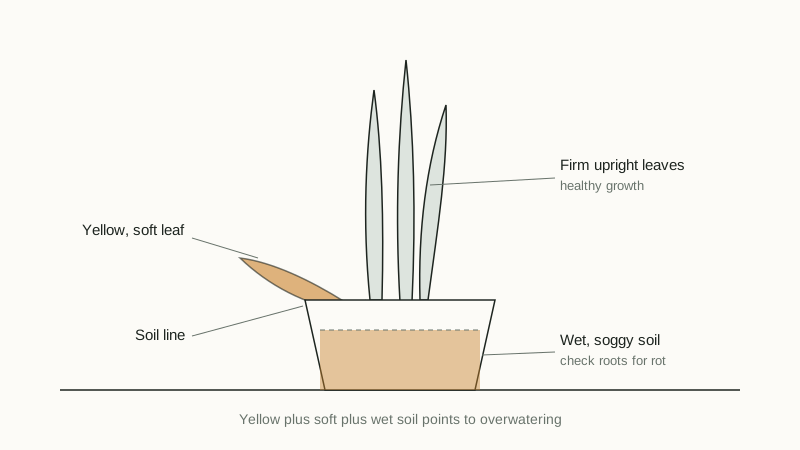
Dust the leaflets occasionally so the natural gloss shows; do not buy leaf-shine products. New shoots emerge pale lime green and darken over a few weeks, which owners sometimes misread as a problem. On Raven, that lime green matures to near-black. Yellowing leaflets and mushy stems almost always mean wet feet: unpot, trim rotted rhizomes, and repot dry. Growth is slow by nature, so judge the plant over months, not weeks.
Common mistakes
- Watering before the mix dries completely, the main route to rhizome rot
- A pot much bigger than the rhizome mass, which holds water for weeks
- Direct sun, which scalds and browns the leaflets
- Impatience; ZZ is naturally slow, and a quiet plant is usually fine
- Cold drafts or exposure below about 50 F
Companion plants
It belongs on the neglect-tolerant shelf with snake plant and cast iron plant, all of which want the same soak-dry cycle and low light. Keep it apart from thirsty plants so nobody gets watered on the wrong schedule. Like other aroids, all parts contain calcium oxalate and are toxic to cats and dogs, so place it where pets do not chew.
Varieties worth growing
- Raven (Dowon): lime green new growth that matures to purple-black
- Chameleon: leaves emerge golden yellow and darken with age
- Lucky: wider leaflets with rounded tips
- Zenzi: compact dwarf with curled, crowded leaflets
Frequently asked questions
How often should I water a ZZ plant?
Only when the mix is dry all the way down, which works out to about twice a month in summer and once a month in winter for most homes. Soft, mushy stems mean you are watering too often.
Is ZZ plant toxic to pets?
Yes. All parts contain calcium oxalate crystals and are listed as having medium toxicity to cats and dogs, causing mouth irritation, vomiting, and diarrhea if eaten.
Can I propagate ZZ from a single leaflet?
Yes, but it is a long game. A leaflet pushed into moist mix roots in a few months and slowly forms a new rhizome; expect a year or more before it looks like a plant. Division is far faster.
Why are the stems flopping over?
Usually very low light making weak growth, or heavy wet mix weakening the rhizome. Brighter indirect light and a drier cycle firm it up.