Houseplant growing guide
Snake plant
Dracaena trifasciata · Asparagaceae
Sun
Low to bright indirect
Season
Year-round indoors
Maturity
Decades
Water
Very low
Soil pH
6.0 to 7.5
Spacing
Container; to 4 ft
By Dandre Noah
Planting snake plant
Snake plant is a pot plant everywhere outside zones 10 to 12, and it prefers to be snug. Repot in spring only when roots are crowding or cracking the pot, every 3 to 5 years for most plants, and go up just one size into a container with drainage holes. A gritty cactus and succulent mix or regular potting soil cut with a third perlite both work. Tall cultivars get top-heavy, so a clay pot adds useful ballast. This is one houseplant that suffers more from kindness than neglect: the fastest way to kill it is a generous pot and a wet mix.
Planting details
- Repot every 3 to 5 years; it blooms and grows best slightly pot-bound
- Gritty cactus mix or houseplant mix plus a third perlite
- Divide clumps in spring for identical new plants
- Leaf cuttings of variegated types like Laurentii produce plain green offspring
- Outdoors year-round only in zones 10 to 12
Growing requirements
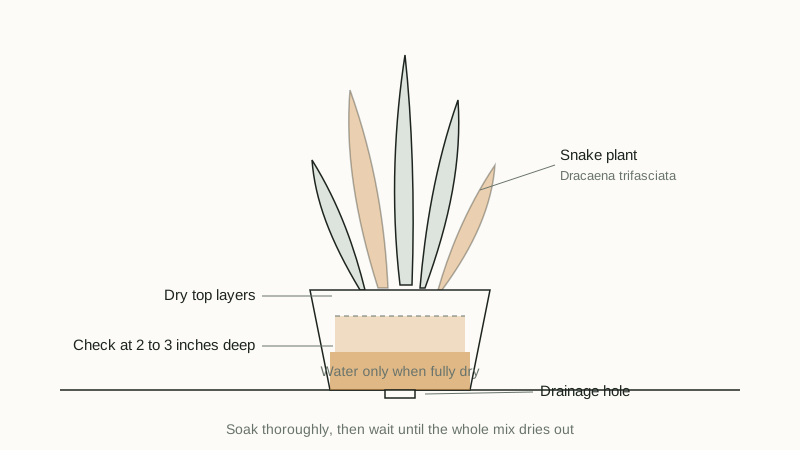
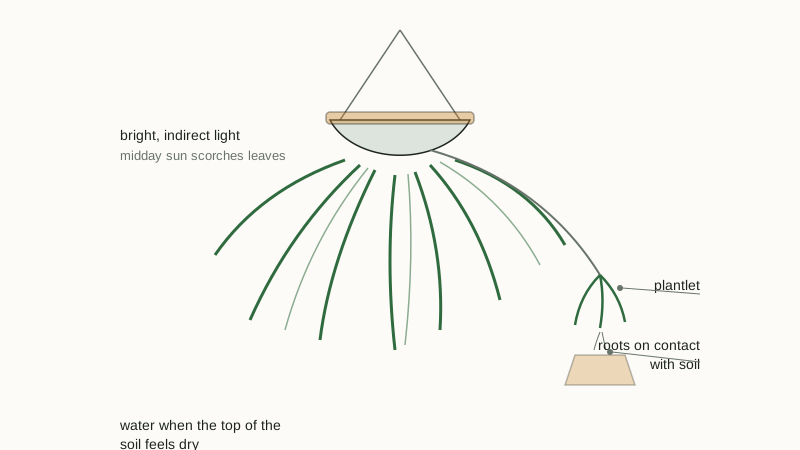
Snake plant survives in genuinely low light, which built its reputation, but it grows faster and holds stronger banding in bright indirect light, and it tolerates a few hours of direct sun. Water only when the mix has dried through, roughly every 2 to 3 weeks in summer and once a month or less in winter, since the rhizomes and fleshy leaves store water. NC State Extension advises watering only every one to two months in winter. Normal room temperatures suit it; keep it above about 50 F and off cold winter windowsills. It needs no humidity and very little fertilizer.
Harvesting and care
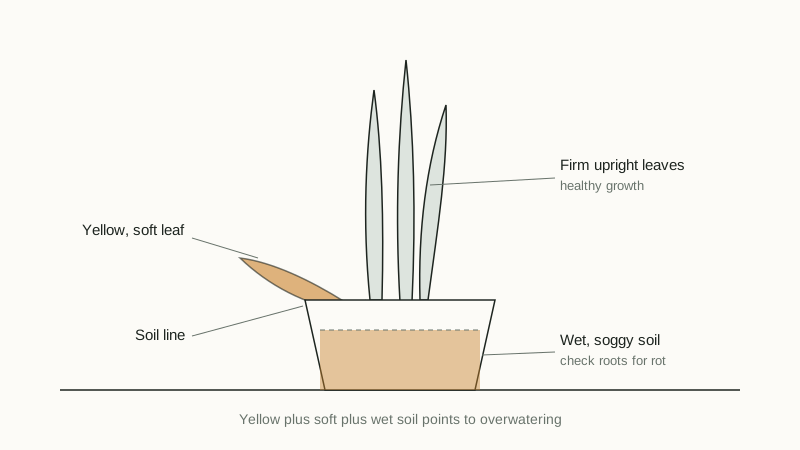
There is almost nothing to do: wipe dust off the leaves now and then, and do not water on a schedule. Overwatering is the one reliable killer, and it shows up as a soft, mushy base. A mature, slightly crowded plant sometimes surprises its owner with a stalk of fragrant greenish-white flowers, usually at night, followed by sticky nectar drips. To propagate, pull the clump apart at repotting; division preserves variegation, while leaf cuttings are slower and produce plain green plants from striped or edged cultivars.
Common mistakes
- Watering on a weekly schedule instead of waiting for the mix to dry; root rot is the main killer
- Pots several sizes too big, which stay wet for weeks after each watering
- Letting the pot sit in a saucer of drained water
- Cold exposure below about 50 F, including leaves pressed to winter glass
- Rooting leaf cuttings of Laurentii expecting yellow edges; seedlings come back plain green
Companion plants
Group it with the other dry-rhythm plants: jade plant, ZZ plant, aloe, and cast iron plant all want the same long dry-down and tolerate the same neglect. Keep it away from thirsty ferns and prayer plants that need weekly watering. Snake plant is mildly toxic to cats and dogs, so give it a spot pets leave alone.
Varieties worth growing
- Laurentii: the classic, dark banded leaves with gold edges
- Hahnii: bird's nest type, a low funnel rosette under 8 inches
- Moonshine: broad silvery gray leaves with dark margins
- Bantel's Sensation: narrow leaves with bold white vertical stripes
- Black Gold: very dark leaves edged in bright gold
Frequently asked questions
How often should I water a snake plant?
When the mix is dry all the way through, roughly every 2 to 3 weeks in summer and once a month or less in winter. Wrinkled, leaning leaves mean thirsty; soft mushy leaves at the base mean too much.
Can a snake plant really grow in the dark?
It survives low light better than almost any houseplant, but it grows slowly there and the banding fades. Bright indirect light gives a fuller, more patterned plant.
Is snake plant toxic to pets?
Yes, mildly. Chewing the leaves causes mouth irritation, drooling, and stomach upset in cats and dogs.
Why is my snake plant turning yellow and mushy?
Overwatering and rot. If the base is soft, unpot the plant, cut away mushy rhizomes, and repot the healthy sections into fresh dry mix.