Houseplant growing guide
African milk tree
Euphorbia trigona · Euphorbiaceae
Sun
Bright indirect; some direct
Season
Year-round indoors
Maturity
3 to 6 ft indoors
Water
Low
Soil pH
6.0 to 7.0
Spacing
Container; 6 to 12 ft outdoors
By Dandre Noah
Planting african milk tree
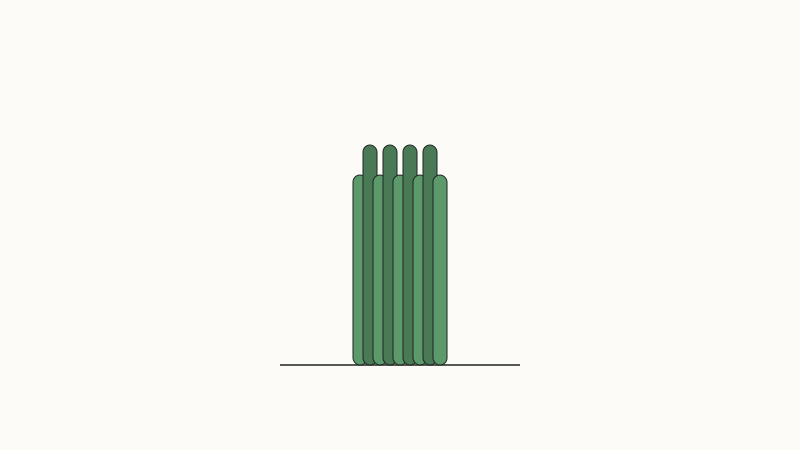
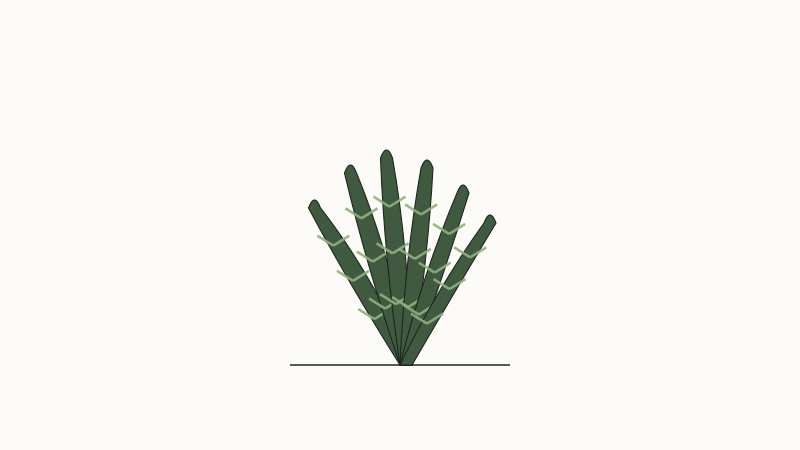
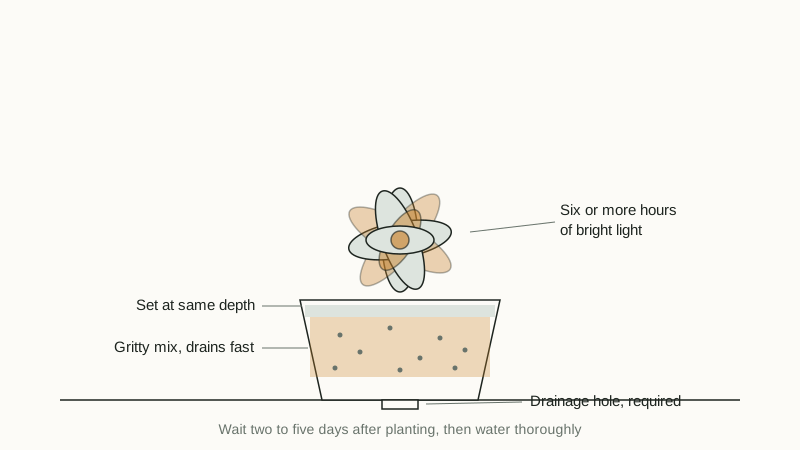
This is a pot plant everywhere outside zones 9 to 11. Give it a chunky cactus or succulent mix in a container with drainage holes, and pick a heavy pot from the start, because it grows fast and top-heavy into its signature candelabra silhouette. Indoors it wants bright light, with a few hours of gentle direct sun fine but harsh afternoon glass avoided. Bring it in whenever nights head below about 45 F. Outdoors in warm climates it becomes a 6 to 12 foot hedge or accent; indoors expect a 3 to 6 foot specimen that may eventually need support or a hard prune to fit the room.
Planting details
- Cactus or succulent mix in a pot with drainage
- Water only when the top 1 to 2 inches are dry
- Milky latex sap is toxic and a skin irritant; handle with gloves
- Bring indoors before nights drop below about 45 F
- Propagates easily from stem cuttings
Growing requirements
Bright indirect light indoors and part sun outside. The stems stretch and lean if light falls short, so put it near a bright window and turn the pot now and then for even growth. Warmth is the other need: it wants roughly 65 to 85 F and stalls below that. Water sparingly, letting the top inch or two of mix dry between waterings, and never leave the pot standing in drained water. Normal household humidity is fine, but give it air circulation to head off fungal spots, and feed lightly once or twice in the growing season at most.
Harvesting and care
Pruning is how you keep the chandelier under control: cut a stem back to a joint with a clean saw and it branches below the cut. The wound bleeds white latex that irritates skin and eyes, so wear gloves and eye protection, and let cuttings dry and callus for several days before planting them in gritty mix to root. Every couple of years in spring, move up one pot size. Watch the stem ridges for mealybugs and spider mites, and keep the whole plant out of reach of children and pets, because the sap is not a joke.
Common mistakes
- Weekly-schedule watering, the sure route to root rot
- Pruning barehanded; the latex burns skin and is worse in eyes
- A light plastic pot for a tall plant, which tips once the crown spreads
- Treating it like a desert cactus that needs blazing sun; it prefers bright indirect light indoors
- Cold drafts or an unheated porch below about 45 F
Companion plants
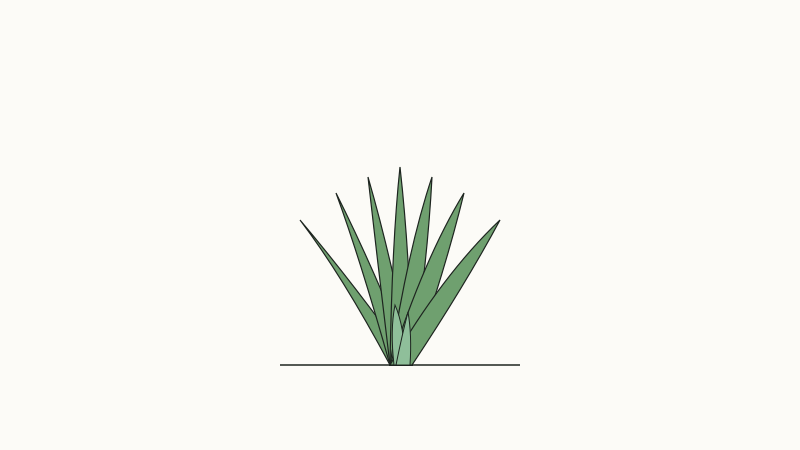
It belongs in the same drought-tolerant group as jade plant, aloe, and African spear plant, which all want the same long dry-down and a bright sill. Keep it clear of thirsty ferns and prayer plants whose misting and watering it would resent, and because of the sap its best neighbors are plants nobody needs to handle often.
Varieties worth growing
- Rubra (Royal Red): red-edged stems and maroon leaves; the showier form
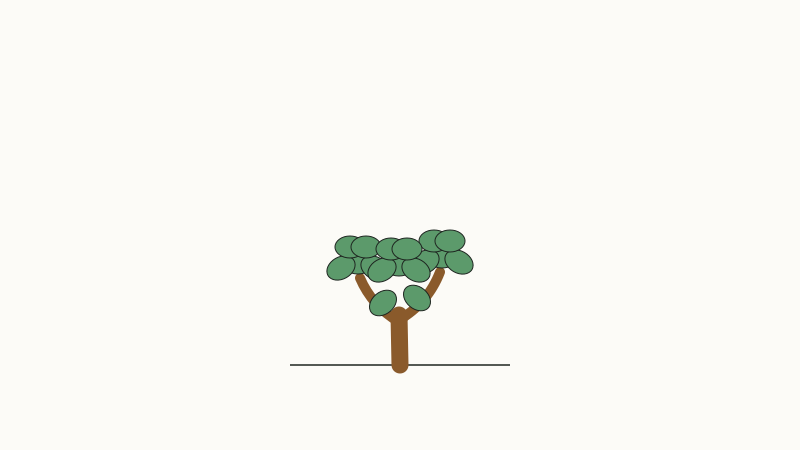
- Species type: green three-angled stems with small teardrop leaves that drop seasonally
Frequently asked questions
Is African milk tree a cactus?
No. It is a Euphorbia, a succulent that mimics cactus form. The giveaway is the milky latex, which true cacti do not have.
How dangerous is the sap?
Genuinely irritating: it burns skin, can blister, and is dangerous in eyes. Wear gloves for pruning and wash tools afterward.
Can I grow it outside?
Year-round in zones 9 to 11 as a hedge or specimen. Elsewhere it summers happily on a patio and comes in before cold nights.
Does it flower?
Almost never indoors. The tiny greenish blooms appear mainly on large outdoor plants in warm climates.