Houseplant growing guide
African spear plant
Dracaena angolensis · Asparagaceae
Sun
Low to bright indirect
Season
Year-round indoors
Maturity
Years; slow growing
Water
Very low
Soil pH
6.0 to 7.5
Spacing
Container; spears to 7 ft
By Dandre Noah
Planting african spear plant
Grow it like its cousin the snake plant, because that is what it is: the species sold for decades as Sansevieria cylindrica, now Dracaena angolensis, tagged at nurseries as African spear or starfish sansevieria. Pot it snug in a gritty cactus mix with drainage and resist the urge to up-pot often, since crowded roots suit it. Nursery plants are often sold as rooted leaf fans, sometimes braided or with painted tips; those leaves persist for years while new spears eventually rise from the base to make a fuller clump. It survives outdoors year-round only in frost-free zones, so bring it inside whenever nights head below about 55 F.
Planting details
- Gritty cactus or succulent mix; keep slightly pot-bound
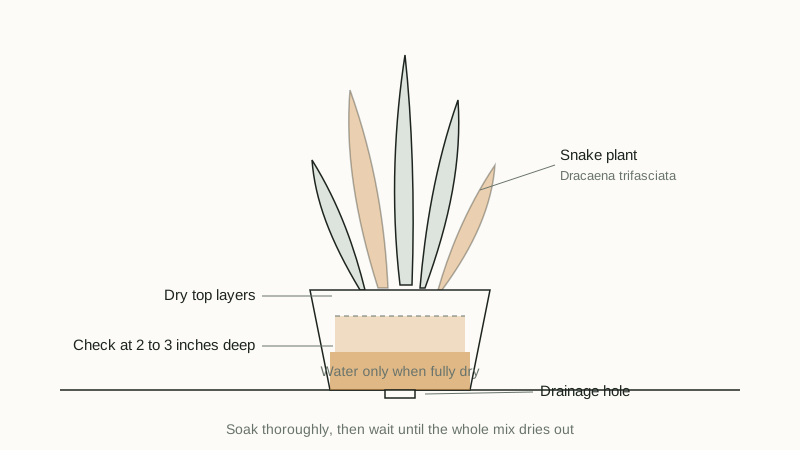
- Water about every 2 weeks in summer, monthly in winter
- Summer it outside in morning sun only; harsh light burns it
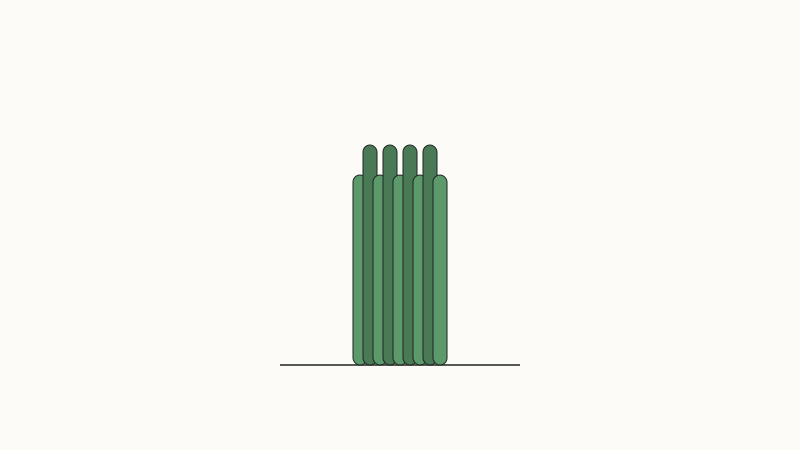
- Individual spears reach an inch thick and up to 7 feet
- Toxic to cats and dogs; site accordingly
Growing requirements
It tolerates genuinely low light but grows faster and stands more rigidly in bright indirect light, and NC State Extension recommends a brightly lit window. If it summers outdoors, restrict it to morning sun, because afternoon sun bleaches and scars the spears. Water the way you would a snake plant: soak and dry, roughly every two weeks in summer and monthly or less in winter, since the thick spears are water storage. Normal room temperature is fine; keep it above about 55 F. Feeding is optional, and a diluted dose once or twice in the growing season is plenty.
Harvesting and care
Dust the spears occasionally and otherwise leave it alone. A mature plant may send up a spike of small fragrant white flowers tinged pink in summer, followed by orange-red berries if pollinated; enjoy it and cut the stalk when it is done. Propagation is simple at the pot edge: rhizome divisions with roots attached pot up directly, and leaf sections root too, though slowly. The reliable killers are the same as for every sansevieria type, wet mix and cold, and mealybugs sometimes tuck in where the spears meet.
Common mistakes
- Overwatering, which turns the spear bases soft and mushy
- A pot several sizes too big, which stays wet for weeks
- Afternoon outdoor sun in summer, which bleaches and scars the leaves
- Cold below about 55 F, including a leaf pressed to winter glass
- Expecting braided nursery leaves to multiply; new spears come from the base, not the braid
Companion plants
Its vertical spears contrast well with the other dry-rhythm houseplants: snake plant, ZZ plant, and jade plant share its soak-and-dry watering schedule and its tolerance for dimmer corners. Keep it away from thirsty neighbors like prayer plant that want weekly water and misting. Like the rest of the dracaena group it is mildly toxic to pets, so give it a shelf or floor spot that animals ignore.
Varieties worth growing
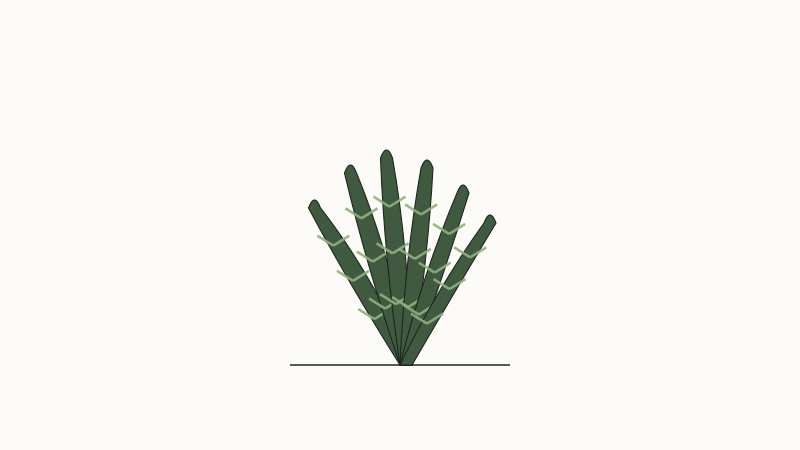
- Boncel (starfish): short, fat spears that spread from the base like a fan
- Species type: tall cylindrical spears, often sold braided
- var. patula: spears that arch outward rather than standing straight
- Spaghetti: very thin, delicate spears for a finer texture
Frequently asked questions
Is African spear plant a snake plant?
A close cousin. It is Dracaena angolensis, formerly Sansevieria cylindrica, with the same family and the same care as the common snake plant.
How often should I water it?
Roughly every two weeks in summer and monthly in winter, letting the mix dry fully between waterings. Wrinkled spears mean thirsty; soft bases mean too much.
Why are the leaves braided?
That is done at the nursery for looks. The braid stays decorative, and new growth fans up naturally from the base.
Will it flower indoors?
Sometimes, even in a pot: a spike of small, fragrant white flowers tinged pink, usually in summer.