Houseplant growing guide
Alocasia jacklyn
Alocasia tandurusa 'Jacklyn' · Araceae
Sun
Bright indirect
Season
Year-round indoors
Maturity
2 to 5 years
Water
Moderate
Soil pH
5.5 to 6.5
Spacing
2 to 3 ft
By Dandre Noah
Planting alocasia jacklyn
Jacklyn entered the hobby during the collector surge of the early 2020s and was only formally described in 2023 as Alocasia tandurusa, from the Bolaang Mongondow region of North Sulawesi. Because the wild population was heavily collected, nearly every plant for sale now is tissue cultured, and young plants need a gentle start: settle them into a small pot of very chunky aroid mix and let them root in for a season before repotting. Give it bright indirect light and a warm, still spot above 65 F. Outdoors it survives only in zones 10 to 12, in shade.
Planting details
- Pot small in a very chunky mix; tissue-cultured plants need time to root in
- Propagate by dividing corms or offsets at spring repotting only
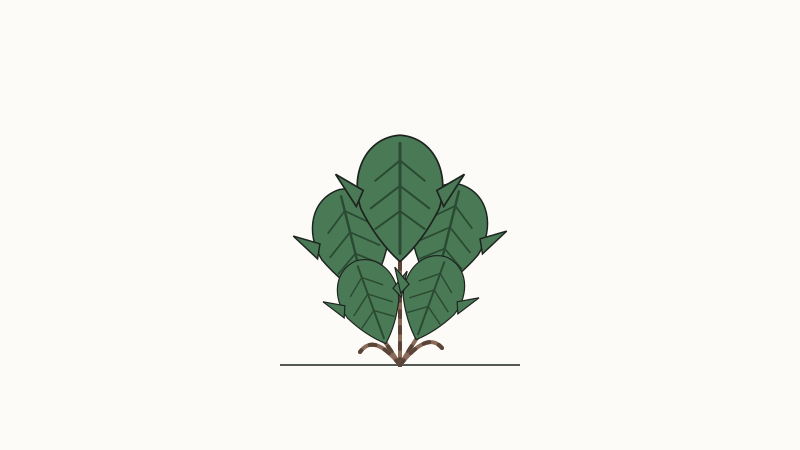
- Juvenile leaves are less divided; the antler shape develops as the plant matures
- Hold above 65 F for reliable growth; it is less forgiving of cold than the big hybrids
- Reaches about 2 to 3 feet indoors, taller in a warm greenhouse
Growing requirements
Bright, diffused light keeps the lobes deep and the dark vein contrast sharp; in shade the new leaves come in simpler and smaller. Water when the top two inches of mix dry out, and let the mix breathe between waterings, because this species is especially quick to rot in airless soil. Humidity of 50 to 60 percent suits it fine, moderate for an alocasia, though edges crisp below that. Feed monthly at half strength in the growing season, always on already-moist mix so the roots do not burn.
Harvesting and care
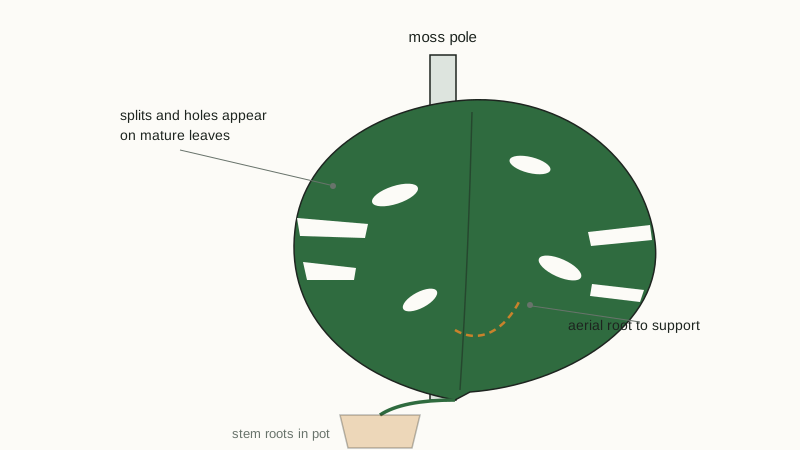
Do not panic when a young plant produces plain arrow leaves with shallow lobes: the dramatic, deeply cut antler form only appears on mature blades, and each successive leaf divides a little further. Spider mites and thrips both target the new unfurling leaves, so inspect the folds of fresh growth. Expect slower winter growth and reduce watering to match. All parts are toxic if chewed, so site it away from pets.
Common mistakes
- Repotting a fresh tissue-culture plant too soon or into too large a pot
- Dense, peat-heavy mix that stays airless around the roots
- Judging it by juvenile leaves; young plants look like ordinary alocasias until they mature
- Cold snaps below 60 F, which stop growth and cost leaves
- Buying wild-collected plants; stick to tissue-cultured stock since the wild population is depleted
Companion plants
Jacklyn earns a spot as the centerpiece of a collector shelf, with the calmer leaves of peperomia or nerve plant around it rather than competing statement foliage. Boston fern at its side keeps the air humid without demanding the same careful mix. Keep it out of pet reach like every alocasia, and away from doors where cold drafts hit in winter.
Frequently asked questions
Why does my alocasia jacklyn not have antler leaves yet?
Young plants produce shallower, more conventional leaves. The deeply lobed adult form develops as the plant matures and each new leaf gets larger.
Is alocasia jacklyn a real species?
Yes. It was formally described in 2023 as Alocasia tandurusa, from North Sulawesi, after circulating in the trade under the name Jacklyn.
Is alocasia jacklyn toxic to pets?
Yes. All alocasias contain calcium oxalate crystals and are toxic to cats and dogs if chewed.
Can I grow jacklyn from a leaf cutting?
No. Like all alocasias it only propagates from rhizome or corm division, never from leaf or petiole cuttings.